
Poland has requested that the European Commission impose a €250 million penalty on Meta due to scam advertisements.
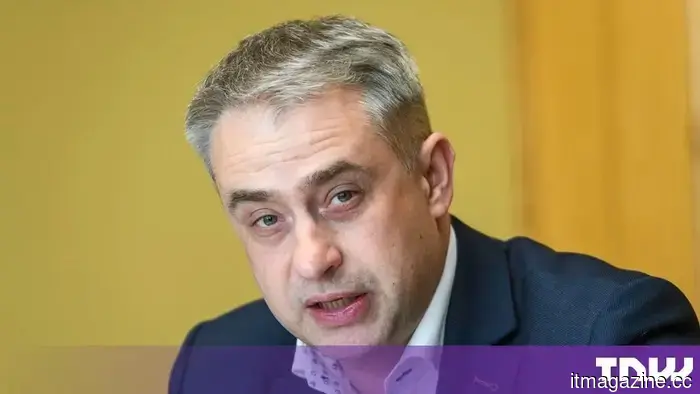
Poland’s deputy prime minister and digital affairs minister, Krzysztof Gawkowski, has requested that the European Commission impose a €250 million fine on Meta, which is approximately $291 million, due to scams and misleading advertisements on Facebook and Instagram. He urged Meta to swiftly implement effective measures to eliminate scams, false advertising, and the promotion of illegal applications, particularly in a country where the company is already facing legal challenges over fraudulent ads.
On August 18, Warsaw submitted nine written inquiries to Meta regarding the extent of scam advertising in Poland, the company's methods for detecting deepfakes, the verification process for advertisers, and the timeline for removing reported ads, with a response required in seven days. Deputy minister Dariusz Standerski stated that if the responses were unsatisfactory, the next step would involve contacting the Commission to initiate proceedings under the Digital Services Act, which has now occurred.
However, there's a constitutional peculiarity; Poland lacks the authority to fine Meta or determine the amount since enforcement against major online platforms is solely in the Commission's hands. Therefore, the €250 million is merely a request rather than a penalty.
This request is relatively modest compared to the potential fines allowed under the DSA, which can reach up to 6% of a company's global annual revenue, amounting to several billion euros for Meta. The Commission has previously issued penalties in the low hundreds of millions, with a reference point being X, which was fined €120 million last year for violating transparency obligations. Compared to that, the €250 million for advertising fraud seems more plausible than punitive.
Whether the Commission will take action remains uncertain. While member states can refer issues and raise complaints, Brussels sets its own enforcement priorities and has been notably slow to resolve the Meta cases currently underway.
The political pressure in Poland has been intensified by an ongoing dispute involving Rafał Brzoska, founder of the parcel locker company InPost and one of the nation's richest individuals. For years, fraudulent investment advertisements have misused his image, including false claims of his death that even reached his children. After he publicly criticized these ads, Meta suspended his Instagram account, an action Gawkowski labeled as "censorship in its darkest form," a phrase that often precedes official complaints.
A court ruling with broader implications underpins this situation. In March, the Warsaw Court of Appeal dismissed Meta's attempt to invoke the DSA’s hosting liability shield in a case brought by Brzoska and Omenaa Mensah. The court reasoned that since Meta “receives remuneration and provides advertisers with support and tools (algorithms),” it is considered an active participant in advertising rather than a mere intermediary, thus falling outside the protections of Articles 6 and 7.
Meta had contended, as many platforms do, that it simply hosts content submitted by advertisers. The court, however, disagreed, asserting that a company that sells targeting tools and takes a percentage of ad spending cannot be seen as a bystander to its published content.
If this interpretation spreads, it could significantly alter the financial dynamics of advertising fraud throughout the single market. A platform that actively participates in an ad it was compensated to run may be held liable for that ad, which fundamentally changes the business model from merely hosting submitted content.
An additional complexity in Poland’s stance is that its implementation of the DSA was only approved this month following a presidential veto in January. The domestic regulatory body created under this law has received criticism for including current lawmakers. Poland is urging Brussels to vigorously enforce a law that it has only recently codified into national law.
Meta has not publicly responded to the request. In May, European consumer groups lodged their own DSA complaints against Meta, TikTok, and Google concerning financial scam advertising, and the Commission is separately pursuing Meta for issues related to addictive design and child protection, resulting in a lengthy queue of cases.
Other articles
 How close are robots to being utilized on production lines? The journey of Galbot towards industrial AI.
For many years, industrial robots have mainly been utilized for performing repetitive tasks. This is especially true on highly standardized production lines, like those in the automotive industry.
How close are robots to being utilized on production lines? The journey of Galbot towards industrial AI.
For many years, industrial robots have mainly been utilized for performing repetitive tasks. This is especially true on highly standardized production lines, like those in the automotive industry.
 Waystar unleashes agentic AI on claims, denials, and documentation.
Waystar's new agents independently resubmit insurance claims that were previously denied. In Germany, there are restrictions on the number of hospital bills that can be contested, and each bill is assigned a price.
Waystar unleashes agentic AI on claims, denials, and documentation.
Waystar's new agents independently resubmit insurance claims that were previously denied. In Germany, there are restrictions on the number of hospital bills that can be contested, and each bill is assigned a price.
 LibreOffice 26.8 introduces many great features while avoiding any intrusive AI elements.
The Document Foundation has launched LibreOffice 26.8, which introduces enhanced paragraph typography, expanded spreadsheet functionalities, and no intrusive AI features to the open-source office suite.
LibreOffice 26.8 introduces many great features while avoiding any intrusive AI elements.
The Document Foundation has launched LibreOffice 26.8, which introduces enhanced paragraph typography, expanded spreadsheet functionalities, and no intrusive AI features to the open-source office suite.
 The regulator in South Korea has stated that the restrictions imposed by Meta for teenagers should be enforced globally, rather than being limited to the United States.
South Korea's media regulator has contended that Meta's recently announced youth protections should be implemented globally, shortly after the company stated that these measures do not automatically apply everywhere.
The regulator in South Korea has stated that the restrictions imposed by Meta for teenagers should be enforced globally, rather than being limited to the United States.
South Korea's media regulator has contended that Meta's recently announced youth protections should be implemented globally, shortly after the company stated that these measures do not automatically apply everywhere.
 Barret Zoph is returning to Google after six years and two startup ventures.
Barret Zoph, co-founder of Thinking Machines Lab, is set to join Google DeepMind as Vice President of Research, just weeks after Demis Hassabis stepped down from his role as CEO.
Barret Zoph is returning to Google after six years and two startup ventures.
Barret Zoph, co-founder of Thinking Machines Lab, is set to join Google DeepMind as Vice President of Research, just weeks after Demis Hassabis stepped down from his role as CEO.
 Apple has announced its 'Surprise and Shine' event scheduled for September 9.
Apple has announced an event for September 9, during which a foldable iPhone is anticipated, while the regular iPhone 18 has been postponed to spring.
Apple has announced its 'Surprise and Shine' event scheduled for September 9.
Apple has announced an event for September 9, during which a foldable iPhone is anticipated, while the regular iPhone 18 has been postponed to spring.
Poland has requested that the European Commission impose a €250 million penalty on Meta due to scam advertisements.
Poland has requested the European Commission to impose a €250 million fine on Meta due to scam advertisements, following a seven-day period for the company to respond to nine inquiries.