

Nitter has gone offline after seven years, following the receipt of cease-and-desist letters.
X Corp has issued cease-and-desist letters to Nitter, the open-source project enabling users to view X posts without an account. Nitter.net is currently offline, and development has ceased. Its creator is reportedly seeking legal counsel. XCancel, the most recognized site utilizing Nitter, has also halted operations. Sarah Perez covered one of the letters for TechCrunch, noting that X set a deadline of 5pm Eastern on August 25 for Nitter to cease operations.
Contents of the letters
According to the message displayed on Nitter’s site, the letters were received on August 24 and demand a permanent shutdown of all Nitter instances and the project's repository. The developer, identified by the alias Zedeus, stated that he will refrain from commenting on the specifics at this time. He expressed gratitude to all users, hosts, contributors, and donors who supported Nitter over the past seven years. Zedeus informed TechCrunch via email that other Nitter instances had received similar letters, and a version of the notice is also available on the project’s GitHub page, where the code has resided since 2019.
XCancel also communicated that it received a letter from X Corp and announced it will cease operations until further notice. It was the most widely shared site utilizing Nitter.
Legal grounds cited by X
The letter accuses Nitter of "unlawful use and circumvention of X’s Application Programming Interface (API) and associated data," as reported by TechCrunch. X claims to have evidence that Nitter scraped its data and accessed X accounts and session tokens, violating its policies. The company's legal representatives reference the Texas Harmful Access by Computer Act and the Lanham Act, the federal trademark law, while noting that their list of issues is not exhaustive. Neither Musk nor X has publicly commented on the project shutdowns.
What Nitter accomplished
Nitter characterized itself as an alternative front end for Twitter that emphasizes privacy and performance. It retrieved public posts while removing ads, tracking cookies, and JavaScript, allowing readers to access a clean page without needing an account or the app. Nitter was not a complete substitute; it did not provide a homepage feed, infinite scrolling, or notifications, and did not allow users to post as there was no login feature.
Many forums and communities that prohibited direct links to X relied heavily on Nitter, often as a means of protesting against the platform's owner. Most of these forums permitted links to Nitter and XCancel, enabling users to read posts without visiting X. Bluesky is also targeting the same audience.
A precedent for this situation
This is not the first time Nitter has gone offline. In February 2024, X restricted several methods Nitter used to access posts, including the guest account feature, resulting in the main instance becoming nonfunctional. Hosts were then required to associate their instances with a legitimate X account. Development resumed, the service was relaunched in 2025, and instances became operational again. This time, however, X is employing legal measures instead of technical barriers. Furthermore, the product organization has seen a reduction, with head of product Nikita Bier leaving the company this month.
Remaining instances
As Nitter is open source, shutting down the main instance does not mean the end of all Nitter instances. Siladitya Ray reported for Forbes that nearly all popular instances were offline by Wednesday morning, except one hosted in Singapore. Mike Pearl noted at Gizmodo that a Reddit user mentioned some maintainers were still attempting to keep other instances operational, suggesting that operators outside the U.S. may be less accessible to American cease-and-desist orders. Neither assertion has been confirmed by the maintainers.
Scraping disputes are common
TechCrunch observes that X is not the only company engaging in such actions; Meta has also pursued legal action against numerous scrapers. Most large social networking platforms now limit third-party readers, which nudges users toward the official app, allowing the platform to monitor users and show targeted ads. The ownership of scraped content is a contentious issue across various cases. A leak last year revealed how Suno developed its AI music using millions of scraped songs. In July, a U.S. court ruled in favor of SerpApi regarding a dispute over data collection from a platform designed for data aggregation.
Implications in Europe
The letter references Texas state law and a U.S. federal trademark law, neither of which applies to servers located in the European Union. An instance hosted in Europe does not clearly fall under these laws. However, two European regulations are relevant: the Digital Services Act, which mandates that very large platforms provide vetted researchers access to their data, and the Digital Markets Act, which addresses interoperability for designated gatekeepers. Although X has faced proceedings from the Commission on other issues, no European regulatory body has commented on this specific takedown. The Justice Department recently supported Musk’s xAI against a Minnesota state law.
The practical outcome remains unchanged. European
Другие статьи
 Samsung might be experimenting with large batteries for the Galaxy S27 Ultra.
According to reports, Samsung is evaluating five prototypes of the Galaxy S27 Ultra, with battery capacities between 5,700mAh and 6,000mAh.
Samsung might be experimenting with large batteries for the Galaxy S27 Ultra.
According to reports, Samsung is evaluating five prototypes of the Galaxy S27 Ultra, with battery capacities between 5,700mAh and 6,000mAh.
 Nvidia’s DLSS 4.5 has several features, so here’s what is most important for gamers.
Nvidia has launched DLSS 4.5 Ray Reconstruction in early access, providing all RTX GPUs with an enhanced AI denoiser, along with improved Super Resolution and frame generation features.
Nvidia’s DLSS 4.5 has several features, so here’s what is most important for gamers.
Nvidia has launched DLSS 4.5 Ray Reconstruction in early access, providing all RTX GPUs with an enhanced AI denoiser, along with improved Super Resolution and frame generation features.
 IDC predicts that Apple will deliver 10 million foldable iPhones in the first year, priced at $2,500 each.
IDC anticipates that Apple will deliver 10 million foldable iPhones at a price of $2,500 in the first year. In the European Union, the device is required to display a repairability rating and a drop-survival rating.
IDC predicts that Apple will deliver 10 million foldable iPhones in the first year, priced at $2,500 each.
IDC anticipates that Apple will deliver 10 million foldable iPhones at a price of $2,500 in the first year. In the European Union, the device is required to display a repairability rating and a drop-survival rating.
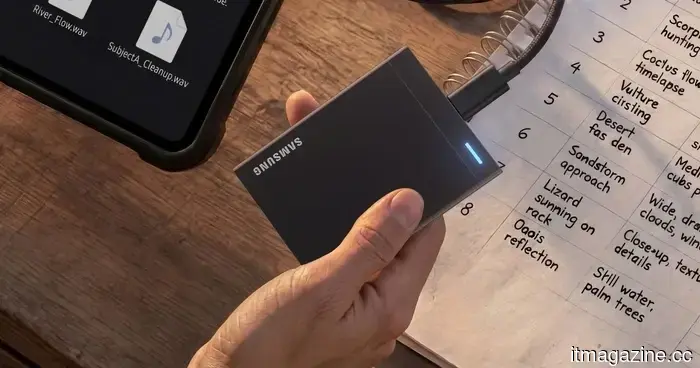 Samsung's latest SSD may render waiting for file transfers obsolete.
At Gamescom 2026, Samsung introduced the P9 and P7 portable SSDs, with the P9 becoming the first 8TB USB4 drive in the world, reaching speeds of 4,000MB/s.
Samsung's latest SSD may render waiting for file transfers obsolete.
At Gamescom 2026, Samsung introduced the P9 and P7 portable SSDs, with the P9 becoming the first 8TB USB4 drive in the world, reaching speeds of 4,000MB/s.
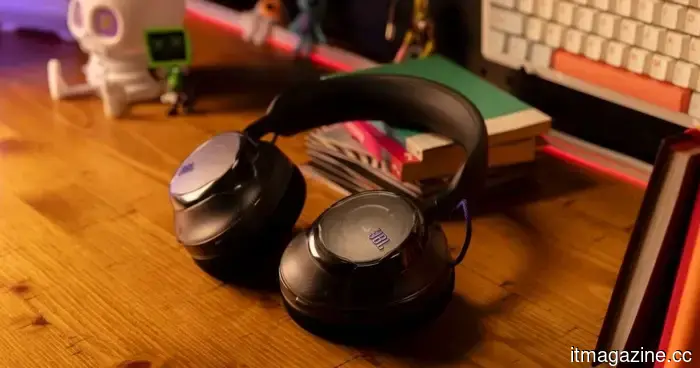 JBL's refreshed Quantum gaming headsets maintain their impact, even at a lower price point.
JBL's latest $50 Quantum 120 features the same 50mm carbon drivers, Spatial Sound, Hi-Res support, and detachable boom microphone as the $130 wireless Quantum 520X.
JBL's refreshed Quantum gaming headsets maintain their impact, even at a lower price point.
JBL's latest $50 Quantum 120 features the same 50mm carbon drivers, Spatial Sound, Hi-Res support, and detachable boom microphone as the $130 wireless Quantum 520X.
 PayRewards debuts in the U.S. with $28 million in funding and a 1.75% fee for accumulating points.
The Australian company that operates Pay.com.au has debuted in the United States with $28 million, imposing a fee of 1.75% or 3.25% on businesses to accumulate points on their bill payments.
PayRewards debuts in the U.S. with $28 million in funding and a 1.75% fee for accumulating points.
The Australian company that operates Pay.com.au has debuted in the United States with $28 million, imposing a fee of 1.75% or 3.25% on businesses to accumulate points on their bill payments.
Nitter has gone offline after seven years, following the receipt of cease-and-desist letters.
X Corp requested a permanent removal of Nitter and its repository. The open-source X reader and XCancel have both been taken offline after seven years.