

PayRewards debuts in the U.S. with $28 million in funding and a 1.75% fee for accumulating points.
Credit: PayRewards
An Australian payments firm believes that American small businesses will be willing to pay for the opportunity to earn points. PayRewards, the US division of Pay.com.au, has launched with $28 million in funding, offering a chance to earn rewards on bank transfers that currently yield no benefits.
The parent company is not engaging in speculation; Pay.com.au reports processing over $7 billion in transactions in the past year for more than 30,000 customers, maintaining a 100% year-on-year growth since its establishment in 2019.
CEO Blake Hutchison describes the situation as a matter of fairness, stating, “Large companies negotiate their way into rewards, while small businesses receive an invoice with a due date."
The pricing structure is notably straightforward, with no monthly platform fee. For bank transfers, businesses can pay 1.75% to earn one point per dollar or 3.25% to earn two points.
The company assesses its points to be worth between one to two cents each. When taken together, the margin is slim; generating points at the lower tier costs 1.75 cents for something valued by the company at one to two cents, meaning the whole model relies on redeeming at the upper value.
The card option is significantly more expensive, with a 2.9% processing fee for payments to vendors who don't accept cards, and incorporating the points system raises the total cost to a range of 4.65% to 6.15%.
This increase buys businesses time and enables stacking. They can retain the float on their cards, benefit from their own card rewards, and earn PayRewards points in addition, a process referred to by the company as the Double Dip.
In Europe, the equivalent sector focuses on selling software rather than points. Berlin's Moss reached unicorn status through spend management services based on subscriptions instead of taking a percentage from every transaction.
Part of this difference can be attributed to regulation; EU rules set caps on consumer card interchange fees at 0.2% for debit and 0.3% for credit, and payment services legislation prevents surcharging on those cards, leaving minimal space for rewards arbitrage.
The question that business owners must consider is primarily mathematical rather than emotional. Germany gave rise to Moss, while Denmark produced one of its competitors, illustrating that European firms generally prefer to keep the 1.75%.
Other articles
 The leaked renders of the Galaxy S27 reveal that Samsung is taking an extremely cautious approach.
The Galaxy S27 might appear nearly identical, but Samsung might be concealing its most significant enhancements in the areas that truly count.
The leaked renders of the Galaxy S27 reveal that Samsung is taking an extremely cautious approach.
The Galaxy S27 might appear nearly identical, but Samsung might be concealing its most significant enhancements in the areas that truly count.
 AOC might surpass Acer in launching the first 5K G-SYNC Pulsar monitor.
AOC has introduced the AGP327KG, a 31.5-inch gaming monitor featuring a 5K resolution, a 144Hz refresh rate, and support for Nvidia G-SYNC Pulsar.
AOC might surpass Acer in launching the first 5K G-SYNC Pulsar monitor.
AOC has introduced the AGP327KG, a 31.5-inch gaming monitor featuring a 5K resolution, a 144Hz refresh rate, and support for Nvidia G-SYNC Pulsar.
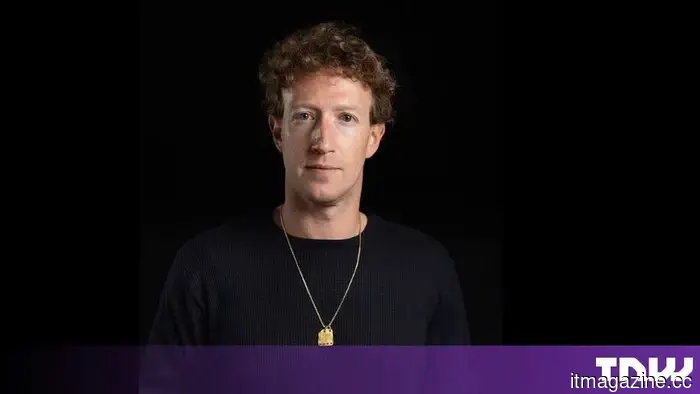 Meta is set to pay as much as $16.68 billion to resolve the youth safety lawsuit involving 29 states.
According to court documents, Meta is set to pay a maximum of $16.68 billion while implementing daily limits and nighttime restrictions for teenagers.
Meta is set to pay as much as $16.68 billion to resolve the youth safety lawsuit involving 29 states.
According to court documents, Meta is set to pay a maximum of $16.68 billion while implementing daily limits and nighttime restrictions for teenagers.
 Amazon is shutting down Mechanical Turk, the human labor service it marketed as artificial intelligence.
Amazon will shut down Mechanical Turk on September 30. A study conducted in 2023 revealed that as many as 46% of its workers were already utilizing AI to complete the tasks.
Amazon is shutting down Mechanical Turk, the human labor service it marketed as artificial intelligence.
Amazon will shut down Mechanical Turk on September 30. A study conducted in 2023 revealed that as many as 46% of its workers were already utilizing AI to complete the tasks.
 EXCLUSIVE: The director of The Whisper Man and the author discuss the creation of Netflix's unsettling thriller featuring Robert De Niro and Adam Scott.
Director James Ashcroft and author Alex North talk about creating Netflix’s dark crime thriller, collaborating with Robert De Niro and Adam Scott, and the film’s father-son narrative.
EXCLUSIVE: The director of The Whisper Man and the author discuss the creation of Netflix's unsettling thriller featuring Robert De Niro and Adam Scott.
Director James Ashcroft and author Alex North talk about creating Netflix’s dark crime thriller, collaborating with Robert De Niro and Adam Scott, and the film’s father-son narrative.
 Anthropic secures a $45 billion computing agreement with Britain's Nscale.
Anthropic has consented to invest $45 billion over a six-year period to lease AI capacity from Nscale's campus in West Virginia, just weeks prior to the London company's listing in New York.
Anthropic secures a $45 billion computing agreement with Britain's Nscale.
Anthropic has consented to invest $45 billion over a six-year period to lease AI capacity from Nscale's campus in West Virginia, just weeks prior to the London company's listing in New York.
PayRewards debuts in the U.S. with $28 million in funding and a 1.75% fee for accumulating points.
The Australian company that operates Pay.com.au has debuted in the United States with $28 million, imposing a fee of 1.75% or 3.25% on businesses to accumulate points on their bill payments.