
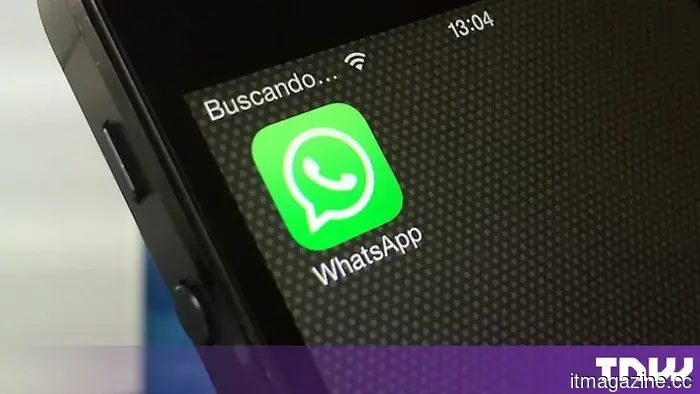
WhatsApp is substituting its six-digit security PIN with a genuine password.
WhatsApp is transitioning from the six-digit PIN previously used for two-step verification to a complete alphanumeric password, with over a billion users having already set up a passkey. Additionally, Android users will receive more information about calls from numbers not saved in their contacts.
Quietly, WhatsApp has established itself as the largest passwordless implementation globally. While announcing a series of account security updates, the company highlighted that more than a billion users have created a passkey.
This number highlights the extent of the shift more than the accompanying features. No other consumer service has successfully transitioned as many individuals from codes to device-based authentication.
A passkey replaces the code by using the phone itself. Instead of receiving a one-time password via SMS, users can confirm their identity using a fingerprint, facial recognition, or the screen lock that already secures their device.
The initial change is minor yet overdue. WhatsApp will replace the six-digit PIN for two-step verification with a complete password that can include letters, numbers, and special characters.
Six digits were never a substantial barrier. It allows for a million combinations, which only poses a significant challenge if attempts are limited in frequency. This is now being replaced with a method that users can strengthen effectively.
A solution has been introduced for those with two phones. Users can now store multiple passkeys for their accounts, including distinct ones for Android and iOS, under Settings, Account, Passkeys.
The third change addresses scams and is currently limited to Android. Calls from numbers not in your contacts will provide additional context, such as whether the number is international or if you share any groups.
The geographical aspect adds a European dimension. WhatsApp is the default messaging app in many parts of the continent, which is also where Meta has had to comply with the Digital Markets Act.
This compliance is the less-discussed aspect. WhatsApp now supports third-party chats in Europe, and Meta has granted access to rival services under the conditions set by Brussels.
However, the issue of account security does not seamlessly integrate with this development. A passkey safeguards your WhatsApp account but does not protect the accounts of those messaging you from different services, and there has been no clear explanation as to how security assurances align, including within Meta’s own interoperability framework.
In the meantime, Europe is crafting its own solution for identity verification, which involves a state-issued digital wallet that member countries are required to provide. This situation presents two methods of identity verification; one comes via a product update, while the other is a regulatory development.
Other articles
 Apple hosted a farewell party for Tim Cook a week before Ternus assumes leadership.
Apple organized a farewell gathering for Tim Cook prior to his transition to John Ternus. As reported by The Information, he spoke about a partner named Mike.
Apple hosted a farewell party for Tim Cook a week before Ternus assumes leadership.
Apple organized a farewell gathering for Tim Cook prior to his transition to John Ternus. As reported by The Information, he spoke about a partner named Mike.
 The Galaxy S27 Ultra from Samsung might be undergoing a redesign, beginning with its large camera protrusion.
Leaked renders of the Galaxy S27 Ultra indicate that Samsung may be working on a revamped camera module, a bigger battery, and possibly substantial alterations within the recognizable Ultra design.
The Galaxy S27 Ultra from Samsung might be undergoing a redesign, beginning with its large camera protrusion.
Leaked renders of the Galaxy S27 Ultra indicate that Samsung may be working on a revamped camera module, a bigger battery, and possibly substantial alterations within the recognizable Ultra design.
 OpenAI has confirmed that its head of data centers has departed as the company shifts its focus to leasing.
OpenAI has confirmed that Chris Malone, the head of its data centers, has departed. The WSJ reports that others are now taking charge of a renewed leasing initiative.
OpenAI has confirmed that its head of data centers has departed as the company shifts its focus to leasing.
OpenAI has confirmed that Chris Malone, the head of its data centers, has departed. The WSJ reports that others are now taking charge of a renewed leasing initiative.
 Apple held a farewell party for Tim Cook a week prior to Ternus assuming control.
Apple organized a farewell party for Tim Cook ahead of his transition to John Ternus. As reported by The Information, he spoke about a partner named Mike.
Apple held a farewell party for Tim Cook a week prior to Ternus assuming control.
Apple organized a farewell party for Tim Cook ahead of his transition to John Ternus. As reported by The Information, he spoke about a partner named Mike.
 Meta declined to enable a teen safety feature by default, the jury was informed.
A former data scientist from Meta informed an Oakland jury that a suggestion to set Instagram's break reminder as the default option was declined due to fundamental metrics.
Meta declined to enable a teen safety feature by default, the jury was informed.
A former data scientist from Meta informed an Oakland jury that a suggestion to set Instagram's break reminder as the default option was declined due to fundamental metrics.
 SpaceX aims to construct a $100 billion spaceport designed for thousands of launches annually.
SpaceX plans to invest as much as $100 billion in a Louisiana spaceport designed to handle thousands of launches each year, compared to the Ariane 6, which has a maximum capacity of nine to ten launches annually.
SpaceX aims to construct a $100 billion spaceport designed for thousands of launches annually.
SpaceX plans to invest as much as $100 billion in a Louisiana spaceport designed to handle thousands of launches each year, compared to the Ariane 6, which has a maximum capacity of nine to ten launches annually.
WhatsApp is substituting its six-digit security PIN with a genuine password.
WhatsApp is substituting its six-digit verification PIN with a complete password, and claims that over a billion users have already set up a passkey.