
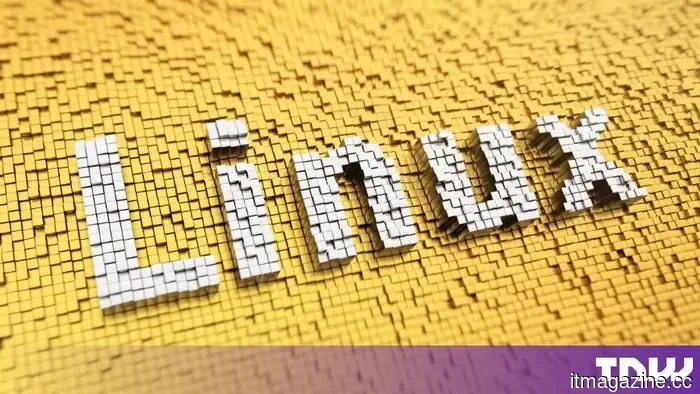
The 28-year dispute regarding the ownership of Linux is approaching its conclusion.
A US appeals court has dismissed the final active claim in the protracted battle over Linux ownership. Simon Sharwood reported this decision for The Register on Sunday.
The conflict dates back to 1998, and the company still pursuing it, Xinuos, has only one last unlikely option remaining.
What the court decided:
On August 10, the US Court of Appeals for the Second Circuit upheld the earlier ruling made by a lower court. Judges Guido Calabresi, Steven Menashi, and Sarah Merriam signed the summary order. This order confirms the judgment from the Southern District of New York, stating that Xinuos's remaining arguments are “without merit.” A summary order does not set any legal precedent.
What IBM does not dispute:
The order is notably clear about what is not disputed. IBM acknowledges that Xinuos owns the copyrighted code and does not contest that it used that code from Project Monterey in its own products, which it continues to develop and sell.
What IBM has contended throughout years of litigation is that it had the authorization to do so.
Why the claim failed:
The issue hinged on timing instead of merit; the key question was when the claim arose. A plaintiff has three years to file a copyright infringement claim from the date of any infringing act. An ownership claim can arise once, at the point when a diligent plaintiff should have been aware of it.
The court determined this claim arose once. IBM did not contest using the code, so the disagreement “does not involve the nature, extent or scope of copying,” as stated in the order. Instead, it revolves around whether IBM had the legal right.
“The contested action, IBM's appropriation of the code in 2001, was a singular event.” Even with the Copyright Act's three-year timeline and determining Xinuos's awareness from 2011, a claim filed in 2021 is considered too late.
The appeals court sided with Xinuos on one point:
The district court viewed the claim as an ownership issue, a stance the Second Circuit disagreed with. Both parties framed the argument as concerning IBM’s rights to use the code rather than ownership of the code, indicating a licensing dispute rather than an ownership dispute. It referenced a 2007 ruling that stated a non-exclusive license does not bestow ownership rights. However, it affirmed the dismissal nonetheless, because the accrual analysis led to the same conclusion.
Where this started:
In 1998, IBM and The Santa Cruz Operation initiated a joint venture called Project Monterey, with the goal of creating UNIX-based operating systems compatible with Intel's upcoming IA-64 processor and IBM's Power architecture. Intel and Sequent also joined the effort.
The work was governed by a Joint Development Agreement, under which each party granted licenses for their code to the other. Section 22.3 allowed them two years from any breach to file a related claim.
How it fell apart:
With the emergence of Linux, which was already running on multiple processors, IBM believed that was the future and withdrew from Project Monterey. In 2000, Santa Cruz announced it would sell a significant portion of its business to Caldera Systems, and IBM officially exited the project in 2001.
IBM was later accused of contributing Monterey code to Linux and its own AIX and Z operating systems, with Santa Cruz's successors claiming ownership of that code.
Twenty-three years in court:
Caldera filed a lawsuit against IBM in Utah in March 2003, later rebranding itself as SCO Group, and filed for bankruptcy in 2007. In January 2011, SCO Group sold nearly its entire software business to Xinuos, but the agreement excluded “any rights, claims, or causes of action related to” IBM.
A Utah district court ruled in favor of IBM in 2016. The Tenth Circuit returned the misappropriation claim for trial in 2018. SCO Group and IBM reached a settlement in August 2021 for $14.25 million, a figure The Register noted reflects years of failing to present compelling evidence.
Xinuos objected and lost:
Xinuos informed the bankruptcy court that the settlement could be interpreted to encompass its claims against IBM and Red Hat. The court dismissed this objection and approved the settlement, which covered all rights in current or future litigation claims against IBM and Red Hat.
Its own case lasted five years:
Xinuos filed against IBM and Red Hat on March 31, 2021. The parties later mutually agreed to drop the claims against Red Hat. Judge Seibel granted IBM summary judgment in a bench ruling in January 2024 and denied reconsideration in April. Final judgment was issued on April 2, 2025.
Crowell & Moring represented Xinuos on appeal, while Latham & Watkins represented IBM.
What was at stake:
Linux powers billions of devices, and Sharwood provided insight into the potential value involved. Huawei announced in June that it would charge $
Other articles
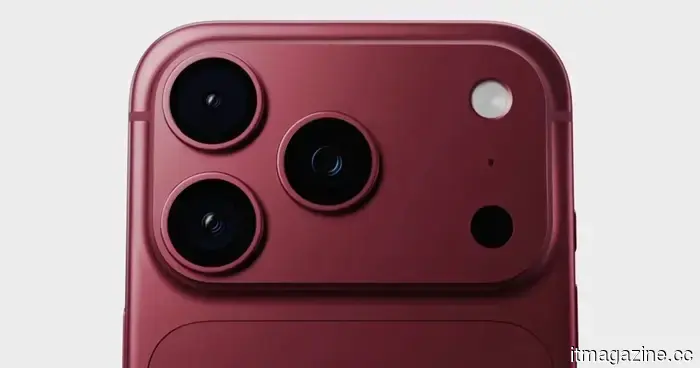 The iPhone 18 Pro might be priced at $1,199, which indicates Apple is exercising some moderation.
According to reports, Apple is expected to increase the prices of the iPhone, but the relatively small price hikes from Samsung and Google may help maintain the iPhone 18 Pro's price at approximately $1,199.
The iPhone 18 Pro might be priced at $1,199, which indicates Apple is exercising some moderation.
According to reports, Apple is expected to increase the prices of the iPhone, but the relatively small price hikes from Samsung and Google may help maintain the iPhone 18 Pro's price at approximately $1,199.
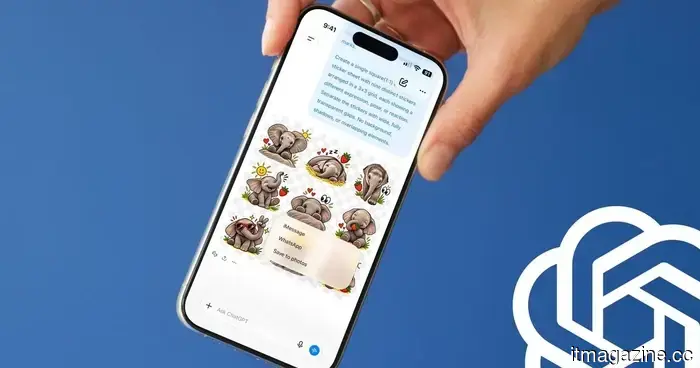 ChatGPT is now capable of transforming your photos into personalized stickers for iMessage and WhatsApp.
ChatGPT is now able to convert your photos into personalized stickers with transparent backgrounds, which can be directly sent to iMessage or WhatsApp.
ChatGPT is now capable of transforming your photos into personalized stickers for iMessage and WhatsApp.
ChatGPT is now able to convert your photos into personalized stickers with transparent backgrounds, which can be directly sent to iMessage or WhatsApp.
 Shokz OpenFit Air 2 replaces touch controls with pressure buttons to avoid unintentional taps.
Shokz introduces the OpenFit Air 2 featuring a more compact case, enhanced Bassphere audio, and pressure-sensitive controls designed to prevent unintentional taps during intense workouts.
Shokz OpenFit Air 2 replaces touch controls with pressure buttons to avoid unintentional taps.
Shokz introduces the OpenFit Air 2 featuring a more compact case, enhanced Bassphere audio, and pressure-sensitive controls designed to prevent unintentional taps during intense workouts.
 Netflix may allow you to stream Peacock and Fox One through its app.
Netflix is allegedly discussing the integration of Peacock and Fox One into its app, marking a significant shift for a company that previously hesitated to collaborate with direct competitors.
Netflix may allow you to stream Peacock and Fox One through its app.
Netflix is allegedly discussing the integration of Peacock and Fox One into its app, marking a significant shift for a company that previously hesitated to collaborate with direct competitors.
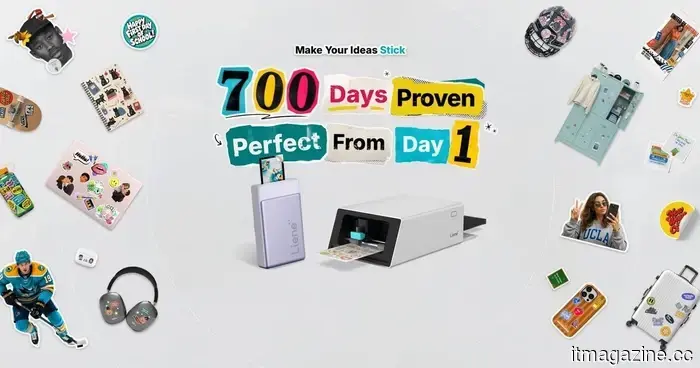 Liene Invested 700 Days Creating a Versatile Printer and Cutter for Your Creative Concepts.
Imagining creative ideas is straightforward, but transforming them into reality can be a different challenge altogether. What begins as a basic project can soon require more tools, steps, and space than anticipated. For Liene, that familiar creative tension ignited the conviction that there was potential to simplify the process.
Liene Invested 700 Days Creating a Versatile Printer and Cutter for Your Creative Concepts.
Imagining creative ideas is straightforward, but transforming them into reality can be a different challenge altogether. What begins as a basic project can soon require more tools, steps, and space than anticipated. For Liene, that familiar creative tension ignited the conviction that there was potential to simplify the process.
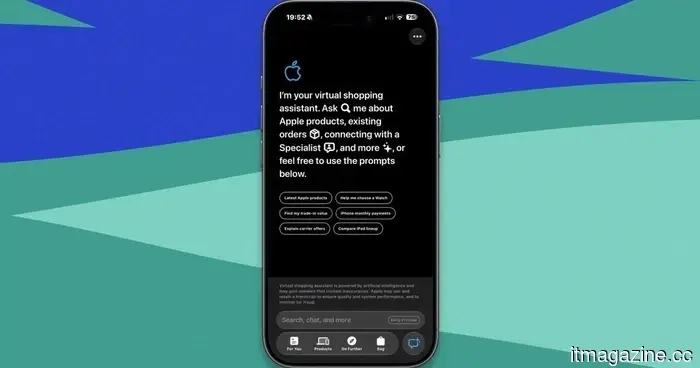 Apple's latest AI shopping assistant is capable of assisting you in selecting your next iPhone or Mac.
Apple's AI-driven virtual shopping assistant is subtly emerging in the Apple Store app for a limited number of iPhone users, enabling them to verify trade-in values, compare products, and receive assistance with purchases.
Apple's latest AI shopping assistant is capable of assisting you in selecting your next iPhone or Mac.
Apple's AI-driven virtual shopping assistant is subtly emerging in the Apple Store app for a limited number of iPhone users, enabling them to verify trade-in values, compare products, and receive assistance with purchases.
The 28-year dispute regarding the ownership of Linux is approaching its conclusion.
According to The Register, a US appeals court has upheld the dismissal of the final claim regarding the ownership of Linux. This dispute originated in 1998.