
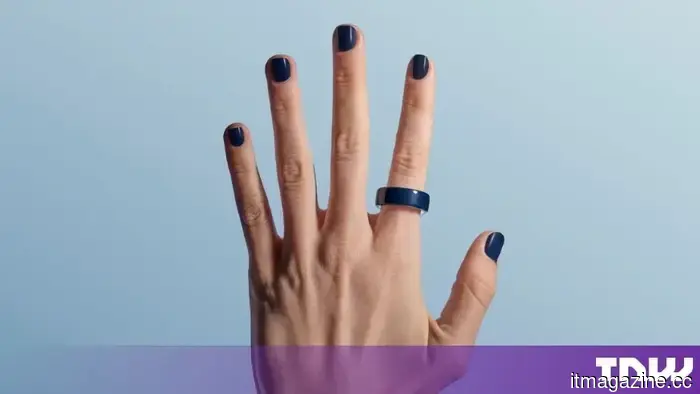
Oura is aiming for up to $3 billion in an IPO that would give it a valuation exceeding $16 billion.
Oura aims for a September listing that could raise up to $3 billion, valuing the smart ring manufacturer at over $16 billion, as reported by Bloomberg. This comes several months after the Finnish firm confidentially filed for a US IPO. This valuation marks a significant increase from the $10.9 billion it held last September, amidst a sector that has gradually gained traction against the Apple Watch for the past two years.
A considerable share of the offering is anticipated to arise from existing shareholders selling their stakes rather than from new capital influx. This detail is crucial for interpreting the listing, as a substantial secondary portion indicates that the IPO is partially a liquidity event for earlier investors rather than solely a mechanism for fundraising.
Those early investors have been well compensated. Oura secured an $875 million Series E funding round in September, with participation from Fidelity, ICONIQ, Whale Rock, and Atreides, along with previous investors such as Dexcom and Coatue.
Currently, the company employs over 900 staff across its offices in San Francisco and Finland, having expanded from a limited original customer base. Its initial clientele comprised self-quantification enthusiasts and biohacking executives, while its present focus is on sleep and recovery tracking for those merely seeking to understand their fatigue.
The sector has profited from a change in consumer interest towards specific measurements. Metrics like sleep, recovery, and readiness lend themselves well to passive continuous tracking, which is more challenging to gather from a device typically removed for charging at night.
The key argument for the product is that a ring is a wearable that individuals consistently keep on. There’s no screen to check, no notifications to dismiss, and the battery life spans days instead of hours, which is a major reason it has captured market share from wrist devices.
Oura's latest hardware advances this concept further, with the Ring 5 launching at $399 as the smallest smart ring available. This pricing, in addition to a subscription fee for the analytics, forms the basis of the valuation.
Subscription revenue distinguishes a $16 billion valuation from a hardware-based multiple, as recurring software income is valued differently than one-time sales of a titanium ring. Thus, the percentage of Oura's revenue that is recurring is the most critical metric.
Competition is emerging from both sides. Samsung’s Galaxy Ring introduces a platform owner into the mix, while Whoop, which markets a screenless band on a subscription model, has achieved a $10.1 billion valuation and has its own IPO aspirations.
Oura is also defending its market position legally, having sued competitor Ultrahuman. Patent litigation serves as a valid indication of how commoditized the hardware market is becoming, with the production of rings becoming increasingly accessible.
Regulatory positioning is another aspect to consider during the filing process. Oura has been cautious to market wellness insights instead of medical diagnoses, and the extent to which it can advance toward clinical claims without triggering regulatory scrutiny is a significant concern for a company valued at this level.
Details regarding Oura’s revenue and member numbers have not been disclosed publicly, creating a substantial gap in any evaluation of a $16 billion price point. This information will be available when the S-1 is publicly released, making it a document worth anticipating.
Manufacturing at the scale required for rings presents its own challenges, as the devices are produced in various sizes and cannot be altered post-purchase, turning size kits and returns into genuine cost factors rather than mere footnotes. Investors will be keen to understand how this issue unfolds as production volumes increase.
Finally, a European hardware firm listing in the US at this scale offers its own commentary. Oura is Finnish, retaining its manufacturing and research operations there while seeking capital from elsewhere. The company has not yet confirmed the listing, and Bloomberg’s report outlines a plan rather than a formal filing with specific terms. As September approaches, the public prospectus should resolve many pending questions.
Other articles
 Trump states that rejecting a data center is an error. Abbott disagrees.
According to Axios, Greg Abbott believes that the backlash against data centers is warranted. Trump states that communities that reject one are making an error.
Trump states that rejecting a data center is an error. Abbott disagrees.
According to Axios, Greg Abbott believes that the backlash against data centers is warranted. Trump states that communities that reject one are making an error.
 Netflix may allow you to stream Peacock and Fox One through its application.
Netflix is said to be negotiating the addition of Peacock and Fox One to its app, marking a significant shift for a company that previously hesitated to collaborate with direct competitors.
Netflix may allow you to stream Peacock and Fox One through its application.
Netflix is said to be negotiating the addition of Peacock and Fox One to its app, marking a significant shift for a company that previously hesitated to collaborate with direct competitors.
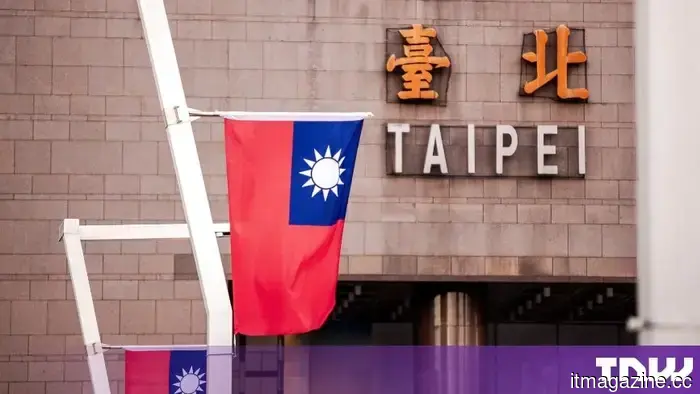 In Taiwan, nine individuals have been charged concerning the export of over 130 Nvidia B300 servers intended for China.
Prosecutors in Taiwan have accused nine individuals, including employees from Nvidia and Super Micro, of the unlawful export of B300 servers to China.
In Taiwan, nine individuals have been charged concerning the export of over 130 Nvidia B300 servers intended for China.
Prosecutors in Taiwan have accused nine individuals, including employees from Nvidia and Super Micro, of the unlawful export of B300 servers to China.
 Liner secures $36.1 million to bring its evidence-first AI search to corporate clients.
South Korean AI search startup Liner has completed a $36.1 million Series C funding round, spearheaded by LB Investment. With a user base of 14 million across 220 countries and the deployment of HUMAIN ONE for enterprises, the company is wagering that a citation-based search approach will attract corporate and government clients.
Liner secures $36.1 million to bring its evidence-first AI search to corporate clients.
South Korean AI search startup Liner has completed a $36.1 million Series C funding round, spearheaded by LB Investment. With a user base of 14 million across 220 countries and the deployment of HUMAIN ONE for enterprises, the company is wagering that a citation-based search approach will attract corporate and government clients.
 A robot capable of drawing blood could become the most significant AI health development of 2026.
The FDA has approved the first robotic system for conducting blood draws autonomously. While it may not be the most glamorous AI story of the year, it is certainly one of the most compelling.
A robot capable of drawing blood could become the most significant AI health development of 2026.
The FDA has approved the first robotic system for conducting blood draws autonomously. While it may not be the most glamorous AI story of the year, it is certainly one of the most compelling.
 MH Ventures and Mapleblock Capital jointly lead a $3 million investment in Oro to advance agentic finance.
Oro has secured $3 million to transform straightforward financial guidance into non-custodial, multi-step transactions. Boasting over 350,000 active users in 80 languages, the platform aims for agentic DeFi execution, especially given that wallet breaches resulted in losses of $444 million in the first half of 2026.
MH Ventures and Mapleblock Capital jointly lead a $3 million investment in Oro to advance agentic finance.
Oro has secured $3 million to transform straightforward financial guidance into non-custodial, multi-step transactions. Boasting over 350,000 active users in 80 languages, the platform aims for agentic DeFi execution, especially given that wallet breaches resulted in losses of $444 million in the first half of 2026.
Oura is aiming for up to $3 billion in an IPO that would give it a valuation exceeding $16 billion.
Oura is said to be aiming for an IPO in September, seeking to raise up to $3 billion with a valuation exceeding $16 billion, an increase from last September's $10.9 billion.