
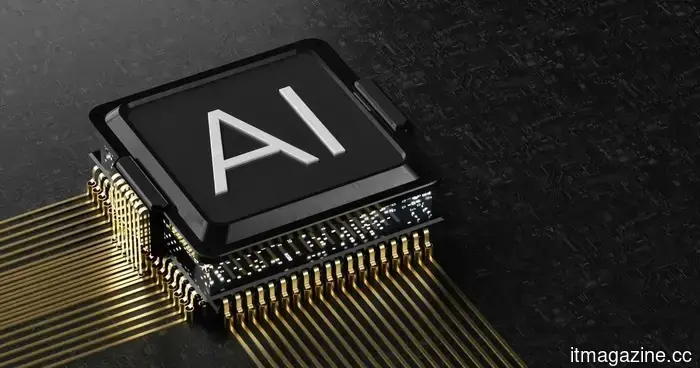
Cooling with solid-state technology may hold the key to quicker AI laptops.
Memory bandwidth is transforming AI laptops, while traditional fan-based cooling is struggling to keep up.
Your next laptop's primary limitation might not be its processor; it could depend on its cooling efficiency. A new white paper from Ventiva, in collaboration with Moor Insights and Strategy, states that thermal design is becoming a crucial factor for the performance speed of AI laptops.
The real challenge lies in memory bandwidth.
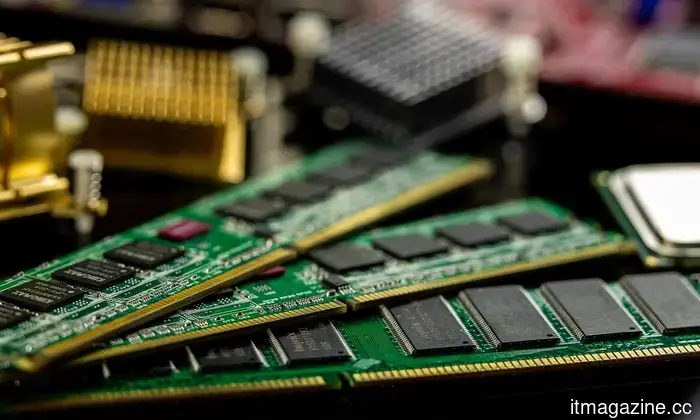
The paper outlines that local AI performance is quantified in tokens per second, predominantly determined by memory bandwidth. Currently, most laptops continue to utilize 128-bit memory buses coupled with LPDDR5 memory, which limits bandwidth to about 150 GB per second. This speed is insufficient for operating today’s more complex AI models at practical speeds, prompting chip manufacturers to address the issue.
Qualcomm has advanced its Snapdragon X2 Elite chips to 192-bit buses, while AMD and NVIDIA now provide 256-bit options in their client silicon. Apple has made the most significant stride with its M5 Max, featuring an impressive 512-bit bus capable of running comprehensive open source models like GPT-OSS 120 B entirely on the device. The report anticipates that the trend towards wider buses will intensify with the introduction of LPDDR6 memory, promising enhanced data rates and improved efficiency, with mainstream use expected by 2027 and 2028.
However, there’s a complication. Wider memory buses necessitate memory chips to be situated very close to the processor, within traces shorter than 25 millimeters—precisely the area where fans and heat pipes have typically been located in thin and lightweight laptops. Apple overcomes this by integrating memory directly onto its chip package, yet other laptop manufacturers face the same spatial challenge within a conventional chassis.
The limitations of fan cooling systems.
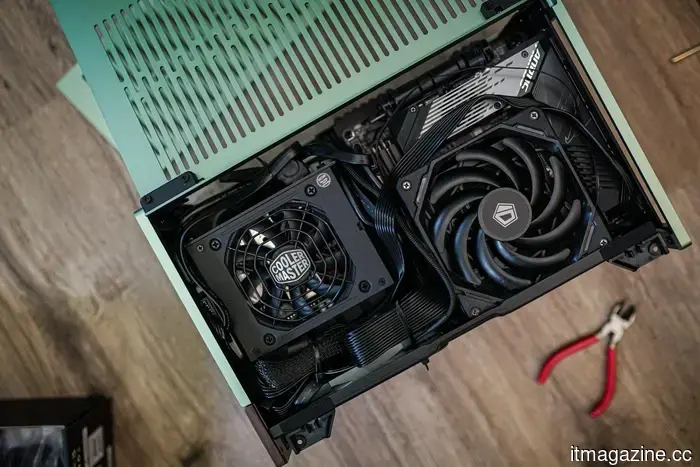
Traditional fan-based cooling solutions are unable to evolve alongside these more compact memory configurations, especially as chipmakers move towards 256-bit and wider buses. This scenario is bringing solid-state cooling to the forefront as a viable alternative. The report points out Ventiva’s ionic cooling platform, which utilizes charged particles to silently circulate air without any mechanical components.
Additionally, it cites Frore’s AirJet technology, which has recently demonstrated its effectiveness by cooling an Intel reference laptop that measures just 11.3mm in thickness, managing 15 watts of fanless cooling while remaining silent. Meanwhile, YPlasma unveiled a plasma-powered laptop cooler at CES, utilizing ionized gas instead of a rotating fan to circulate air, with a claimed operational noise level of just 17 decibels.
The paper suggests that 2027 and 2028 will mark a significant turning point when wider memory buses and LPDDR6 will become standard. If this timeline is accurate, laptop manufacturers will need to reevaluate their approach to cooling rather than treating it as an afterthought.
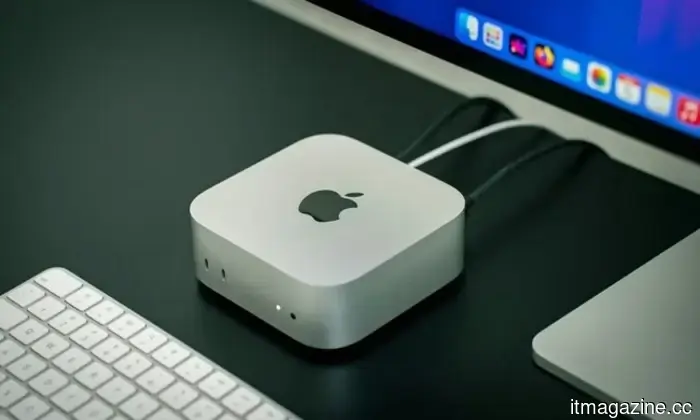
Apple's new Mac mini could be released any day now, potentially beating the iPhones to the market.
Apple is quietly preparing to update the Mac mini, and as reported by Bloomberg's Mark Gurman, it could be announced within days, possibly even before the company sends out invites for its iPhone launch event.
Why is Apple hurrying to introduce a new Mac mini?
ASUS Zenbook A14 (2026) review: The ultraportable laptop I've eagerly anticipated.
Quick take: When I first picked up the ASUS Zenbook A14, it changed my perception of the weight of a 14-inch laptop. My review unit weighs only 0.99kg, and that figure still doesn't fully prepare you for how light it feels in hand. This isn't my first experience with such a lightweight laptop, but the sensation remains refreshing.
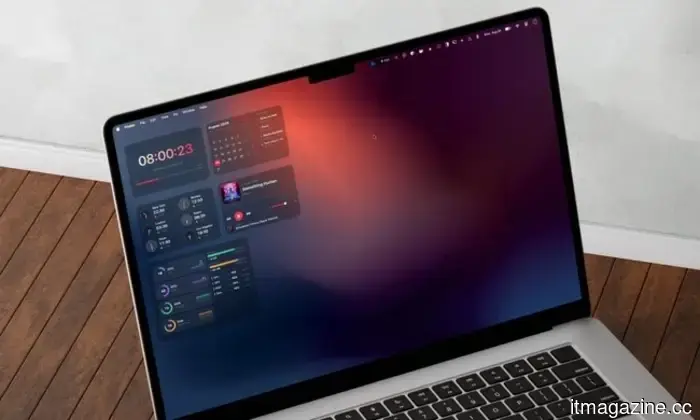
I wasn't initially interested in Mac desktop widgets until I found this app.
Apple's desktop experience just got a significant upgrade.
Apple introduced desktop widgets to Macs with macOS Sonoma in 2023. I remember placing a few on my desktop on the first day and quickly removing them a few minutes later because the default widgets didn't suit my Mac usage style. Their appearance felt off, and honestly, there weren't enough options to make them worthwhile.
Since then, I've been looking for something that provides the same options for Mac as widget apps like Widgetsmith did for the iPhone. I wanted a wider variety, and above all, I sought widgets that genuinely appeared to belong on a Mac desktop rather than feeling like an afterthought.


Other articles
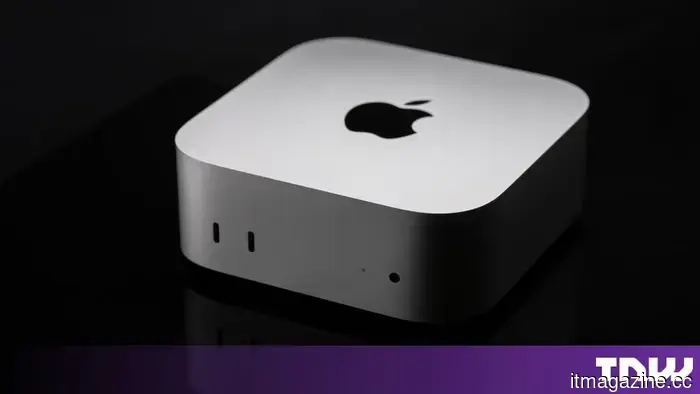 Apple has prepared a Mac mini, which could potentially be Tim Cook's final product.
According to Bloomberg, Apple is set to launch a new Mac mini in just a few days, AirPods 5 in September, and an OLED iPad mini in October.
Apple has prepared a Mac mini, which could potentially be Tim Cook's final product.
According to Bloomberg, Apple is set to launch a new Mac mini in just a few days, AirPods 5 in September, and an OLED iPad mini in October.
 Netflix may allow you to stream Peacock and Fox One through its application.
Netflix is said to be in discussions to incorporate Peacock and Fox One into its app, marking a significant shift for a company that previously opposed collaborating with direct competitors.
Netflix may allow you to stream Peacock and Fox One through its application.
Netflix is said to be in discussions to incorporate Peacock and Fox One into its app, marking a significant shift for a company that previously opposed collaborating with direct competitors.
 Your ESPN charges are set to increase, and the bundles for Disney+ and Hulu are also at risk.
Starting September 17th, ESPN Select will increase to $13.99 per month, while Unlimited will rise to $31.99, along with several Disney Plus and Hulu bundles also experiencing price hikes.
Your ESPN charges are set to increase, and the bundles for Disney+ and Hulu are also at risk.
Starting September 17th, ESPN Select will increase to $13.99 per month, while Unlimited will rise to $31.99, along with several Disney Plus and Hulu bundles also experiencing price hikes.
 Sam Altman indicates that AI has yet to experience its transformative moment akin to that of the iPhone.
Sam Altman states that the industry has been overly optimistic regarding AI timelines, as the economy has much more inertia than he had anticipated.
Sam Altman indicates that AI has yet to experience its transformative moment akin to that of the iPhone.
Sam Altman states that the industry has been overly optimistic regarding AI timelines, as the economy has much more inertia than he had anticipated.
 LYNOOK transforms AI companions from individual conversations into collective, memory-filled experiences.
While many AI companion products continue to focus on keeping users engaged through basic one-on-one chat interactions, LYNOOK Technology is adopting a completely different approach.
LYNOOK transforms AI companions from individual conversations into collective, memory-filled experiences.
While many AI companion products continue to focus on keeping users engaged through basic one-on-one chat interactions, LYNOOK Technology is adopting a completely different approach.
 LYNOOK transforms AI companions from individual conversations into immersive, memory-filled environments.
While many AI companion products continue to focus on keeping users engaged through straightforward one-on-one chat interactions, LYNOOK Technology is adopting a completely different approach.
LYNOOK transforms AI companions from individual conversations into immersive, memory-filled environments.
While many AI companion products continue to focus on keeping users engaged through straightforward one-on-one chat interactions, LYNOOK Technology is adopting a completely different approach.
Cooling with solid-state technology may hold the key to quicker AI laptops.
Memory bandwidth, rather than processing power, is increasingly the primary limitation for AI laptops. A recent white paper examines the reasons why fan-based cooling is inadequate and how solid-state cooling might take its place.