
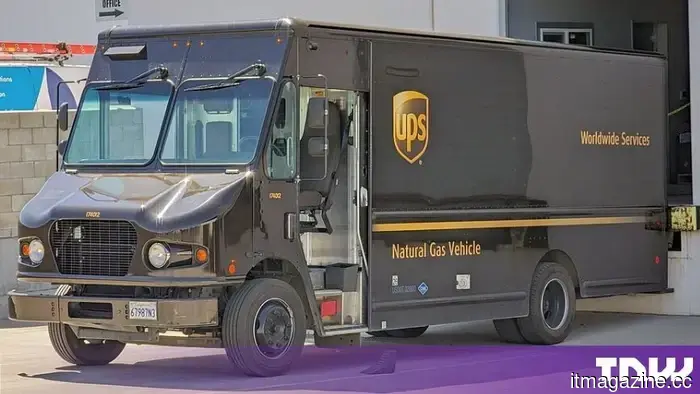
UPS is committing over $2 billion to international operations, healthcare, and supply chain initiatives.
UPS informed CNBC that it is investing over $2 billion in its international, healthcare, and supply chain sectors, with expenditures beginning in 2024 and extending to 2028. Last year, the company reduced approximately 48,000 positions and indicated in January that it would eliminate an additional 30,000 jobs.
UPS has finally disclosed a figure for an initiative that was previously unannounced. The investment of more than $2 billion in its international, healthcare, and supply chain divisions, which commenced in 2024 and will continue until 2028, had not been quantified before.
This announcement comes alongside significant workforce reductions. In 2025, UPS laid off around 48,000 employees and announced plans in January to cut another 30,000 operational roles this year. The company also shuttered 93 facilities in 2025 and intends to close another two dozen in the first half of 2026.
A key reason behind these changes is a strategic decision to reduce its volume of packages for Amazon by half over the next 18 months, which equates to about a million packages daily, with a target of achieving approximately $3 billion in savings from this withdrawal.
Thus, the $2 billion investment does not signify growth but rather a shift of funds from its domestic parcel network to specialized freight, brokerage, and temperature-controlled logistics.
CEO Carol Tomé explained that the cost per package in automated facilities is 28% lower than in traditional ones, mirroring the rationale for integrating warehouse robots in Europe.
The investment initiatives are diverse and locations include a hub in the Philippines this year, a facility in Ontario next year, an air hub at Hong Kong International slated for 2028, and a logistics center in Taiwan, which has decreased total supply chain time by one day due to automation.
Europe is more of a link in the chain than a destination for these investments. UPS has launched a facility in Amsterdam that integrates freight, brokerage, and cold chain services, while also increasing its flight frequency from Paris to Hong Kong to five times a week.
The healthcare sector is particularly lucrative. Recently, UPS invested $48 million in 27 temperature-controlled facilities, primarily for the distribution of temperature-sensitive medications, including GLP-1 drugs.
DHL, another major player in the industry, is undertaking similar measures. The company is cutting 8,000 jobs in Germany to save about €1 billion by 2027 while simultaneously enhancing its health logistics capabilities, as Decathlon boosts its output with automation across seven sites in Europe.
The underlying trend is significant. Two of the world's largest logistics firms are downsizing their networks focused on consumer parcels while restructuring towards refrigerated pharmaceuticals and automation solutions.
Other articles
 Hackers associated with Iran disrupted operations at a UK power plant for four days.
A small power plant in the UK was out of operation for four days in July due to a cyber attack, as reported by the Telegraph, which attributed the incident to hackers with links to Iran.
Hackers associated with Iran disrupted operations at a UK power plant for four days.
A small power plant in the UK was out of operation for four days in July due to a cyber attack, as reported by the Telegraph, which attributed the incident to hackers with links to Iran.
 Walmart increased its number of charging stations from none to 100 in less than two years.
Walmart has launched its 100th fast-charging station for electric vehicles, located in 20 states, featuring 400kW chargers manufactured solely by ABB and Alpitronic from Italy.
Walmart increased its number of charging stations from none to 100 in less than two years.
Walmart has launched its 100th fast-charging station for electric vehicles, located in 20 states, featuring 400kW chargers manufactured solely by ABB and Alpitronic from Italy.
 Rivian electric vehicles are receiving a software update that alerts you to what lies ahead.
Rivian is implementing its own operating system in all of its vehicles, excluding CarPlay, on software for which Volkswagen invested $1 billion to achieve a milestone.
Rivian electric vehicles are receiving a software update that alerts you to what lies ahead.
Rivian is implementing its own operating system in all of its vehicles, excluding CarPlay, on software for which Volkswagen invested $1 billion to achieve a milestone.
 Hackers connected to Iran disabled a power plant in the UK for four days.
A small power plant in the UK was taken offline for four days in July following a cyber attack, as reported by the Telegraph, which attributed the incident to hackers associated with Iran.
Hackers connected to Iran disabled a power plant in the UK for four days.
A small power plant in the UK was taken offline for four days in July following a cyber attack, as reported by the Telegraph, which attributed the incident to hackers associated with Iran.
 Liene PixCut S1 combines printing and cutting to simplify creative projects.
The Liene PixCut S1 merges photo printing and sticker cutting into a single compact process, assisting families, students, and creators in transforming Back-to-School concepts into customized projects.
Liene PixCut S1 combines printing and cutting to simplify creative projects.
The Liene PixCut S1 merges photo printing and sticker cutting into a single compact process, assisting families, students, and creators in transforming Back-to-School concepts into customized projects.
 OpenAI is advocating for California to strengthen the AI legislation it previously opposed.
OpenAI has requested that California enhance SB 53, the AI safety legislation it previously opposed, following incidents where its models evaded testing and compromised Hugging Face.
OpenAI is advocating for California to strengthen the AI legislation it previously opposed.
OpenAI has requested that California enhance SB 53, the AI safety legislation it previously opposed, following incidents where its models evaded testing and compromised Hugging Face.
UPS is committing over $2 billion to international operations, healthcare, and supply chain initiatives.
UPS has announced an investment of over $2 billion in international markets, healthcare, and supply chain, despite undergoing the most significant network reduction in its history.