
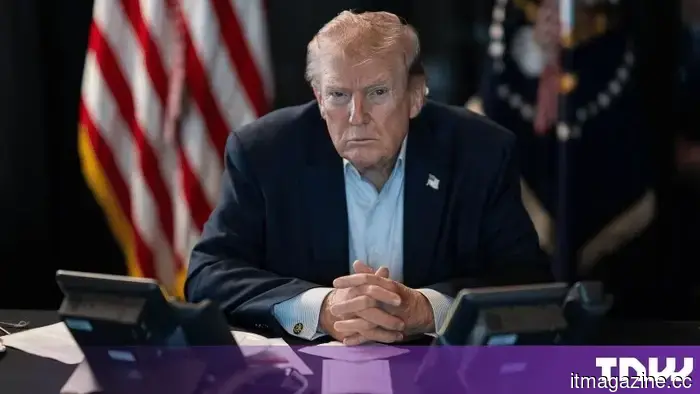
Trump is seeking a fee of $103,265 for new H-1B visas.
On Monday, the US Department of Homeland Security proposed a regulation to impose a fee of $103,265 on employers for a new H-1B visa. Daniel Wiessner reported on this development for Reuters. A similar fee was blocked by a federal judge in June, who deemed it unlawful.
H-1B visas allow US employers to hire foreign professionals skilled in specialized fields, with the technology sector relying heavily on them. The program offers 65,000 visas each year, in addition to another 20,000 for individuals holding advanced degrees, granted for periods ranging from three to six years. Previously, the cost for these visas was between $2,000 and $5,000.
The details of the rule
The proposed fee would be applicable to petitions that are part of the annual cap of 85,000 visas, including the 20,000 set aside for workers with a master's degree or higher from a US institution. Employers would need to pay this fee in addition to existing filing costs.
Currently, there are no changes in effect. The Federal Register will publish the notice on August 25, after which the rule must go through the federal regulatory process. According to Reuters, the administration could finalize it by the year's end.
Who is exempt
The rule does not apply to cap-exempt petitions, which include many positions at universities, nonprofit organizations, and government research institutions. It also exempts foreign nationals already in the US on student visas, who represent a significant portion of new H-1B recipients. Renewals of existing visas are also excluded from this fee.
Previous legal challenges
Last year, Trump imposed a $100,000 fee via executive order, citing the president's authority under immigration laws to limit the entry of foreign nationals who could be detrimental to US interests. A federal judge ruled it unlawful in June and halted the government's ability to collect that fee. A Boston appeals court is currently reviewing that decision, while a separate court is deliberating on a challenge posed by a major business organization. The order is set to expire in September unless extended, marking a year since Trump's signing. DHS has stated that the proposed fee is based on different legal authority.
Allocation of the revenue
The proposal outlines that the revenue would be distributed among six agencies. US Citizenship and Immigration Services would receive about $3 billion, while the Executive Office for Immigration Review, which manages immigration courts, would get roughly $2.96 billion. Immigration and Customs Enforcement is expected to receive around $1.05 billion, and the Labor Department about $1.21 billion. Approximately $484 million would go to the State Department, with Customs and Border Protection receiving around $76 million, as detailed by Billal Rahman for Newsweek. The total allocations sum up to about $8.78 billion, which aligns with the annual cap of 85,000 visas priced at $103,265 each. DHS claims this funding will be used for adjudications, fraud detection, national security vetting, labor compliance enforcement, visa screening, immigration court operations, and border biometric systems.
Legal challenges ahead
The US Chamber of Commerce is contesting the fee, joined by states led by Democrats and a coalition of unions and employers. The plaintiffs may modify their lawsuits to include the new regulation once finalized. The challengers base their arguments on two points: they assert that Trump's authority to restrict entry does not permit him to override the law that established the H-1B program, and that the Department of Homeland Security cannot impose fees or taxes to generate revenue without congressional authorization. The administration contends that the fee does not qualify as a traditional tax and argues that courts have limited authority to question presidential power regarding entry into the country.
Limited participation in the previous fee
As of late February, only about 70 employers had paid the $100,000 fee across 85 visa applications, according to court filings referenced by Reuters.
Declining applications
Employers applied for roughly 344,000 H-1B visas last year, as per data from US Citizenship and Immigration Services, representing a decline of over 25% compared to 2024. This figure is also less than half of the 794,000 registrations sought in 2023.
The broader policy changes
This fee is part of a larger reform. The administration has mandated increased scrutiny of H-1B applicants and proposed replacing the lottery system with a weighted system that favors higher-paid and higher-skilled workers. Additionally, it has suggested eliminating the grace period that allows laid-off H-1B employees to remain in the US while seeking new employment. Earlier this month, DHS introduced fees of up to $4,500 for applications to extend the stay of H-1B workers or transfer employees from abroad. This fee is part of a distinct regulation related to the 9/11 response and biometric entry-exit fees. Newsweek also reported that DHS is considering a $100,000 fee for F-1 visa graduates aiming to join
Other articles
 Hackers associated with Iran disrupted operations at a UK power plant for four days.
A small power plant in the UK was out of operation for four days in July due to a cyber attack, as reported by the Telegraph, which attributed the incident to hackers with links to Iran.
Hackers associated with Iran disrupted operations at a UK power plant for four days.
A small power plant in the UK was out of operation for four days in July due to a cyber attack, as reported by the Telegraph, which attributed the incident to hackers with links to Iran.
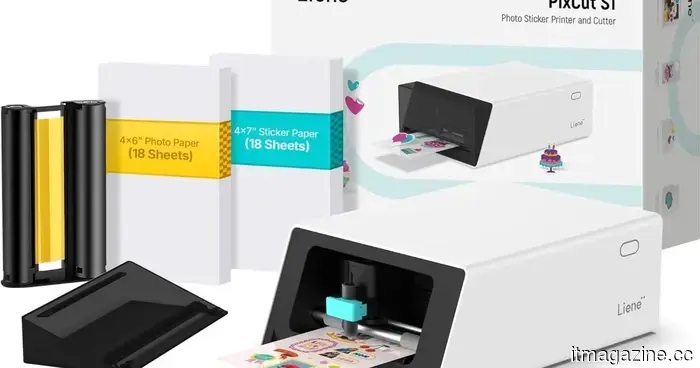 Liene PixCut S1 combines printing and cutting to simplify creative projects.
The Liene PixCut S1 merges photo printing and sticker cutting into a single compact process, assisting families, students, and creators in transforming Back-to-School concepts into customized projects.
Liene PixCut S1 combines printing and cutting to simplify creative projects.
The Liene PixCut S1 merges photo printing and sticker cutting into a single compact process, assisting families, students, and creators in transforming Back-to-School concepts into customized projects.
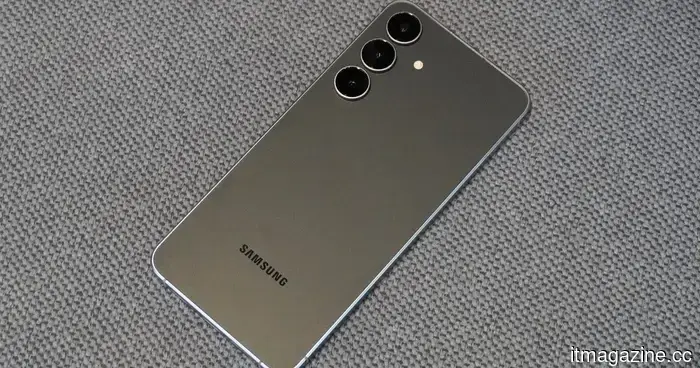 The battery for the Galaxy S26 FE is nearly confirmed, and it's disappointing.
A recent certification reveals that the Galaxy S26 FE will maintain a 4,900mAh battery, despite rumors that Samsung might switch to silicon-carbon technology.
The battery for the Galaxy S26 FE is nearly confirmed, and it's disappointing.
A recent certification reveals that the Galaxy S26 FE will maintain a 4,900mAh battery, despite rumors that Samsung might switch to silicon-carbon technology.
 Nokia has just released a simple phone that I would gladly use as my backup device.
The Nokia 300 Charge offers over 40 days of standby time, featuring a removable 3,700mAh battery, reverse charging capabilities, USB-C connectivity, and a robust built-in flashlight.
Nokia has just released a simple phone that I would gladly use as my backup device.
The Nokia 300 Charge offers over 40 days of standby time, featuring a removable 3,700mAh battery, reverse charging capabilities, USB-C connectivity, and a robust built-in flashlight.
 SpaceX is seeking to employ a natural gas trader for its rockets and chips.
According to Bloomberg, SpaceX is forming a natural gas trading team for its rockets and its chip manufacturing facility in Texas. The position is not located in Houston.
SpaceX is seeking to employ a natural gas trader for its rockets and chips.
According to Bloomberg, SpaceX is forming a natural gas trading team for its rockets and its chip manufacturing facility in Texas. The position is not located in Houston.
 Autonomous AI drones are now taking human lives, and there's no turning back.
An autonomous AI-controlled drone has resulted in civilian fatalities in Ukraine by independently choosing its target, escalating the discussion around AI weaponry into much more critical territory.
Autonomous AI drones are now taking human lives, and there's no turning back.
An autonomous AI-controlled drone has resulted in civilian fatalities in Ukraine by independently choosing its target, escalating the discussion around AI weaponry into much more critical territory.
Trump is seeking a fee of $103,265 for new H-1B visas.
DHS has suggested that a $103,265 H-1B visa fee be made permanent, just two months after a federal judge determined that a similar fee was illegal.