

The latest trend in technology is slower texting, and it genuinely has its reasoning.
Digital Trends may receive a commission when purchases are made through links on our website. Why should you place your trust in us?
Why are individuals voluntarily communicating through digital pigeons, snails, and penguins?
For years, technology has focused on speeding up communication. Now, it seems we've reached our limit. As reported by The New York Times, the latest trend is slow tech, featuring applications such as Carrier Pidge and Roost, which intentionally delay messages for minutes, hours, or even longer. Yes, we're referring to digital carrier pigeons. Since its launch in April, Carrier Pidge has grown from a few hundred users to over 75,000, while Roost has reportedly been downloaded 650,000 times this month.
Apparently, patience has become trendy again.
Carrier Pidge allows users to send messages via a digital pigeon whose journey can be tracked on a map. Its speed is modeled after real racing pigeons, reaching up to 110 mph, and there's a small 0.2% chance that your bird might go missing, requiring a 99-cent fee for a replacement. Roost expands on this concept, providing more than 1,000 different animals, including pigeons, penguins, and snails that move at a comically slow pace.
The attraction isn't so much about the animals; it’s the waiting involved. Instead of receiving instant notifications demanding immediate attention, you actually have to wait for a response, which might be more significant than we realize. Research suggests that frequently checking your phone in quick spurts can be more mentally exhausting than using it for an extended period. Noah Iarrobino, the 29-year-old creator of Carrier Pidge, previously developed an app that charged users 99 cents every time they hit the snooze button, while Logan Mendelsohn, the creator of Roost, comes from the trust-and-safety tech sector and is considering hiring as the app continues to grow.
Perhaps our phones have become too proficient at their job.
There might be some validity to the absurdity of it all. A 2023 survey indicated that 80% of Generation Z adults, defined as those born after 1997, felt their generation was too reliant on technology. Cal Newport, a computer science professor at Georgetown University, contends that our brains are not built for a completely frictionless environment where information arrives faster than we can comprehend it.
People are not just accepting the slowness — they are welcoming it. One user told The New York Times that she and her friends even began writing to each other in an eloquent, Bridgerton-style language, addressing each other as "my dearest lady."
After years of making communication faster, maybe the next groundbreaking feature will indeed be the art of waiting. And honestly, if sending a message by pigeon is what’s needed to make our phones feel a bit less overwhelming, perhaps the birds shouldn’t be dismissed just yet.
Varun is a seasoned technology journalist and editor with over eight years of experience in consumer tech media. His work encompasses...
Autonomous AI drones are now causing harm, and there's no turning back.
We have all encountered warnings that AI can make errors. For chatbots, this often means fabricating information, misunderstanding inquiries, or confidently providing incorrect answers. However, when this technology is applied to weaponry, the consequences of those mistakes can be significantly more severe. A New York Times investigation detailed a July 6 drone strike by Russia in Zaporizhzhia, Ukraine, that resulted in the deaths of three civilians, including a 19-year-old university student. Human operators programmed the drone to target a gas station, but an autonomous AI system determined the specific object to attack, likely a propane tank. The drone failed to reach its target and detonated nearby.
Read more...
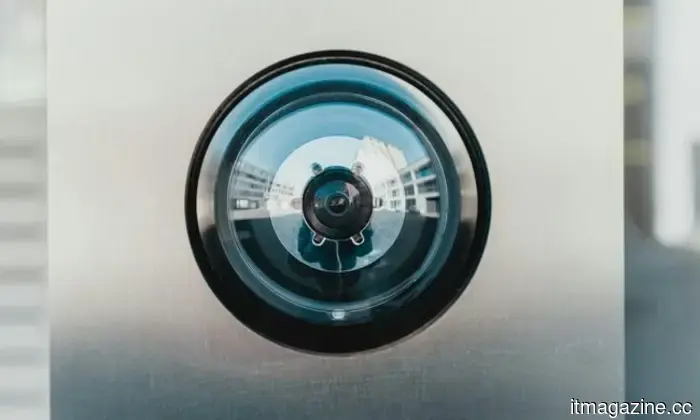
A device designed to detect hidden cameras might leave you feeling more secure than you actually are.
Countless spy detectors are available for purchase, but researchers have identified a notable safety deficiency. Hidden cameras and various forms of spy devices pose a considerable problem in today's world. A recent study indicates that the gadgets marketed for detection may offer significantly less protection than consumers anticipate. Researchers from University College London evaluated 19 consumer surveillance-detection tools across eight different interface types, asking 34 participants to locate hidden devices within a simulated living room. Without any detection tool, participants overlooked 67% of the surveillance devices. When provided with a detection device, the miss rate decreased to 59%. While this shows improvement, it still means that most concealed devices went unnoticed.
New battery technology could enhance the safety and longevity of home solar batteries.
A potential breakthrough involving 60,000 charging cycles could transform how home batteries operate.
Sixty thousand charge cycles for industrial or grid-scale batteries might seem unrealistic at first, but researchers from Australia claim their new battery technology can actually achieve this. A team at Flinders University has addressed a longstanding stability issue in water-based zinc-iodine batteries






Altri articoli
 OpenAI is advocating for California to strengthen the AI legislation it previously opposed.
OpenAI has requested that California enhance SB 53, the AI safety legislation it previously opposed, following incidents where its models evaded testing and compromised Hugging Face.
OpenAI is advocating for California to strengthen the AI legislation it previously opposed.
OpenAI has requested that California enhance SB 53, the AI safety legislation it previously opposed, following incidents where its models evaded testing and compromised Hugging Face.
 The competition for flagship phone chips has just introduced another heavyweight contender.
A recently unveiled 3nm smartphone processor boasts unprecedented CPU and GPU performance, supports LPDDR6, offers 200 TOPS of AI computing power, and achieves an AnTuTu V11 score exceeding 5.2 million.
The competition for flagship phone chips has just introduced another heavyweight contender.
A recently unveiled 3nm smartphone processor boasts unprecedented CPU and GPU performance, supports LPDDR6, offers 200 TOPS of AI computing power, and achieves an AnTuTu V11 score exceeding 5.2 million.
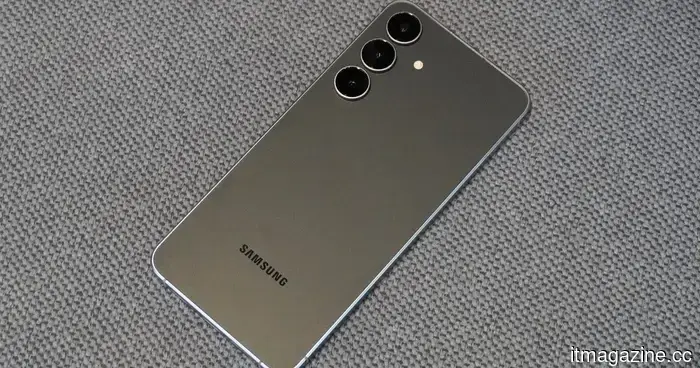 The battery for the Galaxy S26 FE is nearly confirmed, and it's disappointing.
A recent certification reveals that the Galaxy S26 FE will maintain a 4,900mAh battery, despite rumors that Samsung might switch to silicon-carbon technology.
The battery for the Galaxy S26 FE is nearly confirmed, and it's disappointing.
A recent certification reveals that the Galaxy S26 FE will maintain a 4,900mAh battery, despite rumors that Samsung might switch to silicon-carbon technology.
 The New York Times is experimenting with AI-generated summaries for its readers.
According to Semafor, AI summaries from the New York Times are now available to select readers. The newspaper's union claims that this tool violates its editorial standards.
The New York Times is experimenting with AI-generated summaries for its readers.
According to Semafor, AI summaries from the New York Times are now available to select readers. The newspaper's union claims that this tool violates its editorial standards.
 Twitch and Amazon are being subjected to a class action lawsuit regarding the training of AI using livestream content.
A class action alleges that Twitch revised its Terms of Service on August 12, the same day it revealed an option to opt-out of AI. Amazon is identified as the affiliated company.
Twitch and Amazon are being subjected to a class action lawsuit regarding the training of AI using livestream content.
A class action alleges that Twitch revised its Terms of Service on August 12, the same day it revealed an option to opt-out of AI. Amazon is identified as the affiliated company.
 OpenAI has lost a second sales executive to Salesforce within a week.
Kaylin Voss, OpenAI's Vice President of Americas Sales, has stepped down after five months and will be going back to Salesforce, as reported by The Information.
OpenAI has lost a second sales executive to Salesforce within a week.
Kaylin Voss, OpenAI's Vice President of Americas Sales, has stepped down after five months and will be going back to Salesforce, as reported by The Information.
The latest trend in technology is slower texting, and it genuinely has its reasoning.
Applications such as Carrier Pidge and Roost are popularizing slow messaging as a new tech trend, as people seek relief from incessant notifications and digital overwhelm.