

Trump signs a memorandum to facilitate regulations for three launches per day.
Last year, the United States carried out 178 orbital launches and re-entries, but the White House now aims to achieve at least a thousand annually by 2030. On Thursday, President Donald Trump signed a memorandum instructing federal agencies to facilitate reaching that number by largely stepping aside.
The memorandum directs them to accelerate the permitting process and environmental reviews, collaborate with private operators on launch infrastructure development, and ensure sufficient radio spectrum is available to accommodate the increased traffic.
The mathematics is particularly intriguing; increasing from 178 to 1,000 launches over four years equates to approximately three launches every day, every day, from a national infrastructure that currently handles about one launch every other day.
Environmental reviews are the main constraint the memorandum addresses directly. Launch sites are located along coastlines and close to protected habitats, and historically, each significant increase in launch frequency has necessitated a new assessment, a process the administration wishes to expedite.
Spectrum allocation is a less obvious but potentially more critical consideration. Each launch requires telemetry and range-safety frequencies, and at a rate of a thousand launches a year, the allocation transitions from a mere formality to a logistical challenge.
There is little doubt about which company stands to gain the most. SpaceX represents the vast majority of American launches, has invested over $15 billion in Starship, and aims to make rocketry akin to airline scheduling rather than isolated events.
However, this ambition has faced hurdles. The latest Starship V3 flight concluded with the booster exploding, merely three weeks prior to the company’s anticipated public listing, illustrating that regulatory processes are not the sole factor affecting launch frequency.
The memorandum does not seem to tackle the physical constraints involved. Launch pads, propellant infrastructure, and range capacity are limited, and expediting paperwork will not create additional launch facilities at Cape Canaveral.
Moreover, the document reportedly does not come with any funding. Instructing agencies to co-develop infrastructure alongside the private sector is a policy guideline rather than a financial commitment, meaning that these agencies will have to finance from current budgets or rely on the operators.
The rationale behind the ambitious target is based on satellite constellations. Starlink has significantly driven the increase in launch demand, but its financial viability is becoming more challenging as replacement cycles for aging satellites impact profitability.
This ambition is not without precedent; the 178 launches already represent approximately six times the American launch rate of 2013, indicating that the momentum the memo seeks to amplify has largely been generated by reusable boosters without much assistance from the government.
Setting a policy target can provide cover for agencies that might otherwise be hesitant. A regulator tasked with justifying a delay against a declared presidential objective of a thousand launches per year is in a different position compared to one applying a rule independently.
Environmental organizations have previously protested increases in launch frequency at Starbase and Cape Canaveral, and nothing in the memorandum diminishes their ability to contest particular approvals in court. The White House has yet to reveal a timeline for the expedited reviews it seeks.
The re-entry aspect of the target requires more attention. Achieving a thousand launches and re-entries annually entails a thousand controlled descents through civil airspace, each of which restricts corridors and redirects commercial flights.
Air traffic control has already been quietly absorbing these costs, and it is the part of the system with the least flexibility. The memorandum does not indicate where the extra capacity will come from.
Determining whether achieving a thousand is feasible is a different matter from whether it is a meaningful figure to pursue. It is a target that influences how agencies operate long before anyone assesses whether it was actually attained.
Other articles
 Sony's upcoming Xperia smartphone is set to be released on August 24, but it is expected to miss out on a launch in the US.
Sony has announced a new Xperia launch event scheduled for August 24, with rumors suggesting the introduction of the mid-range Xperia 10 VIII.
Sony's upcoming Xperia smartphone is set to be released on August 24, but it is expected to miss out on a launch in the US.
Sony has announced a new Xperia launch event scheduled for August 24, with rumors suggesting the introduction of the mid-range Xperia 10 VIII.
 A brand new pair of glasses priced at $399 can transform your handheld device into a 307-inch gaming configuration.
RayNeo's latest AR glasses, the GT and GT Max, are designed for movies and gaming, featuring native 3DoF tracking, Bang & Olufsen audio, and virtual screens that extend up to 307 inches.
A brand new pair of glasses priced at $399 can transform your handheld device into a 307-inch gaming configuration.
RayNeo's latest AR glasses, the GT and GT Max, are designed for movies and gaming, featuring native 3DoF tracking, Bang & Olufsen audio, and virtual screens that extend up to 307 inches.
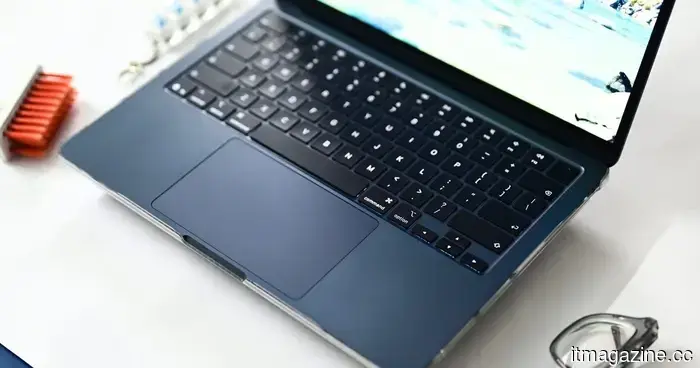 I moved from the M1 to the M5 MacBook Air, and the sound quality of the speakers has declined.
I utilized the M1 MacBook Air as my main laptop for almost four years. Throughout that period, I relied on it for a range of tasks, including writing news articles and editing photos for reviews, as well as working during flights and on weekend getaways. The one feature that received more praise than its sleek build and overall aesthetic was […]
I moved from the M1 to the M5 MacBook Air, and the sound quality of the speakers has declined.
I utilized the M1 MacBook Air as my main laptop for almost four years. Throughout that period, I relied on it for a range of tasks, including writing news articles and editing photos for reviews, as well as working during flights and on weekend getaways. The one feature that received more praise than its sleek build and overall aesthetic was […]
 U.S. users can now create and share mini-games using Meta's Pocket app.
Meta's Pocket is now launching in the U.S., enabling users to vibe-code basic game concepts into playable mini-games that they can share and remix.
U.S. users can now create and share mini-games using Meta's Pocket app.
Meta's Pocket is now launching in the U.S., enabling users to vibe-code basic game concepts into playable mini-games that they can share and remix.
 The DOJ is against holding an emergency hearing regarding the FCC's examination of ABC's licenses.
The DOJ informed a Washington court that an immediate hearing regarding Disney’s request to prevent the FCC from reviewing its eight ABC station licenses is unnecessary.
The DOJ is against holding an emergency hearing regarding the FCC's examination of ABC's licenses.
The DOJ informed a Washington court that an immediate hearing regarding Disney’s request to prevent the FCC from reviewing its eight ABC station licenses is unnecessary.
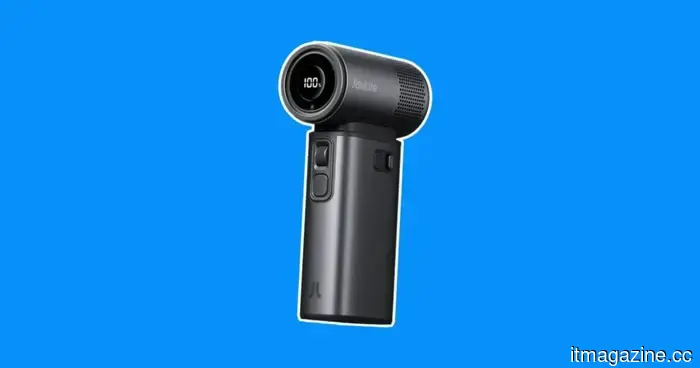 The JISULIFE Ultra2 surpasses Dyson’s handheld fan in cooling performance, and here’s why it's the best choice for this summer.
This post is sponsored in collaboration with JISULIFE. If you've been considering Dyson's latest handheld fan and questioning if it’s truly the top choice for enduring a heatwave, the evidence suggests otherwise. The JISULIFE Ultra2, the flagship model from the premier brand of handheld mini-fans, outperforms Dyson’s handheld […]
The JISULIFE Ultra2 surpasses Dyson’s handheld fan in cooling performance, and here’s why it's the best choice for this summer.
This post is sponsored in collaboration with JISULIFE. If you've been considering Dyson's latest handheld fan and questioning if it’s truly the top choice for enduring a heatwave, the evidence suggests otherwise. The JISULIFE Ultra2, the flagship model from the premier brand of handheld mini-fans, outperforms Dyson’s handheld […]
Trump signs a memorandum to facilitate regulations for three launches per day.
A presidential memorandum instructs US agencies to accelerate the processes of permitting, environmental assessments, and spectrum allocation in order to achieve 1,000 launches annually by 2030.