

I moved from the M1 to the M5 MacBook Air, and the sound quality of the speakers has declined.
I relied on the M1 MacBook Air as my main laptop for nearly four years. Throughout that period, I utilized it for a variety of tasks, including writing news articles, editing review photos, and working during flights or weekend getaways. The one aspect that received more praise than its sleek design and thin profile was the speakers.
Whether I was watching an Apple keynote on YouTube, enjoying a stand-up comedy special in my room, viewing a movie with friends on a work trip, or just hearing the notification sounds and charging chime, the M1 MacBook Air consistently delivered remarkably clear and surprisingly loud audio. Whether it was the chilling screams in The Conjuring, the web-swinging sounds during an action-packed Spider-Man scene, or Chandler’s humorous remarks from Friends, the audio never felt like it was coming from a laptop.
Shikhar Mehrotra / Digital Trends
However, everything changed when my M1 MacBook Air unexpectedly wouldn’t turn on in June 2026, prompting me to purchase the 13-inch M5 MacBook Air with 16GB of RAM and 512GB of storage. Every aspect of the M5 MacBook Air feels like an improvement—expected, given it’s five generations newer—except for the speakers.
The four-speaker "upgrade" that sounds inferior to two
On paper, the M5 MacBook Air should offer superior audio. It replaces the M1’s two-speaker setup with a four-speaker system. Yet in reality, it’s neither as loud nor as rich-sounding as the M1 MacBook Air.
Shikhar Mehrotra / Digital Trends
What you actually experience is a thin, almost hollow midrange, a harsh emphasis on high frequencies, and a severe lack of low-end presence. This audio profile makes dialogue clear but leaves music and movies feeling flat and lifeless. There’s a noticeable absence of fullness, weight behind basslines or explosions; it’s just treble carrying the load.
I picked up on this right away. During setup, I heard some audio cues and instinctively tried to increase the volume, only to discover it was already maxed. A few days later, a friend, who had always praised the M1 MacBook Air’s speakers, simply asked, “What’s wrong with the speakers?” I shared my thoughts on what might be going on.
Shikhar Mehrotra / Digital Trends
What’s the issue here?
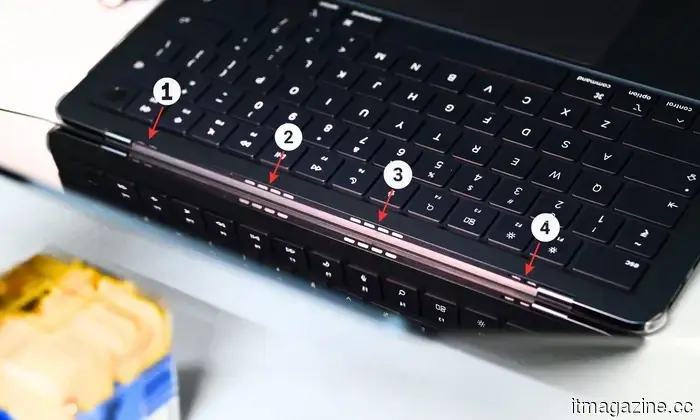
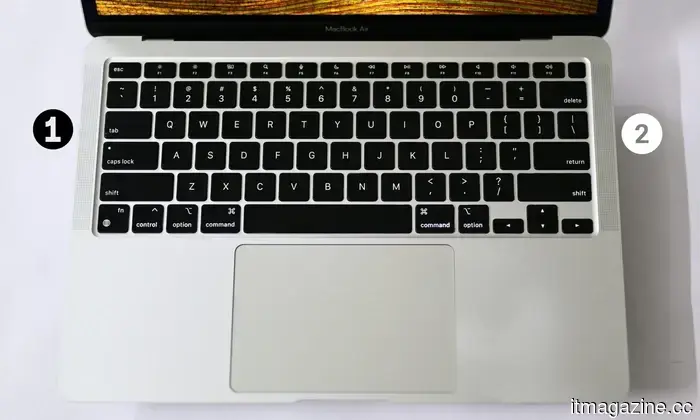
The M1 MacBook Air featured two upward-firing speakers, allowing sound to reach your ears directly. In contrast, Apple has concealed the speaker system in the hinge of the newer Air, meaning sound reflects off the display before reaching you.
This likely contributes to the audio difference; bouncing sound off a stationary surface rather than directing it straight at you tends to scatter low frequencies first, explaining the absence of bass while the treble remains sharp, even excessively so.
Hidden speakers on the M5 MacBook Air Shikhar Mehrotra / Digital Trends
When sitting across from my friend, she remarked that the speakers didn’t project well. To confirm it wasn't just my perception, I placed my M5 MacBook Air next to a friend’s M1 MacBook Air, and the difference was instantly clear. The M5 sounded clear, yet the M1 was appreciably louder and fuller—ideal for playing music in a room.
It turns out I wasn’t the only one noticing this issue. A search through Reddit revealed several users reached similar conclusions after side-by-side comparisons of the two models. One user on r/macbook, who claims to own four MacBooks, stated that the “M1 actually sounds the loudest of them all.”
Top-firing speakers on the M1 MacBook Air Shikhar Mehrotra / Digital Trends
Others noted that while the M5 MacBook Air’s speakers sound cleaner, another user described them as being “too optimized for normal speech/dialogue clarity.” This aligns almost perfectly with my experience. Voices sound sharp, but the low-end punch is considerably diminished.
What is lacking is the loudness and richness that made the M1 MacBook Air’s speakers stand out at higher volumes.
Shikhar Mehrotra / Digital Trends
Can software resolve this issue?
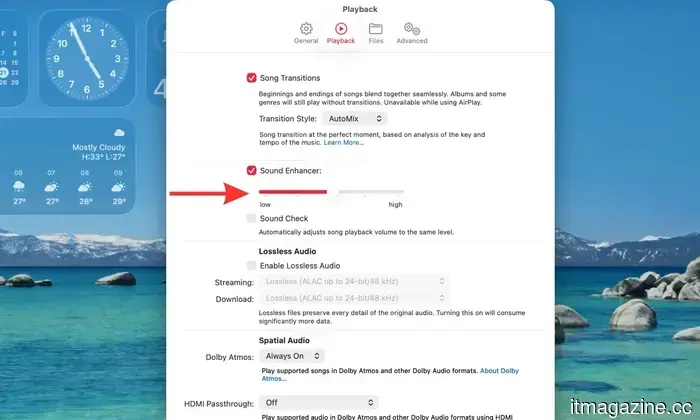
With the hardware unchanged, I spent some time exploring whether macOS could make up for the lost warmth and fullness using software. Two built-in tools in the Music app are worth mentioning.
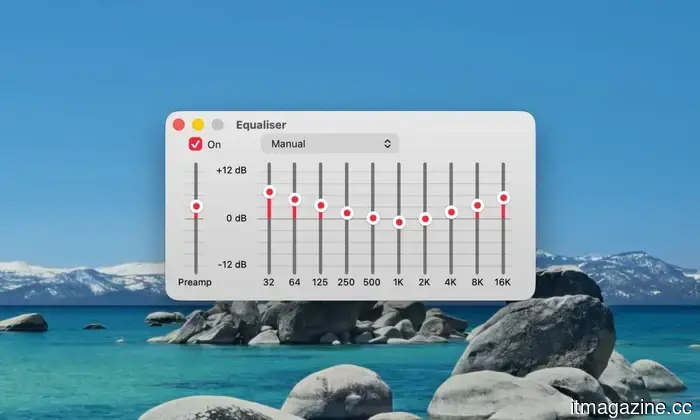
The Equalizer, accessible from the taskbar under Window > Equalizer, allows you to manually adjust specific frequency bands and features a Preamp slider that controls the overall output level before the individual bands kick in. Slightly increasing the Preamp genuinely makes the M5’s speakers sound louder, and pairing it with adjustments to the lower-frequency sliders helps compensate for some of the missing bass.
Shikhar Mehrotra / Digital Trends
However, pushing the Preamp too much, especially in conjunction with the system volume already




Other articles
 A new pair of glasses priced at $399 can transform your handheld device into a 307-inch gaming setup.
RayNeo's latest AR glasses, the GT and GT Max, are designed for movies and gaming, featuring native 3DoF tracking, Bang & Olufsen sound, and virtual screens that can extend up to 307 inches.
A new pair of glasses priced at $399 can transform your handheld device into a 307-inch gaming setup.
RayNeo's latest AR glasses, the GT and GT Max, are designed for movies and gaming, featuring native 3DoF tracking, Bang & Olufsen sound, and virtual screens that can extend up to 307 inches.
 Trump signs a memorandum to facilitate regulations for three launches per day.
A presidential memorandum instructs US agencies to accelerate the processes of permitting, environmental assessments, and spectrum allocation in order to achieve 1,000 launches annually by 2030.
Trump signs a memorandum to facilitate regulations for three launches per day.
A presidential memorandum instructs US agencies to accelerate the processes of permitting, environmental assessments, and spectrum allocation in order to achieve 1,000 launches annually by 2030.
 Wave Browser Connects Daily Surfing to Ocean Cleanup Efforts
The majority of individuals select a web browser based on practical factors such as speed, familiarity, compatibility, and convenience. The environmental impact is often not a significant part of this choice. However, Wave Browser is aiming to make it a consideration for users. Created by Eightpoint, Wave is a Chromium-based browser that merges typical browsing capabilities with features designed to assist […]
Wave Browser Connects Daily Surfing to Ocean Cleanup Efforts
The majority of individuals select a web browser based on practical factors such as speed, familiarity, compatibility, and convenience. The environmental impact is often not a significant part of this choice. However, Wave Browser is aiming to make it a consideration for users. Created by Eightpoint, Wave is a Chromium-based browser that merges typical browsing capabilities with features designed to assist […]
 RayNeo's latest iO Smart Glasses incorporate a compact display into your field of vision.
RayNeo's iOS Smart Glasses integrate a small MicroLED display directly in your field of vision, providing real-time translation, dictation in 112 languages, and an AI-powered memory log, all priced at $479.
RayNeo's latest iO Smart Glasses incorporate a compact display into your field of vision.
RayNeo's iOS Smart Glasses integrate a small MicroLED display directly in your field of vision, providing real-time translation, dictation in 112 languages, and an AI-powered memory log, all priced at $479.
 Sony's upcoming Xperia smartphone is set to be released on August 24, but it will probably not be available in the US.
Sony has announced a new Xperia launch event scheduled for August 24, with rumors suggesting the unveiling of the mid-range Xperia 10 VIII.
Sony's upcoming Xperia smartphone is set to be released on August 24, but it will probably not be available in the US.
Sony has announced a new Xperia launch event scheduled for August 24, with rumors suggesting the unveiling of the mid-range Xperia 10 VIII.
 RayNeo's latest iO Smart Glasses introduce a compact display within your field of vision.
RayNeo's iOS Smart Glasses integrate a compact MicroLED display into your view, providing features such as real-time translation, dictation in 112 languages, and an AI memory log, all priced at $479.
RayNeo's latest iO Smart Glasses introduce a compact display within your field of vision.
RayNeo's iOS Smart Glasses integrate a compact MicroLED display into your view, providing features such as real-time translation, dictation in 112 languages, and an AI memory log, all priced at $479.
I moved from the M1 to the M5 MacBook Air, and the sound quality of the speakers has declined.
I utilized the M1 MacBook Air as my main laptop for almost four years. Throughout that period, I relied on it for a range of tasks, including writing news articles and editing photos for reviews, as well as working during flights and on weekend getaways. The one feature that received more praise than its sleek build and overall aesthetic was […]