
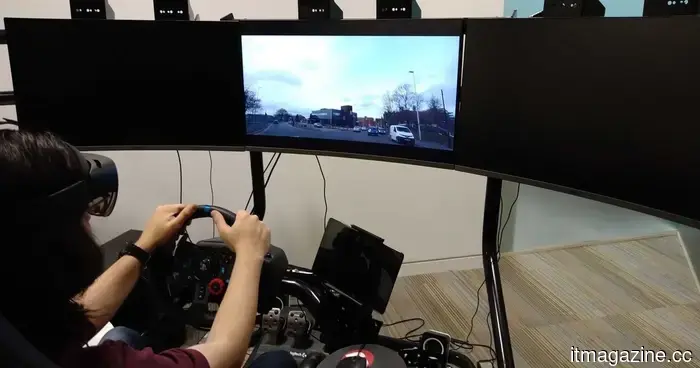
Research indicates that animated alerts can assist distracted drivers in identifying hazards more consistently.
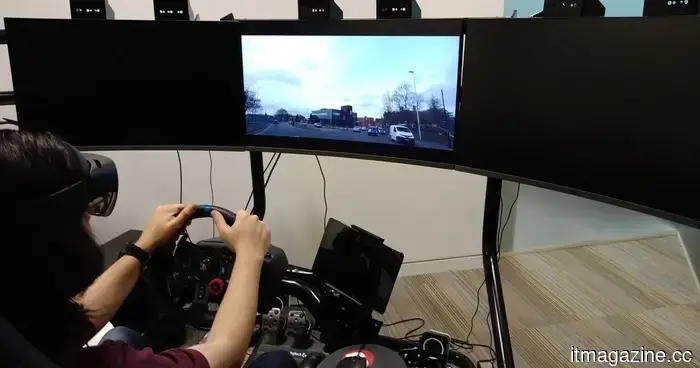
Researchers at the University of Glasgow experimented with augmented reality (AR) glasses that featured an animated robot avatar and discovered it assisted distracted drivers in identifying road hazards almost as effectively as those who were fully attentive.
Self-driving cars face a continuous challenge. When a driver's focus shifts to a phone or laptop, how can you quickly redirect their attention back to the road to spot potential dangers? A recent study from the University of Glasgow indicates the solution might not be another alert or blinking light, but rather a small animated figure that resembles a person pointing out the danger.
Enhancing the alert improved attentiveness
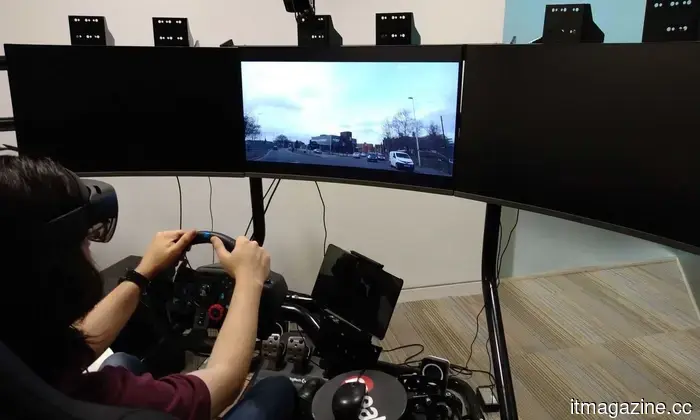
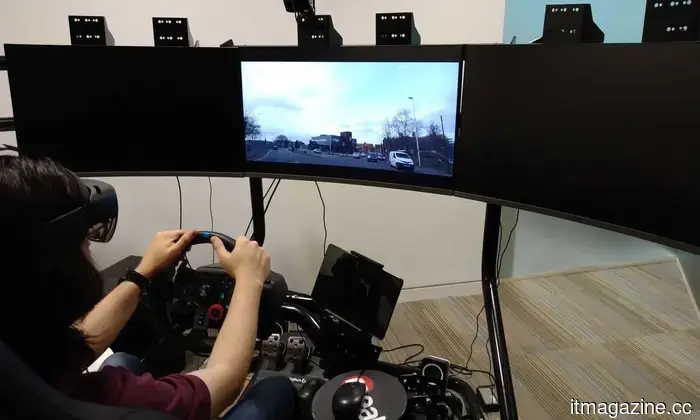
The research, led by PhD candidate Thomas Goodge, involved testing this concept using AR glasses on 48 participants in a driving simulator. Participants engaged in a mixed-reality game while dashcam footage of actual driving situations was displayed, simulating a driver engrossed in emails or games. A warning appeared just before a hazard was shown in the video, and the researchers inquired what the drivers observed.
In the initial phase, distracted participants overlooked hazards significantly more often than a control group that viewed the footage without the game, irrespective of whether the warning was a colored bar or an animated robot head pointing towards the danger. However, the introduction of an additional cue—a red highlight alongside the colored bar or head turning—completely bridged that gap. Both warning methods enabled distracted drivers to accurately identify hazards approximately 80 percent of the time, matching the performance of participants who were not distracted.
Excessive personality had negative effects
However, the robot's effectiveness had its limits. When researchers equipped it with visible signs of stress, such as shaking and sweating, participants became sidetracked trying to interpret its emotional cues, resulting in them missing more hazards. Professor Stephen Brewster, a co-author of the study, also noted a more subtle issue. Some drivers relied solely on the warnings instead of keeping their eyes on the road, mirroring the over-reliance observed in systems like Cadillac's Super Cruise, which monitors driver attention and pulls the vehicle over if no response is detected.
The researchers plan to incorporate sound and dialogue in the next phase to assess how drivers react to a warning system that communicates with them.
Pranob is an experienced tech journalist with over eight years of experience in consumer technology coverage.
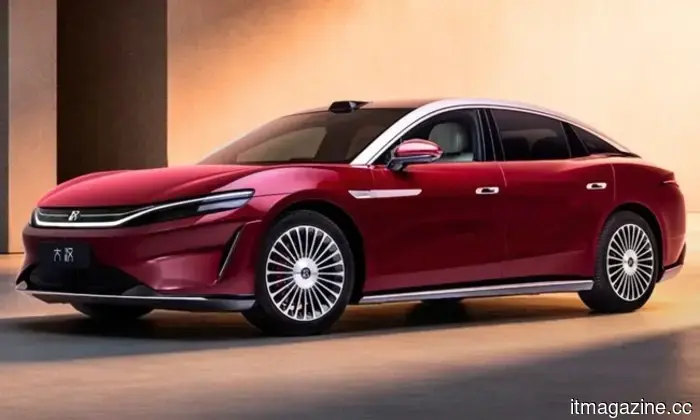
BYD has introduced the Da Han EV, priced at $37,000, featuring a range and amenities typically associated with luxury vehicles in the U.S.
Recently, BYD launched a sedan that offers range and features comparable to luxury cars for less than the price of a base Tesla Model 3 in the U.S. In recent years, Chinese automakers have elevated the standards of what affordable sedans, and cars in general, can offer, with BYD's latest model being a prime example. The Da Han has just commenced pre-sales in China with a starting price below $37,000, aligned with entry-level pricing in the U.S., yet it boasts a feature set akin to a high-end vehicle.
The absent $20,000 EV: Understanding why small, affordable electric cars don't succeed in North America
Recent events in the Chinese market showcased the introduction of three sedans priced well below the $20,000 mark, including models from Volkswagen, Hyundai, and MG. Conversely, hatchbacks in that market are even more affordable. Now, let's shift our focus to the streets of historic cities like Paris, Milan, or Amsterdam, where you will quickly notice a “minicar safari.” Their narrow, centuries-old roads are filled with a variety of electric micro-vehicles. From the compact Citroën Ami, priced at $6,600, to the retro-styled Microlino, these small battery-powered vehicles navigate through traffic and fit easily into tight parking spots that would be unmanageable for a standard sedan, let alone a large SUV. Additionally, the G-Wiz, manufactured in India and sold both there and in the UK, was labeled a "Death Trap" by market reviews yet gained popularity as a small electric option globally, although it never reached North America.
MG has unveiled the MG 07 electric sedan, starting at under $16,000, signaling that U.S. choices remain lacking.
At the 2026 Chengdu Auto Show, SAIC's MG brand officially launched the MG 07, a mid-size sedan with pricing that may genuinely surprise consumers. According to CarNewsChina, the vehicle is available in seven configurations, with prices ranging from 108,900 yuan to 159,900 yuan, or approximately $16,000 to $23,500, making it one of the most budget-friendly electric vehicles. It features a surprisingly upscale design for a sedan priced at $16,000.


Other articles
 Uber has been fined 825 million euros due to the suspension of automated drivers.
The Dutch regulatory authority imposed a fine of 825 million euros on Uber for using software to deactivate driver accounts without informing them. This is second only to the fine imposed on Meta, which was larger.
Uber has been fined 825 million euros due to the suspension of automated drivers.
The Dutch regulatory authority imposed a fine of 825 million euros on Uber for using software to deactivate driver accounts without informing them. This is second only to the fine imposed on Meta, which was larger.
 Research indicates that animated alerts can assist distracted drivers in identifying hazards more effectively.
A recent study indicates that a small animated figure that indicates danger could assist distracted drivers in identifying hazards they may overlook.
Research indicates that animated alerts can assist distracted drivers in identifying hazards more effectively.
A recent study indicates that a small animated figure that indicates danger could assist distracted drivers in identifying hazards they may overlook.
 Google is encouraging publishers to add a button that allows readers to choose them.
Google's new Preferred Sources button allows readers to select a publisher without navigating away from the current page. It secures a position in Top Stories and AI Mode.
Google is encouraging publishers to add a button that allows readers to choose them.
Google's new Preferred Sources button allows readers to select a publisher without navigating away from the current page. It secures a position in Top Stories and AI Mode.
 EXCLUSIVE: The director of It Ends discusses the six-year process behind Neon’s existential horror film.
Director Alex Ullom of It Ends talks about the film's enigmas, its inspirations, and the six-year production process while hinting at his upcoming, even more intense film, 4 X 4: The Event.
EXCLUSIVE: The director of It Ends discusses the six-year process behind Neon’s existential horror film.
Director Alex Ullom of It Ends talks about the film's enigmas, its inspirations, and the six-year production process while hinting at his upcoming, even more intense film, 4 X 4: The Event.
 Samsung's latest 16-inch OLED display aims to transform your laptop into a gaming monitor experience.
Samsung Display introduced a 16-inch OLED laptop panel that achieves a 300Hz refresh rate, marking the highest rate ever recorded on a self-emissive laptop display.
Samsung's latest 16-inch OLED display aims to transform your laptop into a gaming monitor experience.
Samsung Display introduced a 16-inch OLED laptop panel that achieves a 300Hz refresh rate, marking the highest rate ever recorded on a self-emissive laptop display.
 Two 21-year-olds developed an AI that operates online shops.
Siml assumes control over store operations rather than just individual tasks. Two founders who began by selling hand sanitizer at age 15 now manage AI agents in over 1,000 stores, and Adobe data indicates that shoppers directed by AI convert at a rate 42% higher than those from paid search.
Two 21-year-olds developed an AI that operates online shops.
Siml assumes control over store operations rather than just individual tasks. Two founders who began by selling hand sanitizer at age 15 now manage AI agents in over 1,000 stores, and Adobe data indicates that shoppers directed by AI convert at a rate 42% higher than those from paid search.
Research indicates that animated alerts can assist distracted drivers in identifying hazards more consistently.
A recent study indicates that a small animated figure that gestures towards dangers may assist distracted drivers in identifying hazards they may not notice otherwise.