
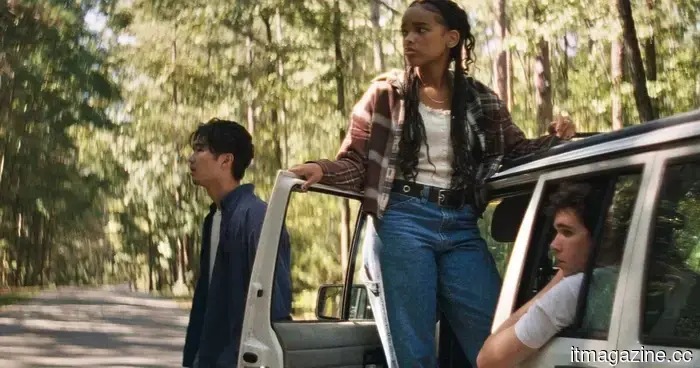
EXCLUSIVE: The director of It Ends discusses the six-year process behind Neon’s existential horror film.
Writer-director Alex Ullom has made his mark in the horror genre with his new road-trip film, *It Ends*. This Neon production chronicles the journey of four friends who embark on a drive only to find themselves ensnared on an endless road, where they must decide whether to continue driving or confront their fate in this eternal nightmare.
In an interview with Digital Trends, Ullom detailed his six-year path to bring the film to the big screen, discussing his sources of inspiration and his vision for the narrative. He also hinted that his next horror project, *4 X 4: The Event*, will amp up the intensity beyond what *It Ends* offers.
This transcript has been condensed for brevity and clarity.
**Digital Trends:** What inspired this story?
**Ullom:** It was likely my harsh transition to adulthood and navigating that with friends. Conceptually, I’ve always imagined it as if Richard Linklater made a horror film.
**Digital Trends:** That definitely comes through in the narrative. It depicts how these four friends drift apart as one of them attempts to move on, only to be caught in a never-ending drive. It’s such a unique and clever premise. How did you settle on the idea of an endless road trip?
**Ullom:** I think liminal spaces offer a sense of comfort for my generation because we are in this transitional phase. Many social structures that used to define our lives—like family or home ownership—are no longer reliable.
Being in constant motion feels like the closest representation of adulthood for me. I feel like I’m just starting to figure this out, so it’s a bit confusing.
**Digital Trends:** I can relate, and it seems like the theme of liminal horror has gained popularity recently. Films like *Backrooms* and *Exit 8* come to mind, and I see this movie as a road trip incarnation of that. What do you, in your perspective, think the road symbolizes?
**Ullom:** I can’t reveal that; it would spoil the movie.
**Digital Trends:** I know you want to keep aspects of the story open to interpretation, but at least I tried!
**Ullom:** Definitely.
**Digital Trends:** Do you think you could endure the road as long as the last character, James? Some characters stay in the car while others don’t, but ultimately he’s the only one to see it through. Do you believe you could make it to the end?
**Ullom:** My younger self would absolutely act like James did. Now, I’d probably stick with whoever I was with on the road. It would depend on whether we wanted to keep exploring.
When I was younger, I would have pushed to the end without processing any existential questions. I would have been in James’s shoes.
**Digital Trends:** He embodies that youthful ambition; he has dreams for his future and wants to escape. But in the end, it feels like he’s given a cruel joke and heads back to reunite with his friends. Do you think they’ll find some happiness on that journey?
**Ullom:** I’d like to think so. I’ll explore that in a sequel, *It Begins*, perhaps 15 years later, akin to a *Before Sunrise* scenario.
**Digital Trends:** Overall, what was production like on this film? Did you face significant challenges, or was it smooth sailing?
**Ullom:** The project spanned six years, and it was a chaotic struggle—like being stuck in the mud. The film stands thanks to its performances and the supportive community, but the production process was grueling. We faced constant challenges due to budget constraints.
**Digital Trends:** So, the filming occurred over six years?
**Ullom:** Pre-production took about two and a half years, and then production lasted roughly three years. We even reshot the film twice.
**Digital Trends:** Did a lot of footage end up on the cutting room floor?
**Ullom:** There was originally an eight-minute scene where the characters discussed the Russian brick video, plus a lot more downtime scenes.
**Digital Trends:** They created their own sort of hangout dynamic in the car. It felt somewhat reminiscent of *Lord of the Flies*, though certainly less violent.
**Ullom:** Definitely, I would have liked to see more bloodshed, though.
**Digital Trends:** The most graphic moment came at the start when those people rushed in—it was quite a gripping hook for the story. Another surprising moment was when it suddenly started raining. It wasn’t particularly frightening, just unexpected, considering it hadn’t rained before. What was the significance of that moment?
**Ullom:** I don’t want to fully explain how everything functions, but there’s an element of abstraction on the road, influenced by the characters' emotions and consciousness, which affects what occurs.
**Digital Trends:** So, ultimately, why

Other articles
 Google reports that Gemma has surpassed one billion downloads.
According to Google, Gemma has achieved over a billion downloads and has 100,000 variants. A Google engineer noted that this count does not include integrations with Android and Chrome.
Google reports that Gemma has surpassed one billion downloads.
According to Google, Gemma has achieved over a billion downloads and has 100,000 variants. A Google engineer noted that this count does not include integrations with Android and Chrome.
 4 intelligent changes demonstrating that privacy is the software's ultimate standout feature.
In 2026, privacy is emerging as a fundamental product feature in four software categories, with browsers automatically blocking trackers, VPNs undergoing independent audits, and AI operating on devices.
4 intelligent changes demonstrating that privacy is the software's ultimate standout feature.
In 2026, privacy is emerging as a fundamental product feature in four software categories, with browsers automatically blocking trackers, VPNs undergoing independent audits, and AI operating on devices.
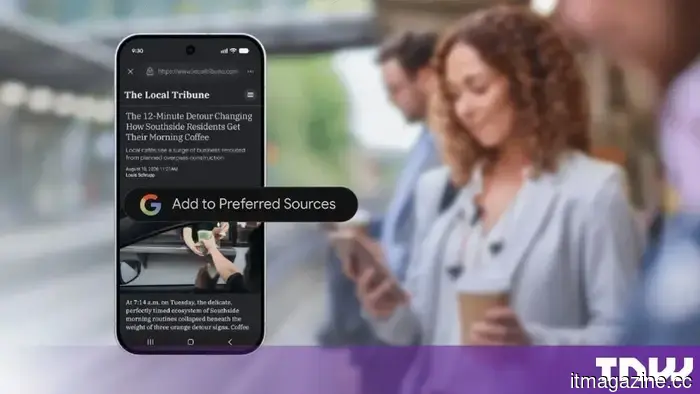 Google is encouraging publishers to add a button that allows readers to choose them.
Google's new Preferred Sources button allows readers to select a publisher without navigating away from the current page. It secures a position in Top Stories and AI Mode.
Google is encouraging publishers to add a button that allows readers to choose them.
Google's new Preferred Sources button allows readers to select a publisher without navigating away from the current page. It secures a position in Top Stories and AI Mode.
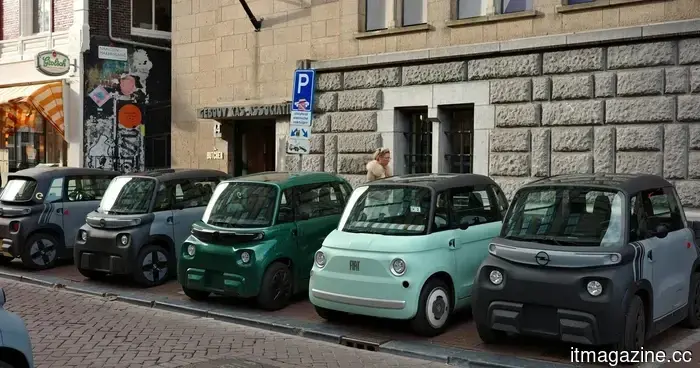 The absent $20,000 electric vehicle: The reason small, budget-friendly electric cars fail to succeed on North American highways.
In Europe and China, inexpensive electric cars are flourishing, while in North America, regulations, road conditions, and a preference for larger vehicles have caused affordable EVs to lag behind.
The absent $20,000 electric vehicle: The reason small, budget-friendly electric cars fail to succeed on North American highways.
In Europe and China, inexpensive electric cars are flourishing, while in North America, regulations, road conditions, and a preference for larger vehicles have caused affordable EVs to lag behind.
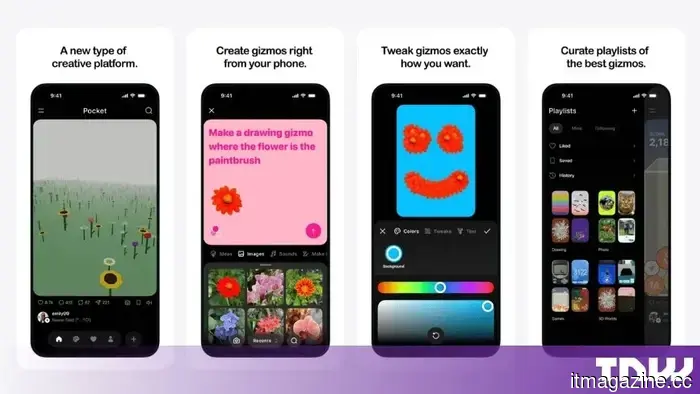 Meta introduced Pocket in the United States, and the app from which it originated ceased operations on the same day.
Meta's Pocket app has launched nationwide in the US. It was developed by the Gizmo team that Meta brought on board in March, and the original Gizmo app was discontinued on the same day.
Meta introduced Pocket in the United States, and the app from which it originated ceased operations on the same day.
Meta's Pocket app has launched nationwide in the US. It was developed by the Gizmo team that Meta brought on board in March, and the original Gizmo app was discontinued on the same day.
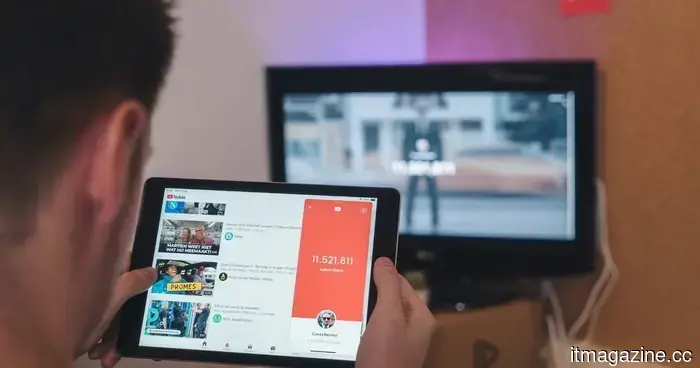 YouTube Premium is set for another increase in its prices, and it may affect your finances shortly.
YouTube Premium users in various countries are experiencing new price hikes, with Singapore already announcing increased rates and indications that additional markets may also see similar changes.
YouTube Premium is set for another increase in its prices, and it may affect your finances shortly.
YouTube Premium users in various countries are experiencing new price hikes, with Singapore already announcing increased rates and indications that additional markets may also see similar changes.
EXCLUSIVE: The director of It Ends discusses the six-year process behind Neon’s existential horror film.
Director Alex Ullom of It Ends talks about the film's enigmas, its inspirations, and the six-year production process while hinting at his upcoming, even more intense film, 4 X 4: The Event.