

Two 21-year-olds developed an AI that operates online shops.
They began their online sales at the age of 15, and their company, Siml, now operates over 1,000 stores. Nurtilek Raimzhanov and Zuhayr Abdullazhanov became best friends in high school. When they were fifteen, the pandemic struck, prompting them to sell hand sanitizer online. Their venture taught them valuable lessons as they managed listings, ran advertisements, and handled customer inquiries. Frustrated by the monotony of checking the same twelve competitor websites each morning, Zuhayr created scrapers to automate the task. These tools often malfunctioned, laying the groundwork for everything they have built since.
Both founders left Kyrgyzstan to pursue engineering studies at prestigious universities in the United States, continuing their collaboration despite a two-hour time difference. Their final project before Siml was Tail AI, a personal finance app for college students, which gained over 10,000 users shortly after launching. They also published research on data analysis and agent orchestration, focusing on how multiple autonomous agents coordinate tasks while maintaining accuracy. Additionally, Nurtilek worked on machine learning systems for freight and logistics, tackling routing, delivery predictions, and classification challenges with customs officers.
Ultimately, they both dropped out of school. Siml is now supported by some of the leading investors in Silicon Valley. When asked about the changes since their teenage online selling days, Zuhayr responded plainly, “Nothing really. We were sorting out listings and ads then, and millions are still doing the same now. The tools have become sleeker, but the work has not become easier.”
While platforms have handled distribution, they haven't simplified the work itself. Setting up a store can take just a few hours, but effectively managing one demands continuous effort. Global retail e-commerce is expected to reach $6.9 trillion by 2026, and anyone with a laptop can start selling quickly. However, that first order brings a multitude of responsibilities: customer support, advertising, listings, creative tasks, pricing, returns, compliance, and analytics. An entire economy has developed around offloading these tasks, and the most consistent way to profit in e-commerce remains selling the idea of making money in e-commerce.
Then came two significant shifts.
First, tariffs shifted margins into daily calculations. The United States suspended the de minimis exemption in 2025, which was confirmed in February 2026 without any future restoration date. Now, around four million packages daily require formal customs processing. Each product must have a classification code, country of origin, and material description, with costs recalculated for every shipment instead of assumed seasonally. Many sellers lack the expertise to navigate duties, relying on spreadsheets and instinct.
The second, larger shift is that buyers are increasingly using AI agents instead of browsing stores themselves. Research from Adobe Analytics indicated a 393% growth in AI-driven traffic to U.S. retail sites year over year in the first quarter of 2026, with quality surpassing volume. In March 2025, traffic referred by AI converted 38% less effectively than that from paid search and email; by March 2026, it was 42% more effective, with revenue per visit rising by 37%. Another alarming insight for store owners was Adobe's finding that only 66% of retail product pages were machine-readable, indicating that a third of the content was not accessible to the AI systems managing customer traffic.
Centuries of trade have gone into making products discoverable by consumers, yet little has been done to ensure they are discoverable by AI agents. Merchants can be visible to every human buyer yet remain hidden from the systems those buyers now rely on. According to McKinsey, sales through AI-driven commerce could generate between $3 to $5 trillion globally by 2030.
Siml's main function is to run online stores with a focus on autonomy rather than mere assistance. While most AI-driven commerce tools offer help—like drafting descriptions or responding to emails—Siml assumes full control over store operations as a cohesive, autonomous loop, allowing agents to continuously monitor and act on the business without prompts.
Support systems manage inquiries automatically, equipped with complete context about orders, products, and customer history. Advertising becomes a streamlined decision-making process, while creative content is created and tested consistently rather than commissioned separately. Pricing and inventory strategies come with attached rationales rather than a barrage of metrics on a dashboard.
What sets Siml apart is its ability to enable sellers to cater to AI agents rather than human shoppers. Listings and product pages are designed for AI assistants shopping on behalf of consumers, allowing them to locate products, assess genuine attributes, compare options objectively, and complete purchases without a human viewer scrolling through the page. Past commerce platforms established environments for demand to meet supply—not for AI buyers that parse structured data without interaction. Merchants that can present clear information to agents first will gain an advantage similar to what early sellers experienced on previous platforms.
Sellers can adopt

Other articles
 Meta pays Microsoft several hundred million dollars annually to lease AI models.
According to Bloomberg, Meta invests several hundred million dollars annually on renting AI models from Microsoft's Azure. Both companies have refrained from commenting on the matter.
Meta pays Microsoft several hundred million dollars annually to lease AI models.
According to Bloomberg, Meta invests several hundred million dollars annually on renting AI models from Microsoft's Azure. Both companies have refrained from commenting on the matter.
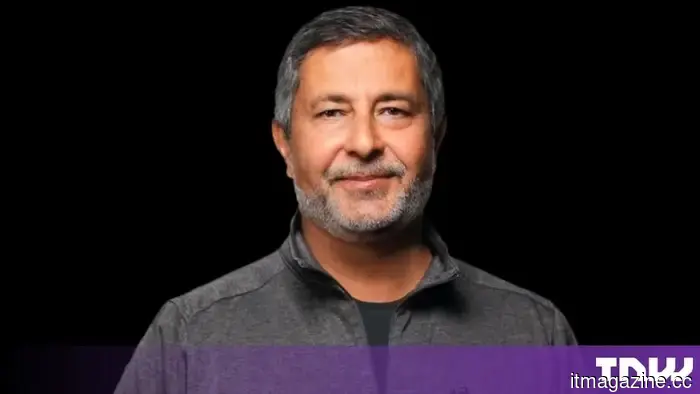 Micron is investing $10 billion in a laboratory, wagering that the memory cycle has shifted.
Micron is investing $10 billion in a research laboratory in Boise over the next ten years. According to its CEO, AI has altered the value of memory. The company's stock dropped by 29% in July.
Micron is investing $10 billion in a laboratory, wagering that the memory cycle has shifted.
Micron is investing $10 billion in a research laboratory in Boise over the next ten years. According to its CEO, AI has altered the value of memory. The company's stock dropped by 29% in July.
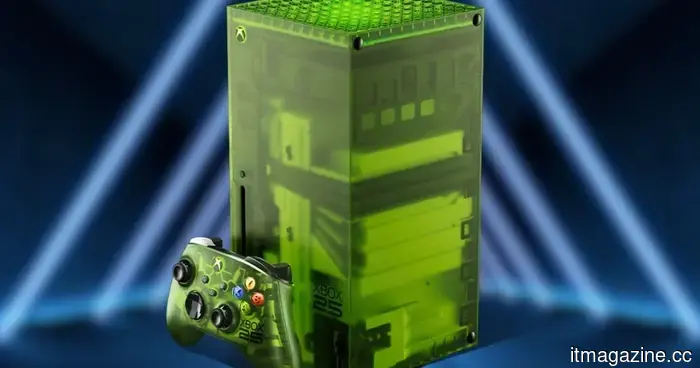 The Xbox console for its 25th anniversary from Microsoft might be priced at $100 above the 1TB Series X model.
The see-through, vintage-inspired Xbox Series X25 might be released right in time for Black Friday this November.
The Xbox console for its 25th anniversary from Microsoft might be priced at $100 above the 1TB Series X model.
The see-through, vintage-inspired Xbox Series X25 might be released right in time for Black Friday this November.
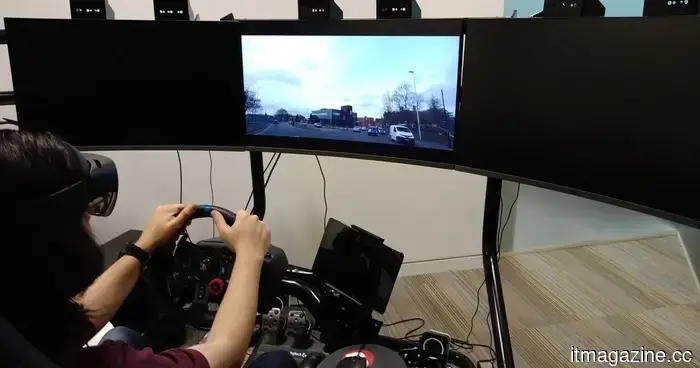 Research indicates that animated alerts can assist distracted drivers in identifying hazards more effectively.
A recent study indicates that a small animated figure that indicates danger could assist distracted drivers in identifying hazards they may overlook.
Research indicates that animated alerts can assist distracted drivers in identifying hazards more effectively.
A recent study indicates that a small animated figure that indicates danger could assist distracted drivers in identifying hazards they may overlook.
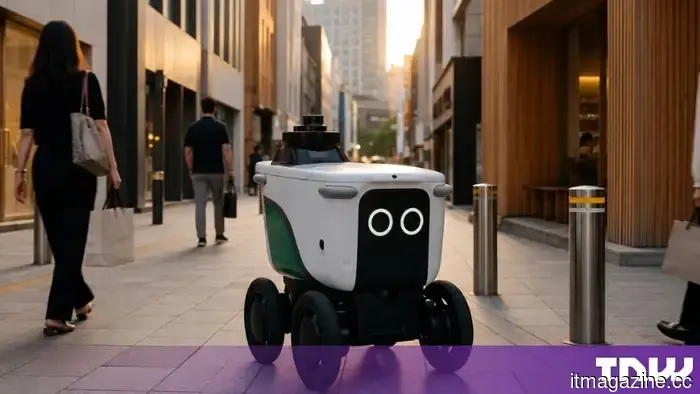 World ID and peaqOS introduce privacy-enhancing human verification for robots and machines.
Robots operating on peaqOS can now confirm they are engaging with a genuine human using World ID's zero-knowledge proofs, all while keeping the individual's identity confidential. This integration can be accessed via robotic.sh, and there is no need for an API key or any fee per verification.
World ID and peaqOS introduce privacy-enhancing human verification for robots and machines.
Robots operating on peaqOS can now confirm they are engaging with a genuine human using World ID's zero-knowledge proofs, all while keeping the individual's identity confidential. This integration can be accessed via robotic.sh, and there is no need for an API key or any fee per verification.
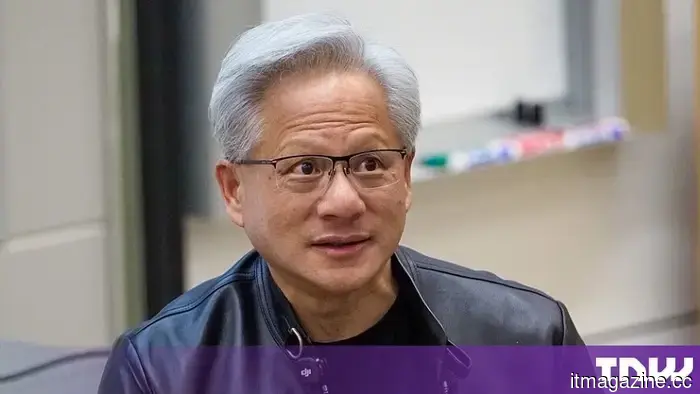 Nvidia is engaged in discussions with the Korean chip designer Rebellions, specializing in inference technology.
Jensen Huang met with the CEO of Rebellions in Santa Clara. This would mark Nvidia's fourth licensing and hiring agreement within a year, following Groq and Poolside.
Nvidia is engaged in discussions with the Korean chip designer Rebellions, specializing in inference technology.
Jensen Huang met with the CEO of Rebellions in Santa Clara. This would mark Nvidia's fourth licensing and hiring agreement within a year, following Groq and Poolside.
Two 21-year-olds developed an AI that operates online shops.
Siml assumes control over store operations rather than just individual tasks. Two founders who began by selling hand sanitizer at age 15 now manage AI agents in over 1,000 stores, and Adobe data indicates that shoppers directed by AI convert at a rate 42% higher than those from paid search.