

Apple Music will categorize AI-generated songs, and the associated tags are now required.
Apple Music will begin indicating which songs are created with AI, making the requirement for these labels mandatory. On Thursday, Apple informed music industry partners about the Made With AI Labels, as reported by Billboard. Any track that a content provider designates as "materially generated using AI" will feature a visible label.
Apple Music is the final major service to introduce such labels for listeners. These labels are set to launch "later this year," although Apple has not specified a date.
In March, Apple rolled out AI Transparency Tags, allowing record labels and distributors to disclose AI usage in artwork, tracks, compositions, or music videos. Initially, these tags were optional, with Apple deferring to content providers on what constituted as AI.
The latest email from Apple removes this option, stating, “Content providers will be required to include AI Transparency Tags in any instance where AI was used to create a material portion of the content, including tracks that are AI platform generated.” Apple further clarified that “AI-platform-generated content” refers to anything primarily derived from a generative AI service. The objective, according to 9to5Mac, is to “provide listeners with as much transparency as possible.”
The email places the accountability on those who upload content, stating, “As we implement Made With AI Labels, content providers will be important partners,” as they are best positioned to understand how their content was created. Despite Apple’s capability to conduct its own assessments—according to Oliver Schusser, who oversees Apple Music—the company prefers self-disclosure from providers. Schusser explained that every label may unknowingly deliver AI content, and they consequently need to develop tools to grasp the extent of AI usage.
The email does not outline the consequences for providers who fail to tag their tracks, and none of the reports from Billboard, The Hollywood Reporter, or Digital Music News addressed this gap. Additionally, no specific threshold has been established, as the term "material portion" remains undefined beyond AI platform generation. It is also unclear whether Apple will verify tagged tracks against its own detection system or simply rely on providers’ claims.
In April, Schusser revealed that more than a third of the music Apple Music receives monthly consists of “100% AI” tracks, though the actual listening of this content is minimal, accounting for under 0.5% of usage. Apple has been tackling fraudulent streams longer, redistributing royalties from approximately 2 billion manipulated streams into its payment pool for artists and labels in 2025 and recently increasing penalty fees related to streaming fraud.
Apple is the last major platform to visibly disclose AI usage, while others have already taken action. Spotify announced it would label AI artist profiles this month, implementing badges by mid-September while keeping those profiles out of editorial and algorithmic recommendations. TIDAL went further, stating it would withhold royalties from AI-generated music and label every track it identifies. Deezer has been using detection for over a year and reported that fully AI-generated tracks made up more than half of its daily uploads, with a significant portion flagged as fraudulent.
The record industry pushed for a labeling system, proposed by a coalition led by the RIAA and IFPI, which suggested two tags: “AI-generated” for tracks where AI created major components and “AI-assisted” for those where humans performed while using AI. Apple opted for a single label for any content providers designate.
Currently, tracks needing tagging mainly come from generative services like Suno and Udio, with Suno having added watermarking and fingerprinting to its output amid legal actions.
However, there’s still uncertainty surrounding the launch date of the labels, whether the tagging requirement will commence before their introduction, any penalties for non-compliance, a definition of “material,” or if Apple will use its detection methods on untagged tracks. Schusser's metrics are not recent; Apple hasn’t updated them, nor disclosed any changes in the share of AI uploads. Additionally, it is unclear what actions listeners will be able to take with the label once available, as Spotify and Deezer exclude fully AI tracks from recommendations, while Apple has only announced its labeling initiative without further details.
Altri articoli
 Prima di spendere oltre $1.000 per un Pixel 11 Pro, considera questi 5 telefoni.
Il Pixel 11 Pro è un eccellente smartphone con fotocamera, tuttavia il suo prezzo di $1,099 rende accessibili anche flagship più veloci, telefoni più leggeri, batterie enormi e schermi pieghevoli.
Prima di spendere oltre $1.000 per un Pixel 11 Pro, considera questi 5 telefoni.
Il Pixel 11 Pro è un eccellente smartphone con fotocamera, tuttavia il suo prezzo di $1,099 rende accessibili anche flagship più veloci, telefoni più leggeri, batterie enormi e schermi pieghevoli.
 Uno studio ha scoperto che avvisi animati possono aiutare i conducenti distratti a individuare i pericoli in modo più affidabile.
Un nuovo studio suggerisce che un piccolo personaggio animato che indica verso il pericolo potrebbe aiutare i conducenti distratti a individuare i rischi che altrimenti potrebbero perdere.
Uno studio ha scoperto che avvisi animati possono aiutare i conducenti distratti a individuare i pericoli in modo più affidabile.
Un nuovo studio suggerisce che un piccolo personaggio animato che indica verso il pericolo potrebbe aiutare i conducenti distratti a individuare i rischi che altrimenti potrebbero perdere.
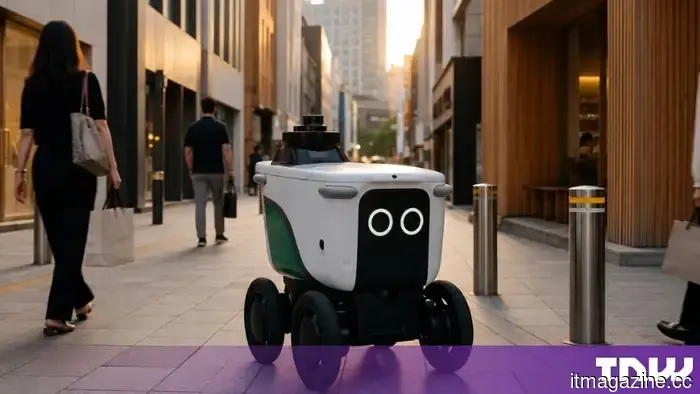 World ID e peaqOS portano la verifica umana che preserva la privacy a robot e macchine
I robot che eseguono peaqOS possono ora verificare di interagire con un vero essere umano attraverso le prove a conoscenza zero di World ID, senza apprendere l'identità della persona. L'integrazione è disponibile tramite robotic.sh senza chiave API o costo per verifica.
World ID e peaqOS portano la verifica umana che preserva la privacy a robot e macchine
I robot che eseguono peaqOS possono ora verificare di interagire con un vero essere umano attraverso le prove a conoscenza zero di World ID, senza apprendere l'identità della persona. L'integrazione è disponibile tramite robotic.sh senza chiave API o costo per verifica.
 Due ventunenne hanno creato un'IA che gestisce negozi online.
Siml si occupa della gestione delle operazioni del negozio, non solo dei compiti. Due fondatori che hanno iniziato a vendere disinfettante per le mani a 15 anni ora gestiscono agenti AI in oltre 1.000 negozi, poiché i dati di Adobe mostrano che i clienti indirizzati dall'AI convertono il 42% in modo migliore rispetto alla ricerca a pagamento.
Due ventunenne hanno creato un'IA che gestisce negozi online.
Siml si occupa della gestione delle operazioni del negozio, non solo dei compiti. Due fondatori che hanno iniziato a vendere disinfettante per le mani a 15 anni ora gestiscono agenti AI in oltre 1.000 negozi, poiché i dati di Adobe mostrano che i clienti indirizzati dall'AI convertono il 42% in modo migliore rispetto alla ricerca a pagamento.
 Nvidia è in trattative con il designer coreano di chip per inferenza Rebellions.
Jensen Huang ha incontrato il CEO di Rebellions a Santa Clara. Sarebbe il quarto accordo di licenza e assunzione di Nvidia in un anno, dopo Groq e Poolside.
Nvidia è in trattative con il designer coreano di chip per inferenza Rebellions.
Jensen Huang ha incontrato il CEO di Rebellions a Santa Clara. Sarebbe il quarto accordo di licenza e assunzione di Nvidia in un anno, dopo Groq e Poolside.
 Astromech ha raccolto 20 milioni di dollari a una valutazione di 3,8 miliardi di dollari per prevedere come si rompa la biologia.
Ben Lamm e George Church hanno raccolto 20 milioni di dollari a una valutazione di 3,8 miliardi di dollari per Astromech, un'IA che legge 3,8 miliardi di anni di evoluzione per prevedere dove la biologia fallirà.
Astromech ha raccolto 20 milioni di dollari a una valutazione di 3,8 miliardi di dollari per prevedere come si rompa la biologia.
Ben Lamm e George Church hanno raccolto 20 milioni di dollari a una valutazione di 3,8 miliardi di dollari per Astromech, un'IA che legge 3,8 miliardi di anni di evoluzione per prevedere dove la biologia fallirà.
Apple Music will categorize AI-generated songs, and the associated tags are now required.
Apple Music will require its AI Transparency Tags and plans to display Made With AI labels later this year. However, it hasn't specified how it will enforce these requirements.