
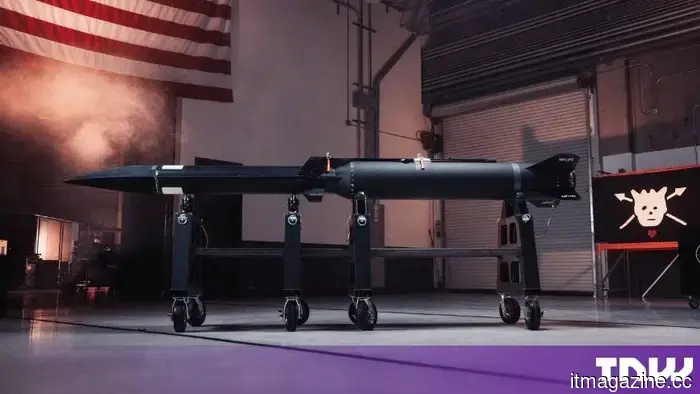
Castelion secures $1 billion at a valuation of $13 billion to enhance the production of hypersonic weapons.
Castelion has secured $1 billion at a valuation of $13 billion. Founded in 2022 by three SpaceX executives, the company aims to produce missiles. Its inaugural product, Blackbeard, is a hypersonic strike weapon focused on quantity rather than precision.
The funding structure warrants careful examination. The total round comprises $800 million in equity and $250 million in committed financing for a revolving credit facility, as stated by the company. A revolving credit line functions as a credit source rather than a lump sum. The equity amount is what determines the valuation.
JPMorganChase’s Strategic Investment Group co-led the funding alongside Andreessen Horowitz and funds managed by Carlyle. Returning investors include Lightspeed, Lavrock Ventures, Altimeter, General Catalyst, and Interlagos, while T. Rowe Price is a new participant, which is a detail noted by bankers. This public-markets manager has invested prior to the establishment of a public market.
The focus of the pitch is on manufacturing, not engineering. Castelion does not assert that it creates superior missiles compared to Lockheed Martin or RTX; instead, it claims it can produce them more efficiently, with greater speed and lower costs, by operating its factories in a manner similar to SpaceX.
Andrew Kreitz, co-founder and CFO, articulated the challenge during an interview with Bloomberg Tech, highlighting the importance of producing thousands of low-cost weapons. His experience at SpaceX has influenced their strategy, with the other founders, Bryon Hargis and Sean Pitt, sharing a similar background.
The proof of concept is located in New Mexico. Project Ranger is situated on a 1,000-acre site in Sandoval County, which Castelion describes as the largest dedicated hypersonic missile manufacturing facility in the nation. The company has already invested over $250 million of its own funds into the project, with plans for hundreds of millions more in the future.
“Very few teams convert capital into physical capability at that ratio,” stated Ravi Mhatre, co-founder of Lightspeed, pointing out his firm’s prior support during Series A before any complete system had been tested.
Regarding actual payments from the Pentagon, Castelion claims to have secured over $500 million in U.S. military contracts within the span of 18 months. It also transitioned Blackbeard from concept to a recognized program in less than four years, aiming for deployment by 2027.
One publicly disclosed contract is particularly noteworthy. In June, the U.S. Navy issued a firm-fixed-price order worth $23.4 million, which includes 50 pre-production prototypes of Blackbeard and 50 shipping and storage containers. The majority of the work occurs in Rio Rancho, New Mexico, concluding in 2027.
It is important to emphasize that these are prototypes and not operational units, meaning the figure does not represent a unit price for a completed weapon. This is the only public price that the government has associated with the product, compared to a framework agreement that targets a minimum annual production of 500 missiles upon completion of testing. Tech Funding News observes that this rate is more indicative of a production line than a defense workshop.
The gap between 50 prototypes and 500 annually represents what the $13 billion investment intends to achieve.
Andreessen Horowitz holds three of the investments mentioned. This funding round reflects a long-standing thesis developed by their American Dynamism fund, which also invests in entities like Anduril and Hadrian. Hadrian specializes in automated factories for defense components and recently raised $1.37 billion at nearly an $8 billion valuation.
“American Dynamism has consistently believed that the most challenging and crucial problems are of a physical nature,” remarked Katherine Boyle, a general partner at the firm. She recalled investing in Castelion when it was merely “a small team eager to produce what the Department of Defense most urgently needed, quicker and more affordably than experts anticipated.”
While one fund does not indicate a trend, there are emerging patterns. Cambridge Aerospace recently raised $300 million at a valuation of $3.4 billion for air defense efforts, while Smack Technologies garnered $61 million as the Pentagon's procurement urgency became a viable business strategy. In Europe, funding is pursuing drone technologies, with Helsing leveraging Rakuten to enter Japan’s arms market.
The impetus for Washington’s financial support lies in a stockpile issue. Hypersonic weapons exceed Mach 5 and possess flight characteristics that complicate current air defense systems. The U.S. inventory has not kept up with China’s advancements, as reported by TechCrunch’s Marina Temkin. Castelion believes that the main obstacle lies in production capacity, not in the physics of development.
Investors share similar sentiments in varying articulations. Todd Combs, head of the Strategic Investment Group at JPMorganChase, described the deal as a means to reinforce the defense industrial base. Carlyle’s Aaron Hurwitz referred to the company as “a critical asset to national security.”
Другие статьи
 Новая пара очков за 399 долларов может превратить ваш портативный устройство в игровую систему с экраном 307 дюймов.
AR-очки RayNeo GT и GT Max нацелены на фильмы и игры с нативным 3DoF трекингом, аудиосистемой Bang & Olufsen и виртуальными экранами размером до 307 дюймов.
Новая пара очков за 399 долларов может превратить ваш портативный устройство в игровую систему с экраном 307 дюймов.
AR-очки RayNeo GT и GT Max нацелены на фильмы и игры с нативным 3DoF трекингом, аудиосистемой Bang & Olufsen и виртуальными экранами размером до 307 дюймов.
 Обзор X-Sense SC07 и SCO7W: надежные, доступные и спокойствие ума
Детектор дыма и угарного газа X-Sense SC07 предлагает простоту установки, надежное обнаружение и实时ные показания угарного газа без каких-либо подписок или больших затрат.
Обзор X-Sense SC07 и SCO7W: надежные, доступные и спокойствие ума
Детектор дыма и угарного газа X-Sense SC07 предлагает простоту установки, надежное обнаружение и实时ные показания угарного газа без каких-либо подписок или больших затрат.
 Google Home наконец-то исправил свои неуклюжие голосовые команды, но большинство пользователей пока не могут ими воспользоваться.
Google Home теперь может настраивать ваши огни на точный кельвин с помощью вашего голоса, хотя эта функция и две другие находятся в программе раннего доступа.
Google Home наконец-то исправил свои неуклюжие голосовые команды, но большинство пользователей пока не могут ими воспользоваться.
Google Home теперь может настраивать ваши огни на точный кельвин с помощью вашего голоса, хотя эта функция и две другие находятся в программе раннего доступа.
 Adobe хочет, чтобы Firefly обрабатывал весь звуковой ряд для ваших видео.
Adobe Firefly провел последние несколько лет, обучаясь созданию изображений и видео. Теперь Adobe хочет, чтобы он также занимался звуковой дорожкой. Генерация музыки, генерация речи и генерация звуковых эффектов теперь доступны в Firefly, предоставляя создателям инструменты для производства музыки, повествования и пользовательских эффектов, не покидая рабочее пространство ИИ Adobe. Adobe утверждает, что генерация музыки […]
Adobe хочет, чтобы Firefly обрабатывал весь звуковой ряд для ваших видео.
Adobe Firefly провел последние несколько лет, обучаясь созданию изображений и видео. Теперь Adobe хочет, чтобы он также занимался звуковой дорожкой. Генерация музыки, генерация речи и генерация звуковых эффектов теперь доступны в Firefly, предоставляя создателям инструменты для производства музыки, повествования и пользовательских эффектов, не покидая рабочее пространство ИИ Adobe. Adobe утверждает, что генерация музыки […]
 Ссылки браузера Wave: повседневный серфинг для очистки океана
Большинство людей выбирают веб-браузер по практическим причинам: скорости, привычности, совместимости и удобству. Экологическое воздействие реже является частью этого решения. Однако браузер Wave пытается сделать его одним из факторов, которые учитывают потребители. Разработанный компанией Eightpoint, Wave — это браузер на основе Chromium, который сочетает в себе стандартные функции просмотра с возможностями, предназначенными для помощи […]
Ссылки браузера Wave: повседневный серфинг для очистки океана
Большинство людей выбирают веб-браузер по практическим причинам: скорости, привычности, совместимости и удобству. Экологическое воздействие реже является частью этого решения. Однако браузер Wave пытается сделать его одним из факторов, которые учитывают потребители. Разработанный компанией Eightpoint, Wave — это браузер на основе Chromium, который сочетает в себе стандартные функции просмотра с возможностями, предназначенными для помощи […]
 Марк Цукерберг купил замок, в то время как остальные из нас получают один, сделанный из песка, раз в год.
Марк Цукерберг купил ирландское поместье площадью 440 акров на неделе, когда Meta предстояло судебное разбирательство по делу о детях. Тем не менее, замок не является проблемой.
Марк Цукерберг купил замок, в то время как остальные из нас получают один, сделанный из песка, раз в год.
Марк Цукерберг купил ирландское поместье площадью 440 акров на неделе, когда Meta предстояло судебное разбирательство по делу о детях. Тем не менее, замок не является проблемой.
Castelion secures $1 billion at a valuation of $13 billion to enhance the production of hypersonic weapons.
Castelion secured $1 billion at a valuation of $13 billion to ramp up the mass production of hypersonic missiles. The Navy has placed an order for 50 pre-production prototypes to date.