
Callosum raises $100 million to reduce the costs of AI workloads, with the UK government included on the cap table.
Callosum has secured $100 million, just six months after emerging from stealth mode with a mere $10 million. This funding round includes investment from the British government, as reported by Bloomberg, which identified the UK's public AI fund as a contributor.
The Cambridge-based firm initially exited stealth in February with $10.25 million, spearheaded by Plural, a fund established by former Wise executive Taavet Hinrikus, in collaboration with the government research agency ARIA and angel investors such as Charlie Songhurst, Stan Boland, and John Lazar. In May, discussions about a significantly larger funding round, potentially reaching $100 million (approximately £75 million), were reported.
Callosum's focus is on orchestration, not hardware. Its software allocates AI workloads across various mixed hardware platforms, such as Nvidia, AMD, and Google, directing each component of a task to the most suitable chip and model, rather than relying on a uniform grid of GPUs. The company asserts that for complex agentic tasks, like autonomous computer usage, their solution can achieve twice the accuracy, seven times the speed, and reduce costs to a quarter compared to traditional GPU setups.
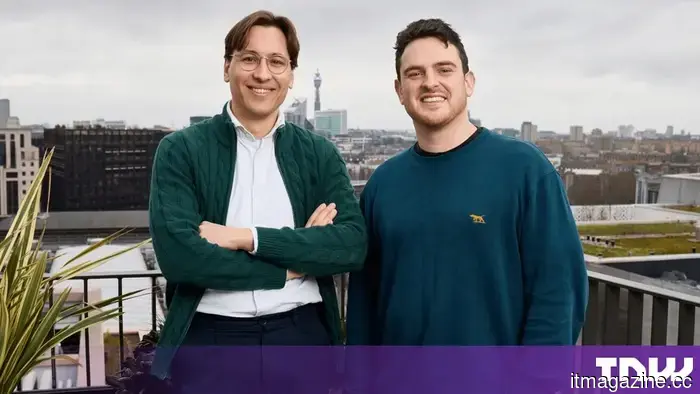
The founders, Danyal Akarca and Jascha Achterberg, met during their PhD studies at Cambridge and have co-authored articles in Nature journals, with experience at Intel and Google DeepMind. They challenge the dominant paradigm, stating, "Big labs are currently betting that one model will rule them all," believing this approach is flawed.
The involvement of the government is worth noting. In April, Callosum became the first equity investment by the UK's Sovereign AI Unit, a £500 million initiative led by James Wise, and founded with support from technology secretary Liz Kendall and chancellor Rachel Reeves. Details regarding the investment amount and equity stake were not revealed initially and have remained undisclosed, prompting interest from Parliament. Six other firms mentioned in the announcement, including Cosine, Prima Mente, Cursive, Doubleword, Twig Bio, and Odyssey, received up to a million GPU hours on national supercomputing resources rather than cash.
Akarca remarked on the decision to establish the company in Britain, highlighting the country’s rich talent pool from universities and organizations like DeepMind, which he considers the natural environment for their venture. Government officials have been particularly vocal about this sentiment; at the launch, Kendall expressed that the government is "betting on Britain."
Callosum enters the market at a time when the economics of AI inference have emerged as a primary concern in the industry. While model training costs are concentrated among a few companies, the financial burden of operating models is shared more broadly, putting Nvidia's software dominance under strain from unexpected competition this year.
Other British companies are also exploring cost-effective AI solutions. Velaura raised $110 million for low-power inference chips, and UK AI startups now collectively hold a valuation of $256 billion, according to recent industry assessments.
The company's narrative draws from neuroscience—specifically, the corpus callosum, which is the bundle of fibers linking the brain’s two hemispheres. The founders argue that intelligence arises from the coordination of distinct systems rather than from a single, vast one that scales.
The viability of this engineering hypothesis remains uncertain in the field, but obtaining funding for it in Britain is comparatively easier than seeking investment for developing a cutting-edge model, especially given the financing gap between UK investors and American labs.
Still, several aspects of the funding round have not been made public. Bloomberg's report did not provide a valuation; the complete investor list has not been confirmed by the company, and it remains unclear how much of the $100 million originated from the Sovereign AI Unit versus private sources.
Companies House filings are expected to clarify ownership details in the following quarter, offering a slower but more dependable response than a press release. As of this writing, Callosum had not issued a statement.
Other articles
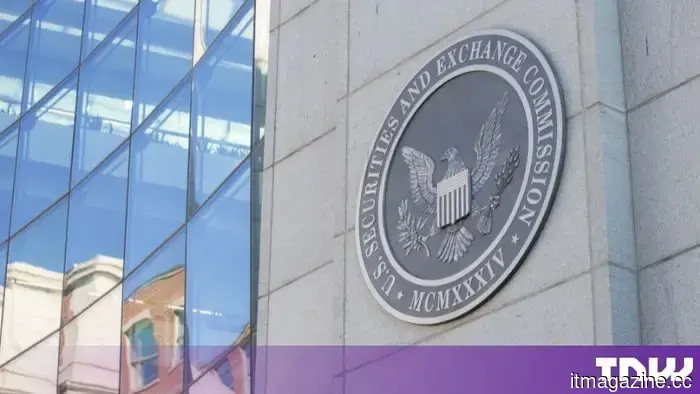 Trump invites cryptocurrency leaders as the SEC suggests its most favorable regulations to date.
On Tuesday, the SEC suggested exemptions for tokens and introduced a conditional safe harbor. The following day, Trump welcomed crypto leaders at the White House.
Trump invites cryptocurrency leaders as the SEC suggests its most favorable regulations to date.
On Tuesday, the SEC suggested exemptions for tokens and introduced a conditional safe harbor. The following day, Trump welcomed crypto leaders at the White House.
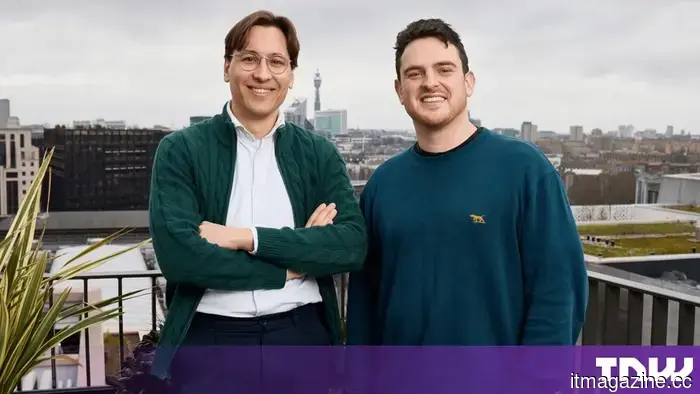 Callosum secures $100 million to reduce the costs of AI workloads, with the British government included as an investor.
The Cambridge-based startup Callosum has secured $100 million for software designed to distribute AI workloads across mixed chips, with support from the UK’s public AI fund among its investors.
Callosum secures $100 million to reduce the costs of AI workloads, with the British government included as an investor.
The Cambridge-based startup Callosum has secured $100 million for software designed to distribute AI workloads across mixed chips, with support from the UK’s public AI fund among its investors.
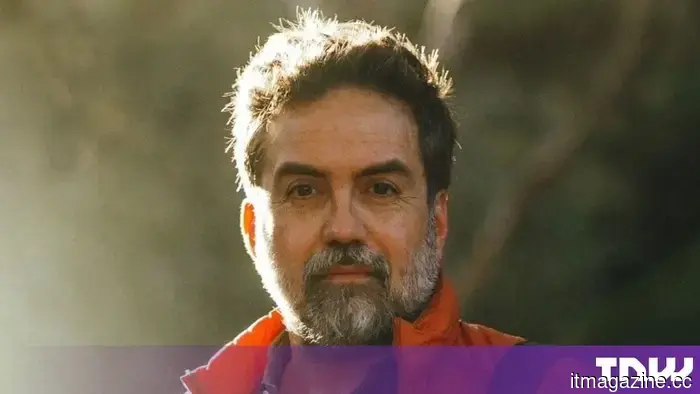 The initial witness for Meta informed the jury that the issue stemmed from Mark Zuckerberg's culture.
Arturo Béjar, a former engineer at Meta, informed an Oakland jury that the company's culture rendered safety improvements unfeasible, during a trial initiated by four states.
The initial witness for Meta informed the jury that the issue stemmed from Mark Zuckerberg's culture.
Arturo Béjar, a former engineer at Meta, informed an Oakland jury that the company's culture rendered safety improvements unfeasible, during a trial initiated by four states.
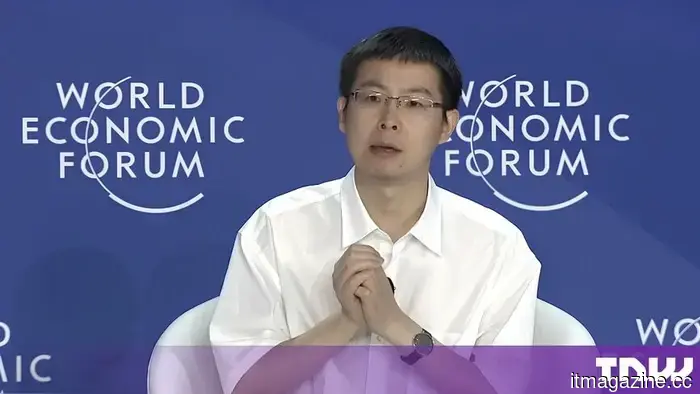 The founder of Unitree states that robots are approaching a 'ChatGPT moment.'
Wang Xingxing mentioned at the World Robot Conference that embodied AI is approaching a “ChatGPT moment,” estimating a timeframe of two to ten years for this development.
The founder of Unitree states that robots are approaching a 'ChatGPT moment.'
Wang Xingxing mentioned at the World Robot Conference that embodied AI is approaching a “ChatGPT moment,” estimating a timeframe of two to ten years for this development.
 The Justice Department is supporting xAI in its challenge against Minnesota's nudify prohibition.
The US Justice Department has submitted its support for xAI's challenge against Minnesota's prohibition on AI nudification, as a federal judge considers an injunction and will make a ruling shortly.
The Justice Department is supporting xAI in its challenge against Minnesota's nudify prohibition.
The US Justice Department has submitted its support for xAI's challenge against Minnesota's prohibition on AI nudification, as a federal judge considers an injunction and will make a ruling shortly.
 A professor from Berkeley wrote an op-ed discussing students who take shortcuts, but a detector marked her article.
An op-ed by a mathematics professor from UC Berkeley concerning declining standards was marked as having some AI assistance, although she claims she only utilized AI for editing purposes.
A professor from Berkeley wrote an op-ed discussing students who take shortcuts, but a detector marked her article.
An op-ed by a mathematics professor from UC Berkeley concerning declining standards was marked as having some AI assistance, although she claims she only utilized AI for editing purposes.
Callosum raises $100 million to reduce the costs of AI workloads, with the UK government included on the cap table.
Cambridge-based startup Callosum has secured $100 million for software designed to distribute AI tasks across various chip types, with support from the UK’s public AI fund among its investors.