
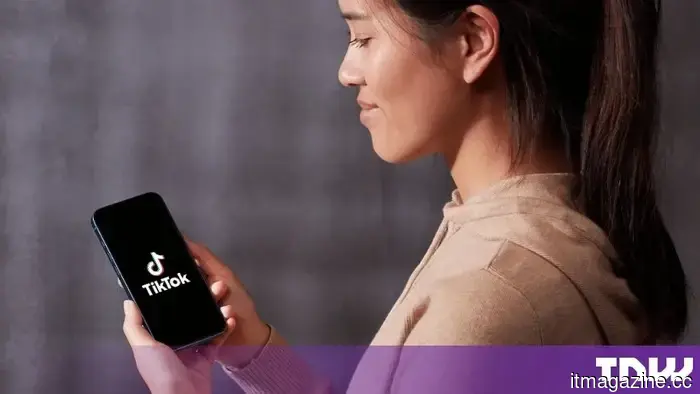
TikTok is developing a feature that allows users to send money through direct messages.
According to Bloomberg, TikTok is developing a feature that would allow users to send money to each other through direct messages. This functionality would utilize TikTok Pay, the app's current payment system. Authors Natalie Lung and Alexandra Levine noted that there are indications of this feature within the hidden code of TikTok's US iPhone application.
The code suggests a design that would let recipients accept a payment before it expires. The sender would receive updates via push notifications or their inbox. Additionally, there appears to be an option for attaching a note to payments, similar to how captions are used on Venmo.
TikTok has downplayed the report, with a spokesperson telling Bloomberg that the feature is not being tested in any market, indicating it may still be in early development. There’s no certainty that it will be released.
TechCrunch did not receive a response from TikTok for a comment. The outlet pointed out that apps frequently develop and test features that never go live, emphasizing that code alone does not guarantee a product will be available. Even if TikTok implements DM payments, it might take some time before users can access them.
This move represents a further step toward TikTok becoming a super app. The platform has been expanding beyond video for years, and payments appear to be the next logical development. The transition reflects a broader trend among social platforms to integrate commerce into their services in order to capture more consumer spending and data, as noted by Bloomberg. Currently, TikTok leads in revenue generated from in-app purchases with users worldwide spending over $2.9 billion on the app this year, according to Sensor Tower.
Since 2022, TikTok has been the top app globally concerning in-app purchase revenue, and in the US, users spend more there than on YouTube, Facebook, or Instagram.
The app already facilitates monetary transactions through various means. Users can purchase digital coins to send gifts to creators and livestream hosts, which can be converted to cash. Many also include their Venmo or Cash App details in their bios, allowing followers to pay them outside the app. A built-in payment feature would keep such transactions and associated fees within TikTok.
While TikTok Pay is already operational, it currently has limited availability, being live only in Vietnam, Malaysia, and Thailand, where it supports TikTok Shop purchases. A launch in the US would mark a significant expansion for the system. In the US, TikTok Shop operates without TikTok Pay, instead accepting PayPal, Apple Pay, Google Pay, Klarna, and Affirm, in addition to credit cards. The scale of TikTok Shop is substantial, with users globally spending $50.3 billion in the first half of this year, of which approximately $11.8 billion came from the US, a key market alongside Southeast Asia.
Introducing a direct-payment feature could position TikTok against Venmo and Zelle, as TechCrunch pointed out, aligning with offerings from its competitors.
ByteDance has previous experience in payments, with Douyin, its Chinese version of TikTok, already supporting peer-to-peer transfers via its Douyin Pay system. Some of the company’s payment executives are former JPMorgan leaders who helped establish its payment infrastructure.
The company continues to grow. Recently, TikTok applied for two licenses from Brazil's central bank, one to operate as a lender and the other to provide prepaid accounts. Additionally, both TikTok and ByteDance are actively hiring for financial services positions in the US and abroad, as reported by Bloomberg. ByteDance has also secured a record $20 billion loan this year to support its larger objectives.
The push for payments comes during a time of changed ownership structures for TikTok and ByteDance. This year, they finalized a deal to transfer portions of the US operation to American investors, such as Oracle and Silver Lake, in an effort to avoid a nationwide ban. Despite this, ByteDance retains a 19.9% stake according to Mashable.
Political tensions have lessened, with the Trump administration recently lifting its restrictions on TikTok for federal government devices, no longer considering the app a security threat. A domestic payments feature would test TikTok's reach into sensitive financial areas under this new structure.
However, TikTok's payment capabilities have drawn legal scrutiny, with some features at the center of lawsuits from state attorneys general. These lawsuits accuse the app of enabling the exploitation of children and violating money transmission laws.
TikTok has settled multiple cases related to adolescent harm to avoid going to trial, and it has kept a safety fix from millions of US users.
TikTok is not the only platform pursuing this agenda. Elon Musk has been working over the past year to transform X into an "everything app" and recently introduced X Money to facilitate payments between users. Facebook Messenger has offered peer-to-peer payments in the US since 2015. If TikTok does launch its DM payment feature, its existing commerce capabilities could give it a competitive edge. However, the arrival of this feature remains uncertain, and TikTok has
Other articles
 Audi's electric vehicles designed exclusively for China are making their way to Europe, and they are priced lower than the local versions.
A German importer is introducing Audi's E5 and E7X, manufactured in China, to Europe, where they are priced significantly lower than Audi's own European models by several thousand euros.
Audi's electric vehicles designed exclusively for China are making their way to Europe, and they are priced lower than the local versions.
A German importer is introducing Audi's E5 and E7X, manufactured in China, to Europe, where they are priced significantly lower than Audi's own European models by several thousand euros.
 Anthropic is arranging supervoting shares for its founders prior to the IPO.
According to The Information, Anthropic is getting ready to issue supervoting shares for Dario Amodei and its founders ahead of its IPO. Amodei currently holds approximately 2% of the company.
Anthropic is arranging supervoting shares for its founders prior to the IPO.
According to The Information, Anthropic is getting ready to issue supervoting shares for Dario Amodei and its founders ahead of its IPO. Amodei currently holds approximately 2% of the company.
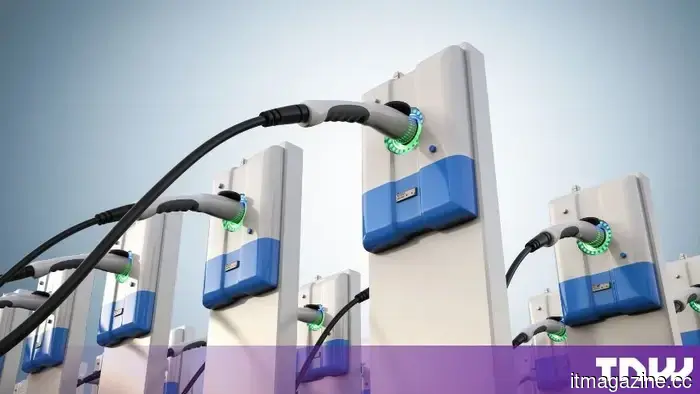 ADAC evaluated five electric vehicles for charging losses, revealing that one of them squandered a quarter of its energy.
ADAC assessed the amount of electricity that fails to reach an EV battery. When using a household socket, the Mercedes CLA experienced a loss of 24.2%, while with an 11 kW wallbox, the loss was 6.9%.
ADAC evaluated five electric vehicles for charging losses, revealing that one of them squandered a quarter of its energy.
ADAC assessed the amount of electricity that fails to reach an EV battery. When using a household socket, the Mercedes CLA experienced a loss of 24.2%, while with an 11 kW wallbox, the loss was 6.9%.
 Anthropic's AI watermark has already led to the creation of tools designed to eliminate it.
Just days after Anthropic started watermarking Claude's text for the EU, developers introduced tools to eliminate it. One of these tools has already garnered over 14,000 stars on GitHub.
Anthropic's AI watermark has already led to the creation of tools designed to eliminate it.
Just days after Anthropic started watermarking Claude's text for the EU, developers introduced tools to eliminate it. One of these tools has already garnered over 14,000 stars on GitHub.
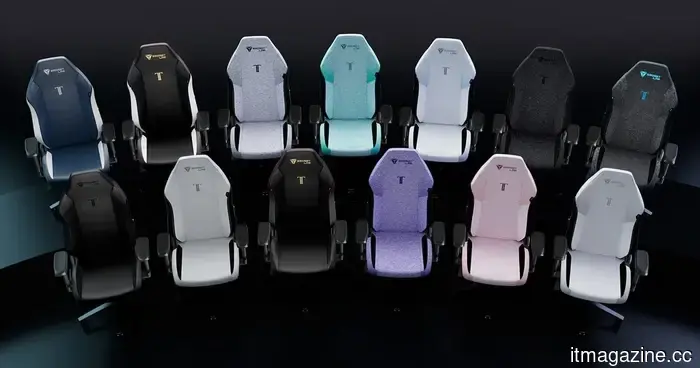 The Top Gaming Chairs to Look Out for in 2026
A gaming chair may appear stylish but can still have you adjusting your position after just an hour. The true distinction becomes evident when brief matches extend into lengthy gaming sessions. Here’s what differentiates appealing design from a chair designed for extended comfort.
The Top Gaming Chairs to Look Out for in 2026
A gaming chair may appear stylish but can still have you adjusting your position after just an hour. The true distinction becomes evident when brief matches extend into lengthy gaming sessions. Here’s what differentiates appealing design from a chair designed for extended comfort.
 Alphabet has raised A$5.5 billion in Australia, surpassing the record set by Apple in 2015 by more than double.
Alphabet has issued its inaugural Australian dollar bond at A$5.5 billion (US$3.9 billion), marking the largest corporate bond issuance in the history of Australia and exceeding the anticipated A$5 billion.
Alphabet has raised A$5.5 billion in Australia, surpassing the record set by Apple in 2015 by more than double.
Alphabet has issued its inaugural Australian dollar bond at A$5.5 billion (US$3.9 billion), marking the largest corporate bond issuance in the history of Australia and exceeding the anticipated A$5 billion.
TikTok is developing a feature that allows users to send money through direct messages.
According to Bloomberg, TikTok is working on a feature for sending money through direct messages, utilizing TikTok Pay. The company has stated that it is not currently in the testing phase and may never be released.