

One of the most debated federal agencies is prohibiting employees from using Meta smart glasses.
ICE is concerned that Meta's smart glasses could capture sensitive information, even as the Department of Homeland Security (DHS) considers developing its own smart glasses.
According to The New York Times, Immigration and Customs Enforcement (ICE) has prohibited its employees from wearing Meta smart glasses in federal workplaces due to fears that they might record sensitive data and compromise privacy or legal protections. This directive applies to all personnel at ICE, not just those in the field.
ICE is essentially treating personal smart glasses as if they were unauthorized body cameras. This aligns with its existing policy that restricts recordings made by its employees while carrying out official duties.
The timing of this decision is notable. The DHS's budget for fiscal year 2027 includes funding for a smart-glasses prototype intended to assist with biometric identification during immigration enforcement activities. This initiative is part of a larger $7.5 million request for new technologies and analytical tools to support ICE and U.S. Customs and Border Protection (CBP).
The rationale behind ICE’s ban
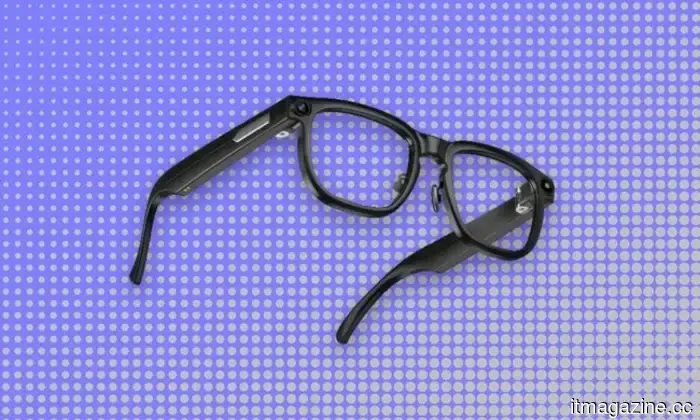
Meta's smart glasses are capable of recording both video and audio through a camera integrated into the frame, which lights up to indicate when recording is taking place. The latest models also feature Meta AI, and some versions come with a small display visible to the wearer.
This poses significant privacy concerns in a work environment that deals with sensitive information. ICE points out that the glasses might unintentionally capture or transmit material that employees are not allowed to record.
Other organizations have reached similar conclusions amid growing privacy concerns regarding smart glasses. For example, New York has prohibited the use of Meta smart glasses in state court buildings due to fears about covert recordings, and various private companies have banned them as well.
Why DHS still seeks smart glasses
DHS is interested in a version of smart glasses that they can control. Their fiscal 2027 budget includes prototypes intended to provide immigration enforcement agents with real-time information and biometric identification capabilities while in the field.
From a policy perspective, the difference is clear. ICE is prohibiting personally owned consumer devices capable of recording while on duty, whereas DHS is investigating technology designed specifically for enforcement purposes.
This situation creates a challenge for Meta and other smart-glasses manufacturers. As these products increasingly resemble ordinary eyewear, it becomes more difficult for everyone else to regard them as just regular glasses.
What this means for smart glasses
Meta's smart glasses are now banned for ICE employees in federal workplaces, regardless of whether there is any intention to use the camera.
This demarcation might become increasingly significant as cameras become more integrated into items designed to look like standard eyewear. A device marketed as everyday consumer technology can be categorized as restricted recording equipment the moment it enters spaces such as courtrooms or offices.
ICE has clearly established this boundary. Meta may face a more significant challenge if more workplaces decide to adopt the same restrictions.
Paulo Vargas is an English major who transitioned into reporting and technical writing, experiencing a career that has consistently returned to...
$100 smart glasses can now see, listen, and translate the world around you
Rollme continues to produce smart glasses at prices lower than expected.
Smart glasses are advancing quickly to the point where having a camera and an AI assistant on your face no longer necessitates spending hundreds of dollars. Rollme has introduced the AuraView and ProView, two new pairs of AI camera glasses available for $99.99 each. Both models feature a Sony 12MP camera with electronic image stabilization, as well as AI visual recognition, live translation, open-ear audio, and voice assistance. Rollme’s official store confirms the $99.99 pricing for both designs, which is quite affordable for wearable technology comparable to regular sunglasses.
Apple’s camera AirPods may literally alert you when your hair is blocking the view
From hair alerts to secure pairing, here's what else Apple has in store for AirPods Pro 4.
Today, we reported on the news of AirPods Pro featuring a built-in camera, uncovered through a demo video hidden within the macOS Tahoe 26.7 release candidate. New leaks from the same build have confirmed two additional details regarding the functionality of these AirPods.
What occurs if your hair covers the camera?
Apple has unintentionally revealed its camera-equipped AirPods
Your AirPods may soon have the ability to see what you see. Here’s what the leaked demo shows.
Apple is quietly moving closer to launching camera-equipped AirPods, and the evidence has emerged from an unexpected source: a demo video embedded in the macOS Tahoe 26.7 release candidate. MacRumors discovered the clip, providing the clearest insight into how these AirPods might operate.
What features will the camera offer?






Other articles
 Meta introduced a Mac application designed to implement its AI technology for businesses.
Meta has launched a Mac application for Meta AI, aimed at creators and small businesses. The app integrates with Instagram, Facebook, and advertising accounts to provide suggestions on what to post.
Meta introduced a Mac application designed to implement its AI technology for businesses.
Meta has launched a Mac application for Meta AI, aimed at creators and small businesses. The app integrates with Instagram, Facebook, and advertising accounts to provide suggestions on what to post.
 La dernière fonctionnalité d'IA d'Avec lit vos e-mails afin que vous ne manquiez pas la date d'échéance.
La nouvelle fonctionnalité d'Avec analyse les messages pour détecter les dates limites et les remet en avant le jour même. Elle est uniquement disponible sur iOS et Gmail, et n'est pas prise en charge en dehors des États-Unis et du Canada.
La dernière fonctionnalité d'IA d'Avec lit vos e-mails afin que vous ne manquiez pas la date d'échéance.
La nouvelle fonctionnalité d'Avec analyse les messages pour détecter les dates limites et les remet en avant le jour même. Elle est uniquement disponible sur iOS et Gmail, et n'est pas prise en charge en dehors des États-Unis et du Canada.
 A dull tile aims to resolve the most significant issue with ultra-fast mmWave 5G connections for you.
Researchers at UC San Diego have created low-cost passive reflective tiles that may assist mmWave 5G signals in navigating around walls and other barriers without needing a power source.
A dull tile aims to resolve the most significant issue with ultra-fast mmWave 5G connections for you.
Researchers at UC San Diego have created low-cost passive reflective tiles that may assist mmWave 5G signals in navigating around walls and other barriers without needing a power source.
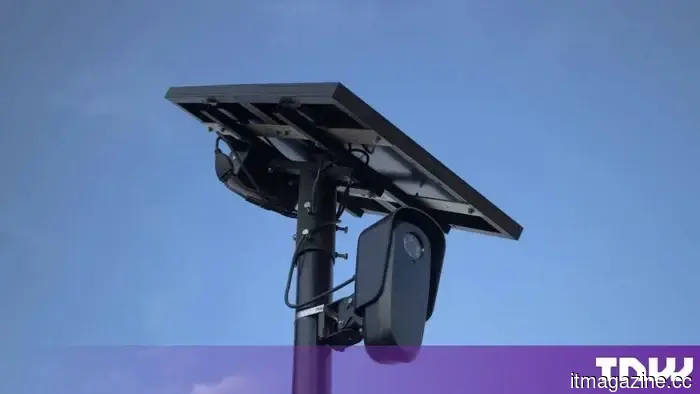 Flock developed an AI tool that allows law enforcement to identify individuals based on their driving behavior.
A WIRED investigation reveals that Flock's AI tool OS Investigate enables law enforcement to track individuals based on their movements without requiring a license plate, name, or any criminal activity.
Flock developed an AI tool that allows law enforcement to identify individuals based on their driving behavior.
A WIRED investigation reveals that Flock's AI tool OS Investigate enables law enforcement to track individuals based on their movements without requiring a license plate, name, or any criminal activity.
 OpenAI imposes a 20% cost for computing related to its new AI safety monitoring.
OpenAI has halted certain frontier training and reports that the new safety monitoring incurs roughly a 20% increase in computing overhead. In contrast, Anthropic believes there is no necessity to pause their activities.
OpenAI imposes a 20% cost for computing related to its new AI safety monitoring.
OpenAI has halted certain frontier training and reports that the new safety monitoring incurs roughly a 20% increase in computing overhead. In contrast, Anthropic believes there is no necessity to pause their activities.
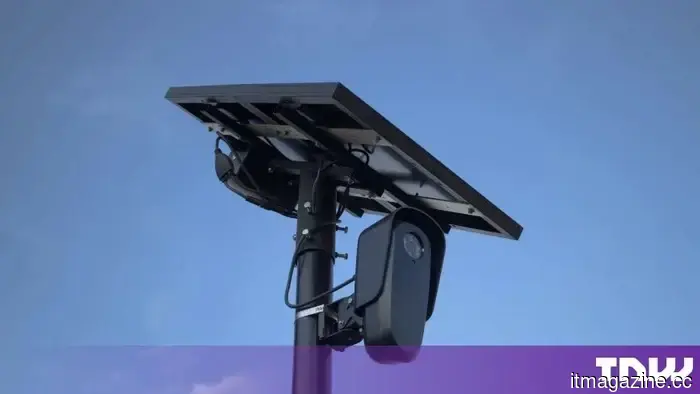 Flock developed an AI tool that enables law enforcement to locate individuals based on their driving habits.
An investigation by WIRED reveals that Flock's AI tool, OS Investigate, enables police to track individuals based on their movements without the need for a license plate, name, or any associated crime.
Flock developed an AI tool that enables law enforcement to locate individuals based on their driving habits.
An investigation by WIRED reveals that Flock's AI tool, OS Investigate, enables police to track individuals based on their movements without the need for a license plate, name, or any associated crime.
One of the most debated federal agencies is prohibiting employees from using Meta smart glasses.
ICE has prohibited Meta smart glasses in federal offices due to privacy issues, while DHS is pursuing funding for specialized smart glasses intended to aid in biometric identification for immigration enforcement.