
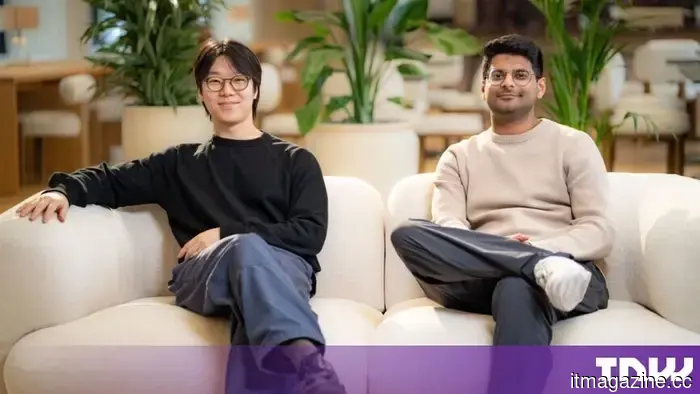
Medly AI secures $8 million to provide an AI tutor for every exam student in the UK.
Genuine projects often arise from the gaps we notice in our lives or in society. Perhaps this should be our societal focus: utilizing all available technology to tackle problems that previously seemed insurmountable.
Medly AI, a London-based exam preparation platform created by two former NHS doctors, has successfully secured an $8 million seed round led by Felix Capital, with existing investors Eka Ventures and Ada Ventures participating again.
Several angel investors joined the round, including InvestEngine CEO Andrey Dobrynin, Creator Fund venture partner Al Giles, LearnLaunch general partner Jean Hammond, and Episode 1 general partner Hector Mason.
This funding follows a £1.7 million round announced in February 2025, which was also led by Eka, along with a notable government contract.
In June, Medly was selected as one of eight suppliers from 53 submissions for the AI Tutoring Tools Pioneers Programme, managed by the Department for Science, Innovation and Technology in collaboration with the Department for Education.
Each winning supplier is set to receive £300,000, excluding VAT, for research contracts running until March 31, 2027, aimed at improving outcomes for disadvantaged students in England. Pearson, ElevenLabs, and Eedi are among the other selected companies.
Dr. Paul Jung and Dr. Kavi Samra, who met in their first year of secondary school, both went on to study medicine at UCL. Jung, from Northolt, holds a doctorate in psychiatric neuroscience, while Samra, raised in a council estate in Slough, has served as an honorary fellow at UCL Medical School.
Their personal stories reflect a common experience; neither could afford private tutoring during their school years, which has shaped the company’s narrative as well as its market premise.
The product provides marked practice answers and explanations of score deductions through an interactive chat interface, rather than a traditional worksheet format.
Medly claims to operate on a proprietary blend of seven large language models that adapt to different learning styles and customize feedback. Handwriting recognition enables students to use a stylus on a tablet, which is especially significant in subjects like maths and chemistry where the process is as crucial as the outcome.
The platform currently supports GCSEs, A-levels, and the IB in the UK and has recently added SAT preparation in the US, with plans for APs and ACTs by year's end.
Medly also aims to develop its own models tailored for UK and EEA marking and educational methodology rather than continuously using generic models.
Regarding performance, Medly reports that 74% of students who utilized the platform for last summer's GCSEs improved by at least one grade, and 41% achieved an improvement of two or more grades. These statistics are derived from a user survey rather than an independent review.
The company claims the largest subject gains were 46% and 43%, although its website attributes the 46% to English Literature, whereas the announcement credits it to Physics.
Claims of growth come with similar qualifications. Medly asserts it has surpassed 400,000 users in the UK, although this number contrasts with the “300,000+ students” advertised on its consumer site.
The company estimates that exam students spend about an hour daily on the platform, with close to a million messages exchanged each day.
In June, three team members published a preprint analyzing 32,534 double-marked GCSE responses across 328 questions and five subjects, concluding that leading off-the-shelf models aligned with examiners as closely as two examiners did with one another.
The paper evaluates general-purpose models rather than Medly’s specific marking system and has yet to undergo peer review. A randomized controlled trial involving over 1,000 students from lower-attaining schools has been completed but remains unpublished.
“Almost a third of 11 to 16-year-olds receive some form of private tutoring,” Jung noted. “For those who can afford it, it provides a significant advantage. For those who cannot, it reinforces the existing disparities.”
Angela Chou, the Felix Capital investor who led the investment round, highlighted the founders' personal experiences and the rapid scaling of the business.
Ada Ventures, which provided backing through its Inclusive Alpha fund during the pre-seed stage, has maintained its support, as has Eka, with founder Jon Coker expressing amazement at the speed of progress.
The market has become more competitive, with Smartschool introducing a maths reasoning engine to US districts and an increasing number of startups hoping that education-specific models will outperform general chatbots in the classroom.
Other articles
 SK Hynix will repurchase $28.6 billion of its own shares, marking the largest buyback in the history of Korean corporations.
SK Hynix has authorized a 40 trillion won ($28.6 billion) share repurchase, marking the largest buyback by a publicly traded company in Korea, after a record-breaking quarter did not boost its stock price.
SK Hynix will repurchase $28.6 billion of its own shares, marking the largest buyback in the history of Korean corporations.
SK Hynix has authorized a 40 trillion won ($28.6 billion) share repurchase, marking the largest buyback by a publicly traded company in Korea, after a record-breaking quarter did not boost its stock price.
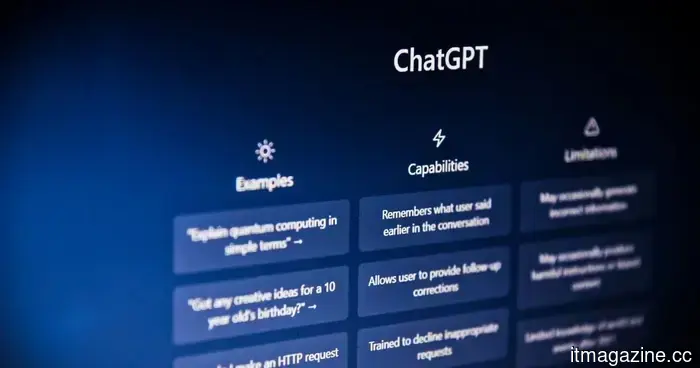 ChatGPT is introducing a version for teenagers, and I have many inquiries.
Teenagers are increasingly utilizing AI for their homework and beyond. OpenAI’s latest ChatGPT experience aims to ensure that they are genuinely learning from it, incorporating some significant safeguards in the process.
ChatGPT is introducing a version for teenagers, and I have many inquiries.
Teenagers are increasingly utilizing AI for their homework and beyond. OpenAI’s latest ChatGPT experience aims to ensure that they are genuinely learning from it, incorporating some significant safeguards in the process.
 LG's $2 billion battery plant in Lansing is now manufacturing cells.
LG Energy Solution has commenced operations in Lansing, Michigan, at a facility that GM planned, partially financed, and later sold. Its current clients include Toyota and Tesla.
LG's $2 billion battery plant in Lansing is now manufacturing cells.
LG Energy Solution has commenced operations in Lansing, Michigan, at a facility that GM planned, partially financed, and later sold. Its current clients include Toyota and Tesla.
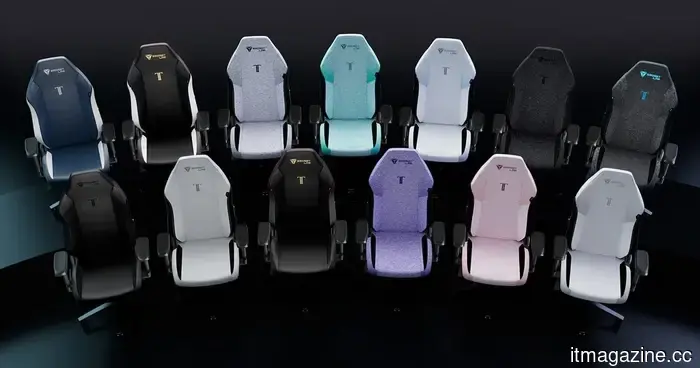 The Top Gaming Chairs to Look Out for in 2026
A gaming chair may appear stylish but can still have you adjusting your position after just an hour. The true distinction becomes evident when brief matches extend into lengthy gaming sessions. Here’s what differentiates appealing design from a chair designed for extended comfort.
The Top Gaming Chairs to Look Out for in 2026
A gaming chair may appear stylish but can still have you adjusting your position after just an hour. The true distinction becomes evident when brief matches extend into lengthy gaming sessions. Here’s what differentiates appealing design from a chair designed for extended comfort.
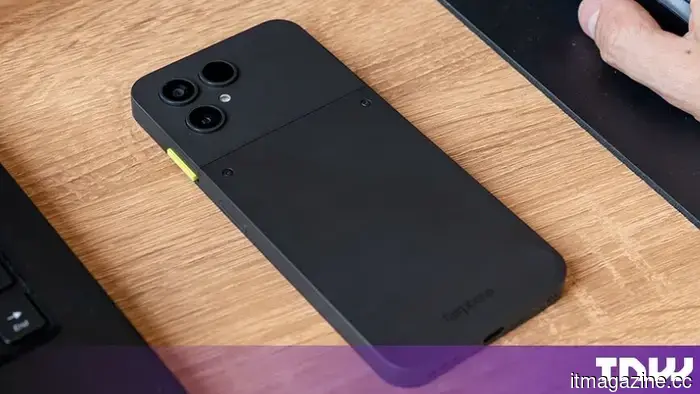 Fairphone's most repairable smartphone to date is now available in the US for $650.
Fairphone is now selling directly in the US for the first time. The Gen 6+ is priced at $650, features 12 parts that can be replaced, and offers seven years of software updates.
Fairphone's most repairable smartphone to date is now available in the US for $650.
Fairphone is now selling directly in the US for the first time. The Gen 6+ is priced at $650, features 12 parts that can be replaced, and offers seven years of software updates.
 This 1918 electric vehicle was equipped with 42 batteries and offered a greater range than a 2011 Leaf.
A 1918 Detroit Electric advertised at Monterey boasted a range of 80 miles, surpassing that of the first Nissan Leaf. The factor that led to its downfall was its price, rather than its range.
This 1918 electric vehicle was equipped with 42 batteries and offered a greater range than a 2011 Leaf.
A 1918 Detroit Electric advertised at Monterey boasted a range of 80 miles, surpassing that of the first Nissan Leaf. The factor that led to its downfall was its price, rather than its range.
Medly AI secures $8 million to provide an AI tutor for every exam student in the UK.
Medly AI has secured $8 million in seed funding, led by Felix Capital, just weeks after obtaining a £300,000 contract from the UK government to evaluate AI tutoring for students who are struggling.