
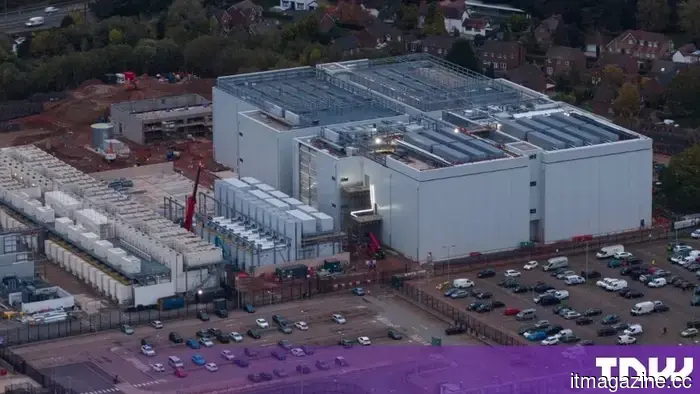
Currently, 63% of the new data centre capacity in Europe is being allocated outside of the major five providers.
Europe's data centre capacity is projected to hit 13 gigawatts by the end of 2026, representing a 20% increase from last year, with much of the new capacity emerging outside traditional markets. In the second quarter, around 700 megawatts were added, but only 37% of this increase went to the five major markets: Frankfurt, London, Amsterdam, Paris, and Dublin. These statistics originate from CBRE, which released its European report on Tuesday, noting that demand is outstripping supply primarily due to a shortage of available power, which is delaying data centre projects. Over half of the demand in that quarter occurred outside these five cities.
The primary factor driving developers away is the lengthy timeframes rather than financial concerns. According to analysts Owen Thomson and Coen Hutters from RaboResearch, connecting a new site in congested core markets can take “10 years or more,” in contrast to significantly shorter waits in Belgium, Portugal, Spain, the Nordics, and Italy. Amsterdam represents the most extreme case, with delays close to a decade; the Dutch grid operator TenneT indicated there would be no additional capacity in much of Noord-Holland for the next ten years. Furthermore, the Netherlands imposes a ban on hyperscale projects exceeding 70 megawatts of IT capacity or ten hectares in most areas.
Frankfurt's core grid won't see significant upgrades until the 2030s, and improvements to London's West London substation are also not expected before the early part of that decade. The long wait times in Britain have prevented Nscale's flagship Essex site from being activated. Denmark illustrates that the issue is not limited to the traditional core markets; Energinet paused new connections earlier this year because its queue reached 60 gigawatts, while national peak demand is approximately seven.
Land availability tells a similar tale, although it does not align with the notion of "cheaper." Prime powered land in Europe now costs €2.26 million per megawatt, reflecting an 82% increase since 2021, with primary markets exhibiting a 2.3 times premium over secondary areas and four times over tertiary ones. In relative terms, while nothing is cheap, it is still less expensive than in Frankfurt, leading developers to favor greenfield sites, which have increased from 8% to 39% in the 2026 to 2028 pipeline.
Electricity prices underpin everything; in 2025, European industrial power sat at about twice the levels in the US, according to IEA data, a gap the region is attempting to address indirectly rather than directly closing.
The most telling signs of this geographical shift are seen in neocloud metrics. AI-focused providers signed contracts for 420 megawatts in the second quarter, compared to 89 megawatts a year earlier, marking a 4.7-fold increase primarily in the Nordics, attributed to more affordable renewable energy. Spain has emerged as another destination, with installed capacity reaching 439 megawatts by the end of 2025, and Spain DC anticipates about 2,537 megawatts by 2030; Amazon has already pledged €33.7 billion in Aragón.
In Finland, Nebius is constructing a €8.5 billion, 310-megawatt facility in Lappeenranta, while the Stargate Norway project near Narvik is initiating at 230 megawatts powered by hydropower, with an additional 290 megawatts planned. Ireland, having lifted its connection moratorium in December 2025, now requires that entry involves behind-the-meter generation aligned with full grid connection, site selection in unrestricted areas, and 80% of annual demand covered by renewable investments in the country.
This situation is more of a toll than an invitation, reflecting a country where data centres already consume over 22% of the national electricity. Utilities have recognized the opportunity, with Uniper investing €5 billion to repurpose old power plant sites that already have grid connections in place.
Hyperscalers constructing facilities for their own use now account for 4.3 gigawatts across Europe, marking a 22% increase and the seventeenth consecutive year of double-digit growth. Approximately 70% of this operational self-build capacity is based in Ireland, the Netherlands, Sweden, and Belgium, reminding us that the traditional markets still retain the established infrastructure even as new capacity develops elsewhere. Vacancy rates in the five core markets slightly decreased last quarter to 6.4%, while in the rest of Europe, it is expected to reach 19% by year’s end, illustrating what happens during a building boom in new locations.
Other articles
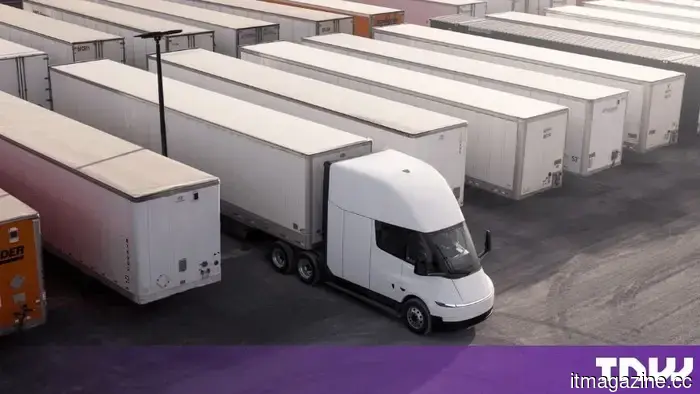 Einride erwirbt 500 Tesla Semis, und Amazon hat einen Anteil am Käufer.
Einride wird 500 Tesla Semis für Amazon und weitere Kunden bereitstellen, was die größte Bestellung dieser Art darstellt. SEC-Unterlagen zeigen, dass Amazon etwa 12% der Anteile an Einride über Warrants hält.
Einride erwirbt 500 Tesla Semis, und Amazon hat einen Anteil am Käufer.
Einride wird 500 Tesla Semis für Amazon und weitere Kunden bereitstellen, was die größte Bestellung dieser Art darstellt. SEC-Unterlagen zeigen, dass Amazon etwa 12% der Anteile an Einride über Warrants hält.
 Rillet secures $100 million at a $1 billion valuation to integrate AI agents into the general ledger.
Rillet has secured $100 million at a $1 billion valuation, with leadership from ICONIQ, for its AI-driven accounting that operates agents within the general ledger. This marks its third funding round in 14 months.
Rillet secures $100 million at a $1 billion valuation to integrate AI agents into the general ledger.
Rillet has secured $100 million at a $1 billion valuation, with leadership from ICONIQ, for its AI-driven accounting that operates agents within the general ledger. This marks its third funding round in 14 months.
 China successfully lands a rocket booster on the ground for the first time.
China's LandSpace successfully landed the first stage of its Zhuque-3 rocket on solid ground, marking a national milestone that reduces the gap between the US and China's advancements in reusable rockets compared to SpaceX.
China successfully lands a rocket booster on the ground for the first time.
China's LandSpace successfully landed the first stage of its Zhuque-3 rocket on solid ground, marking a national milestone that reduces the gap between the US and China's advancements in reusable rockets compared to SpaceX.
 Xiaomi's profits decrease once more as the memory shortage affects its smartphones.
Xiaomi's earnings have declined for the third consecutive quarter due to a memory shortage that has resulted in higher phone prices. Revenue decreased by 6.1%, and the company is focusing on electric vehicles.
Xiaomi's profits decrease once more as the memory shortage affects its smartphones.
Xiaomi's earnings have declined for the third consecutive quarter due to a memory shortage that has resulted in higher phone prices. Revenue decreased by 6.1%, and the company is focusing on electric vehicles.
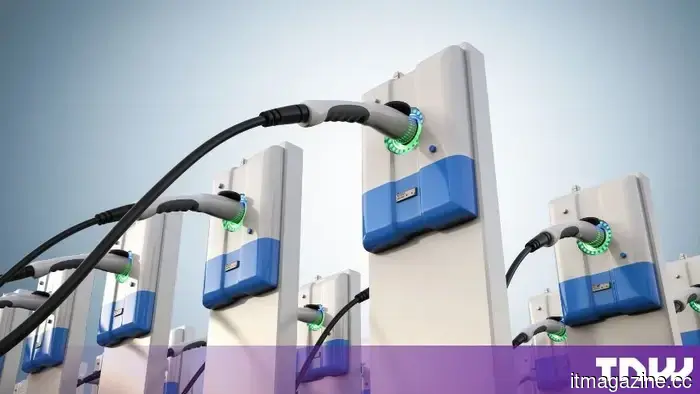 ADAC evaluated five electric vehicles for charging losses, revealing that one of them squandered a quarter of its energy.
ADAC assessed the amount of electricity that fails to reach an EV battery. When using a household socket, the Mercedes CLA experienced a loss of 24.2%, while with an 11 kW wallbox, the loss was 6.9%.
ADAC evaluated five electric vehicles for charging losses, revealing that one of them squandered a quarter of its energy.
ADAC assessed the amount of electricity that fails to reach an EV battery. When using a household socket, the Mercedes CLA experienced a loss of 24.2%, while with an 11 kW wallbox, the loss was 6.9%.
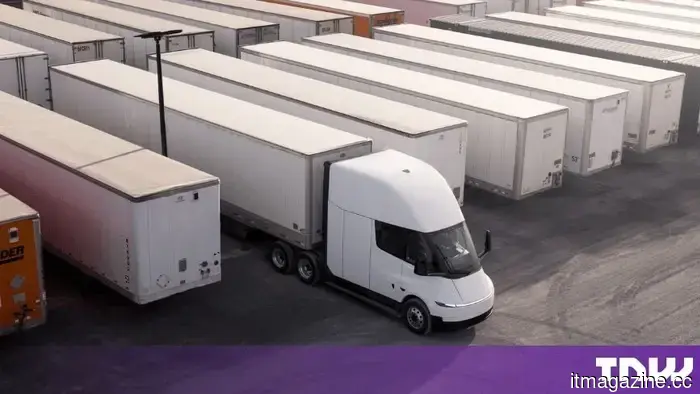 Einride erwirbt 500 Tesla Semis, und Amazon besitzt einen Anteil an dem Käufer.
Einride wird 500 Tesla Semis für Amazon und andere Unternehmen bereitstellen, was die größte Bestellung dieser Art darstellt. SEC-Unterlagen zeigen, dass Amazon Warrants für etwa 12% von Einride hält.
Einride erwirbt 500 Tesla Semis, und Amazon besitzt einen Anteil an dem Käufer.
Einride wird 500 Tesla Semis für Amazon und andere Unternehmen bereitstellen, was die größte Bestellung dieser Art darstellt. SEC-Unterlagen zeigen, dass Amazon Warrants für etwa 12% von Einride hält.
Currently, 63% of the new data centre capacity in Europe is being allocated outside of the major five providers.
In the last quarter, merely 37% of the new data centre supply in Europe was allocated to the traditional five markets. Long grid wait times of ten years are encouraging developers to move towards Iberia and the Nordics.