
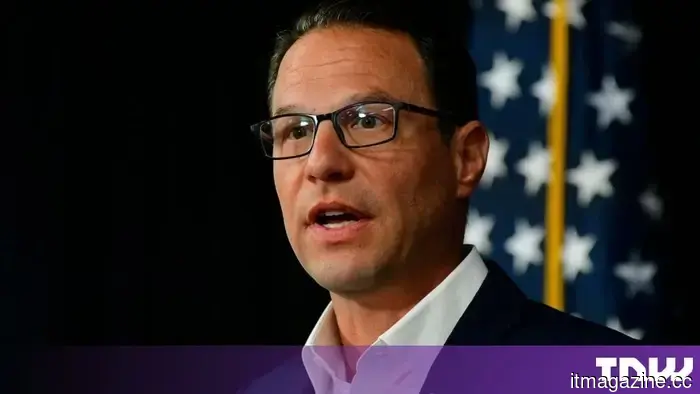
Pennsylvania has recently become one of the most challenging states in the US for constructing a data center.
Governor Josh Shapiro signed an executive order on Tuesday that positions Pennsylvania among the more challenging states in America for establishing an AI data center. The order removes data centers from the state's expedited permit program, delays environmental reviews until local approvals are obtained by developers, and prohibits state agencies from entering into non-disclosure agreements regarding data center projects.
This initiative comes as Pennsylvania has emerged as one of the nation’s most vibrant markets for AI development, while also being one of the most aggressive in regulation. In May, Pennsylvania took legal action against Character.AI after a chatbot claimed to be a licensed psychiatrist, illustrating the state's approach to regulating technology in the same manner as it does with physical infrastructure.
The initiative is called GRID, which stands for Governor's Responsible Infrastructure Development, and is based on four key principles: affordability of energy, transparency and community involvement, workforce development, and environmental protection. Six agencies are tasked with its implementation, including the Department of Environmental Protection, the Public Utility Commission, and the Special Counsel for Energy Affordability.
The framework involves a consent order and agreement. The Department of Environmental Protection will only begin assessing a permit application once the developer signs the agreement, legally tying them to the GRID requirements and confirming that all necessary local approvals are secured.
The financial implications for ratepayers are significant. Developers are required to cover the full costs associated with new electricity generation, transmission, and distribution necessary for their projects without transferring those expenses to Pennsylvania residents and businesses. This aligns Pennsylvania with a federal proposal introduced in June that seeks to make major technology firms responsible for AI's energy expenses.
The Special Counsel has been instructed to establish protocols where data centers may lose service before other users during grid stress events, and to create procedures for charging data centers, rather than ratepayers, for costs associated with reliability backstop auctions.
There will be mandatory annual reporting on energy consumption, peak demand, total water usage, and maximum water demands on peak days. Shapiro was clear about his intentions, stating, “We will not be bullied by developers and bulldozed by their lawyers from big tech companies,” and emphasized that the guidelines are “not voluntary standards” but legally binding requirements for operating in the state.
In an interview with Reuters, he expressed that he is “utilizing the full extent of my executive authority to obstruct projects that are objectionable or unwarranted.” Pennsylvania has identified over 100 proposals for data centers; 15 have sought DEP permits, and five have fulfilled all necessary requirements.
The magnitude of the opposition is notable. Amazon pledged $20 billion to data centers in Pennsylvania in June 2025, marking the largest private investment in the state's history, while the Homer City Energy Campus represents over $10 billion in development with 4.5 gigawatts of gas generation across 3,200 acres.
The financial implications are also substantial: wholesale power prices in the PJM area surged by 76% year on year in the first quarter of 2026, reaching $136.53 per megawatt-hour, with PJM's independent market monitor linking $7.3 billion of the total $16.1 billion from the last capacity auction to data center load.
Shapiro pointed to Archbald, a borough with 7,500 residents facing six proposed data center developments, as an example of the type of situation this order aims to address. Such local pressures are a reason financing has become a limiting factor for construction, with power availability influencing potential project locations.
Additionally, the order addresses a legislative gap, as four bills concerning data centers had passed the Pennsylvania House but stalled in the Senate. These bills dealt with regulations from the Public Utility Commission for loads over 25 megawatts, water-use notification thresholds, annual reporting with significant penalties, and a model township ordinance.
Pennsylvania is not isolated in its efforts to slow data center growth; New York imposed a statewide moratorium on hyperscale centers for up to one year in July, while Texas paused approvals for data center interconnections amid around 474 gigawatts of pending requests, coinciding with a visit from Trump promoting data centers as superior to oil.
Governor Josh Shapiro describes his initiative as the most stringent framework in the nation, a characterization that reflects his perspective rather than an objective assessment, and it exists alongside New York's outright moratorium. The order is effective immediately, and the DEP is expected to release a public permit tracking map.
Other articles
 The Top Ergonomic Office Chairs of 2026
Extended hours at your workstation require more than just a standard office chair. If you're enhancing your home office or substituting an old chair, these ergonomic options are crafted to ensure your comfort and support during the entire workday.
The Top Ergonomic Office Chairs of 2026
Extended hours at your workstation require more than just a standard office chair. If you're enhancing your home office or substituting an old chair, these ergonomic options are crafted to ensure your comfort and support during the entire workday.
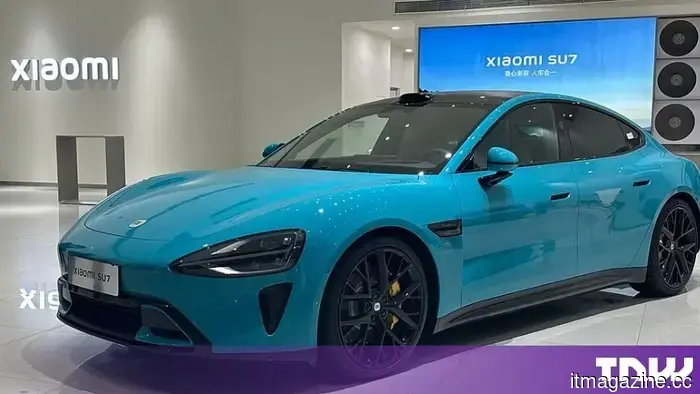 Xiaomi's inaugural electric vehicle has surpassed half a million units delivered.
Xiaomi's SU7 has achieved 500,000 deliveries in 28.5 months. However, it has seen a decline of 43.6% this year, whereas the company overall has experienced an increase of nearly 15%.
Xiaomi's inaugural electric vehicle has surpassed half a million units delivered.
Xiaomi's SU7 has achieved 500,000 deliveries in 28.5 months. However, it has seen a decline of 43.6% this year, whereas the company overall has experienced an increase of nearly 15%.
 Beyond GTA VI: Reasons why 2026 could be the greatest year for gaming.
With titles like GTA 6, Resident Evil Requiem, Wolverine, and Phantom Blade Zero, 2026 is poised to become one of the greatest years in gaming history.
Beyond GTA VI: Reasons why 2026 could be the greatest year for gaming.
With titles like GTA 6, Resident Evil Requiem, Wolverine, and Phantom Blade Zero, 2026 is poised to become one of the greatest years in gaming history.
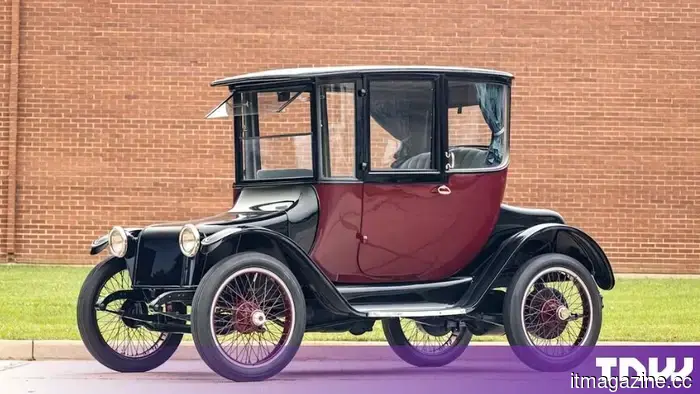 This 1918 electric vehicle was equipped with 42 batteries and offered a greater range than a 2011 Leaf.
A 1918 Detroit Electric advertised at Monterey boasted a range of 80 miles, surpassing that of the first Nissan Leaf. The factor that led to its downfall was its price, rather than its range.
This 1918 electric vehicle was equipped with 42 batteries and offered a greater range than a 2011 Leaf.
A 1918 Detroit Electric advertised at Monterey boasted a range of 80 miles, surpassing that of the first Nissan Leaf. The factor that led to its downfall was its price, rather than its range.
 The phone that you can truly fix by yourself is finally arriving in the US.
Fairphone is now offering its repairable, sustainable phone in the US, complete with a screwdriver. Here’s the price of the Gen 6+ and reasons why it could be worth skipping your next upgrade.
The phone that you can truly fix by yourself is finally arriving in the US.
Fairphone is now offering its repairable, sustainable phone in the US, complete with a screwdriver. Here’s the price of the Gen 6+ and reasons why it could be worth skipping your next upgrade.
 LG's $2 billion battery plant in Lansing is now manufacturing cells.
LG Energy Solution has commenced operations in Lansing, Michigan, at a facility that GM planned, partially financed, and later sold. Its current clients include Toyota and Tesla.
LG's $2 billion battery plant in Lansing is now manufacturing cells.
LG Energy Solution has commenced operations in Lansing, Michigan, at a facility that GM planned, partially financed, and later sold. Its current clients include Toyota and Tesla.
Pennsylvania has recently become one of the most challenging states in the US for constructing a data center.
Governor Josh Shapiro's executive order removes AI data centers from Pennsylvania's expedited permitting process and requires developers to cover their own energy expenses.