
A watchdog organization claims that Meta is compensating influencers to oppose global restrictions on teenagers.
Meta is conducting a worldwide campaign to counteract legislation that would prohibit teenagers from using social media, as revealed by a recent investigation from the Tech Transparency Project. The campaign utilizes paid influencers and sponsored parent groups, according to the watchdog. The strategies originated in the United States and have since been extended to over a dozen countries considering similar regulations. The findings were detailed in a report released on Tuesday.
The watchdog noted that the initial framework was established in Australia, where the company took action five months prior to the enactment of a ban for users under 16. In July 2025, Meta hosted an "Instagram Safety Camp" for parenting influencers at a scenic venue overlooking Sydney Harbour, providing attendees with branded merchandise and refreshments, as outlined in the report.
During the event, influencers were informed that outright bans are ineffective and that Instagram’s parental supervision features are a superior method for ensuring children's safety. The report quoted Ravi Sinha, Meta’s head of child safety, stating that bans do not work, and they may "push teens into places that are less safe." The influencers subsequently communicated these messages to their followers, often using generic tags like #instagrampartner instead of clear advertising disclosures.
This model appears to be implemented consistently in various regions, as detailed in the report. Meta organizes branded events, frequently labeled as Instagram Safety Camp or Screen Smart, and engages actors, radio personalities, psychologists, and parent influencers to promote its Teen Accounts, arguing that bans are unnecessary. Examples in the report included Indonesian actor Darius Sinathrya encouraging his 1.8 million followers to explore safety features, Indian actress Juhi Parmar assuring parents that teens were in a “safer space” on Instagram, and Brazilian actor Douglas Silva sharing a similar sentiment with his three million followers.
According to the watchdog, all these posts were financially compensated, and the disclosures were minimal rather than straightforward labels. In Australia, the report noted, the consumer regulator cautions against burying advertising labels within lengthy hashtags, stating that misleading endorsements could incur fines. Meta defended the use of tags like #instagrampartner as a standard marketing practice and clear acknowledgment of partnerships.
The report also highlighted that Meta collaborates with paid intermediaries such as the Australian youth organization ReachOut, the New Zealand group Netsafe, and the Brussels-based nonprofit ThinkYoung, all of which have supported the company's anti-ban stance, sometimes without revealing their financial backing. Each group communicated to the Tech Transparency Project that they determine their own positions independently and that Meta does not approve their statements.
At the European level, the report outlined a broader network funded by Meta, which has sponsored a youth advisory panel and a parents’ network via ThinkYoung; members of the latter have argued against bans in Brussels. Meta stated that it collaborates with various organizations to enhance teen safety without disclosing individual partnership details.
The core of Meta’s argument is centered around its Teen Accounts, which it claims provide safe supervised environments for young users. However, independent evaluations have raised concerns about their efficacy. The Washington Post reported last year that these accounts “fail spectacularly” at protecting minors from harmful content, a finding echoed by the Tech Transparency Project's assessments.
Meta disputed this characterization, claiming it has hosted over 40 global events since 2024 to advocate for its safety tools for teenagers, ensuring that all paid partnerships are clearly disclosed and comply with local advertising regulations. The company explained that it works with influencers because they are trusted local voices within their communities. Edward Patterson, a Meta spokesperson, challenged the assertion that the influence effort is misleading, arguing that bans lead teens to more dangerous, unregulated areas of the internet, and emphasized that Meta has never instructed a partner to advocate a specific viewpoint.
The Tech Transparency Project took a contrasting view, with director Katie Paul stating that Meta’s reliance on paid advocates indicates that the company understands “the brand has become a problem,” a perspective that Meta disputes.
The timing of the report is particularly significant for Meta, as the company faces a trial in California, where four states accuse it of creating features that addict children. Additionally, it is adjusting to Australia’s under-16 ban, the first of its kind, which was implemented in December. Other governments are initiating similar measures with mixed outcomes. Meta claims to have deleted access to approximately 750,000 Australian accounts deemed to belong to users under 16; however, regulators found that many of the affected teenagers remained online. In Europe, a legislative attempt in France to impose an under-15 ban was overturned by the country’s top court on free expression grounds. Countries like the United Kingdom, Canada, Spain, and several in Asia and the Middle East are at varying stages of assessing similar regulations, with Meta applying its strategies in each case.
The Tech Transparency Project noted that its findings are not comprehensive and observed signs of these tactics occurring in other nations, from Ireland to Turkey. It urged governmental bodies to be cautious of Meta's efforts to create a facade of parental endorsement for
Other articles
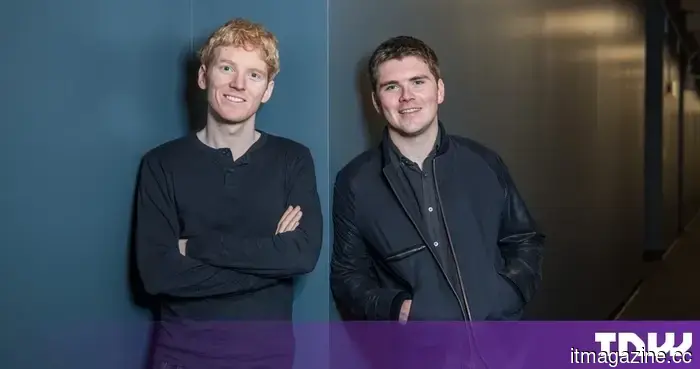 Stripe finalizes its OpenRouter agreement for an estimated $7.5 billion or higher.
Stripe has officially announced its agreement to acquire the AI model router OpenRouter. The purchase price has not been revealed; however, the New York Times cites a figure of $7.5 billion, while Axios mentions it could be over $8 billion.
Stripe finalizes its OpenRouter agreement for an estimated $7.5 billion or higher.
Stripe has officially announced its agreement to acquire the AI model router OpenRouter. The purchase price has not been revealed; however, the New York Times cites a figure of $7.5 billion, while Axios mentions it could be over $8 billion.
 Intel's upcoming laptop CPUs may receive a significant cache enhancement with Razor Lake.
The rumored Razor Lake mobile CPUs from Intel may feature bLLC for significantly larger cache pools, while an initial manufacturing claim has changed from TSMC N2X to the somewhat less specified N2P V2.
Intel's upcoming laptop CPUs may receive a significant cache enhancement with Razor Lake.
The rumored Razor Lake mobile CPUs from Intel may feature bLLC for significantly larger cache pools, while an initial manufacturing claim has changed from TSMC N2X to the somewhat less specified N2P V2.
 China successfully lands a rocket booster on the ground for the first time.
China's LandSpace successfully landed the first stage of its Zhuque-3 rocket on solid ground, marking a national milestone that reduces the gap between the US and SpaceX in the realm of reusable rockets.
China successfully lands a rocket booster on the ground for the first time.
China's LandSpace successfully landed the first stage of its Zhuque-3 rocket on solid ground, marking a national milestone that reduces the gap between the US and SpaceX in the realm of reusable rockets.
 Marvell provides Google with a $12.2 billion share option as part of a custom-chip agreement.
Marvell issued Google a warrant to purchase as much as $12.2 billion in its shares, which will become available as Google acquires its custom AI chips. Marvell's stock surged, while Broadcom's declined.
Marvell provides Google with a $12.2 billion share option as part of a custom-chip agreement.
Marvell issued Google a warrant to purchase as much as $12.2 billion in its shares, which will become available as Google acquires its custom AI chips. Marvell's stock surged, while Broadcom's declined.
 Samsung has raised foundry prices by as much as 15%, with China facing the highest increases.
According to Reuters, Samsung has increased its advanced chipmaking prices by as much as 15%, driven by AI demand exceeding TSMC’s production capacity. Chinese clients are now facing the highest prices.
Samsung has raised foundry prices by as much as 15%, with China facing the highest increases.
According to Reuters, Samsung has increased its advanced chipmaking prices by as much as 15%, driven by AI demand exceeding TSMC’s production capacity. Chinese clients are now facing the highest prices.
 India's Murf AI introduces Falcon 2 to compete with leaders in voice AI.
Bangalore's Murf AI has introduced Falcon 2, priced at $0.01 for each generated minute, which is one-fifth the cost of ElevenLabs, and asserts that its benchmark scores surpass those of certain OpenAI models.
India's Murf AI introduces Falcon 2 to compete with leaders in voice AI.
Bangalore's Murf AI has introduced Falcon 2, priced at $0.01 for each generated minute, which is one-fifth the cost of ElevenLabs, and asserts that its benchmark scores surpass those of certain OpenAI models.
A watchdog organization claims that Meta is compensating influencers to oppose global restrictions on teenagers.
A report from the Tech Transparency Project indicates that Meta compensates influencers globally to support the argument that its Teen Accounts render social media bans for adolescents unnecessary.