
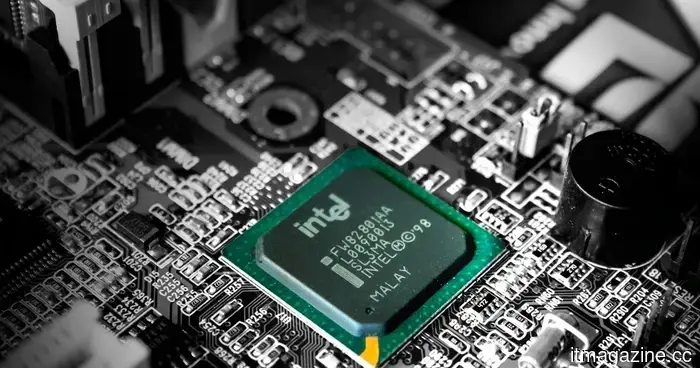
Intel's upcoming laptop CPUs may receive a significant cache enhancement with Razor Lake.
Razor Lake is said to be introducing bLLC to mobile chips, while an initial claim regarding N2X has already been updated to N2P V2.
Intel's upcoming laptop processors may feature a significantly larger cache. Leaker Jaykihn suggests that Razor Lake will include mobile SKUs equipped with bLLC, or Big Last Level Cache, which could expand Intel's large-cache approach to laptops.
However, it’s wise to be cautious about these claims. Jaykihn first mentioned TSMC’s N2X process for Razor Lake before revising it to N2P V2. Intel has yet to unveil Razor Lake or validate either specification, maintaining an air of uncertainty around this upcoming generation.
Razor Lake will feature bLLC mobile SKUs, according to Jaykihn (@jaykihn0) on August 18, 2026.
The significance of bLLC for laptops
Implementing bLLC would provide certain processors with a much larger last-level cache. Nova Lake is anticipated to launch this technology in desktop chips, while mobile processors might have to wait for Razor Lake's arrival.
A clear comparison can be drawn with AMD’s X3D series, which utilizes additional cache as a key selling point for gaming CPUs, including some laptops. If Intel successfully integrates its own large-cache architecture into notebooks, future gaming laptops may enjoy an upgrade that surpasses mere increases in clock speeds and core counts.
At this stage, we should not assume returns akin to those seen with X3D. The leak lacks specifics about cache sizes or performance benchmarks, leaving actual performance benefits uncertain.
Understanding N2P V2
The revised claim regarding the process is more challenging to define. TSMC has publicly characterized N2P as an upgraded version of N2, but their current documentation does not mention a process labeled “N2P V2.”
This makes it challenging to interpret Jaykihn’s revised term based solely on publicly available information. Until Intel or TSMC provides further clarification, N2P V2 should be viewed as a term emerging from the leak rather than an officially recognized TSMC process.
What remains unverified
Razor Lake’s development timeline is such that both cache configuration and manufacturing aspects might still undergo changes. The swift amendment from N2X to N2P V2 serves as a reminder of the variable nature of early CPU leaks.
The key point to observe is whether Intel eventually confirms bLLC for mobile processors. If this feature makes it to the final Razor Lake hardware, premium laptops could receive a more intriguing cache improvement than just another typical generational upgrade.
Paulo Vargas is a former English major who transitioned into reporting and technical writing, with a career that has always returned to...
My Mac seldom informs me about my internet usage, prompting me to find an app that does.
Having used a Mac for years, I’ve developed a knack for troubleshooting issues. Typically, I start in the Settings app, make a few adjustments, and usually identify the source of the problem. For instance, upon noticing my Mac slowing down, I checked the Storage section and instantly got a detailed view of what was consuming space. After some cleanup, I managed to free up crucial storage, returning my Mac to its normal state. I've applied similar methods to diagnose battery drain or unexpected CPU usage, as macOS offers ample resources for troubleshooting when something seems off.
However, one aspect that remains unclear is where all my internet data goes. This curiosity arose when my internet appeared to be acting unusually for several days. Things felt slower than normal, yet my connection seemed fine and I wasn’t downloading anything substantial; so what was consuming all that bandwidth? It turned out that several applications on my Mac were accessing the internet in the background without my knowledge. I likely wouldn't have realized this if I hadn’t discovered a Mac app that revealed exactly what was happening behind the scenes, making for an intriguing situation.
Researchers uncover a disturbingly simple trick that could lead AI bots to bypass safety protocols.
If you ask an AI agent to hack an account, it will most likely refuse. However, researchers at EPFL have demonstrated a simpler approach: it involves patience rather than technical expertise. Their recent study shows that by breaking a harmful objective into smaller, innocuous-sounding requests, one can deceive AI agents into fulfilling tasks they would typically decline (via TechXplore). This mirrors the recent 'Bioshocking' exploit, where AI browsers were manipulated into perceiving credential theft as part of a harmless game.
[Update] Googlebook is finally set to launch, and the date is sooner than expected.
Googlebook will have its showcase on September 15, alongside Gemini, Android, and new laptops.
Update: Google has clarified details about the event. Here’s the statement: "Nothing will be announced on September 15; that is just the date of the embargoed event."
The original story continues.



Other articles
 China successfully lands a rocket booster on the ground for the first time.
China's LandSpace successfully landed the first stage of its Zhuque-3 rocket on solid ground, marking a national milestone that reduces the gap between the US and SpaceX in the realm of reusable rockets.
China successfully lands a rocket booster on the ground for the first time.
China's LandSpace successfully landed the first stage of its Zhuque-3 rocket on solid ground, marking a national milestone that reduces the gap between the US and SpaceX in the realm of reusable rockets.
 The sideloading solution that Google pledged months ago is now being released.
Google's enhanced sideloading process is now being implemented, allowing advanced users to bypass ADB. However, you'll have to toggle a setting, confirm your identity, and wait for a period of 24 hours before using it.
The sideloading solution that Google pledged months ago is now being released.
Google's enhanced sideloading process is now being implemented, allowing advanced users to bypass ADB. However, you'll have to toggle a setting, confirm your identity, and wait for a period of 24 hours before using it.
 Samsung has raised foundry prices by as much as 15%, with China facing the highest increases.
According to Reuters, Samsung has increased its advanced chipmaking prices by as much as 15%, driven by AI demand exceeding TSMC’s production capacity. Chinese clients are now facing the highest prices.
Samsung has raised foundry prices by as much as 15%, with China facing the highest increases.
According to Reuters, Samsung has increased its advanced chipmaking prices by as much as 15%, driven by AI demand exceeding TSMC’s production capacity. Chinese clients are now facing the highest prices.
 Stripe finalizes its OpenRouter agreement for an estimated $7.5 billion or more.
Stripe has officially announced its acquisition of the AI model router OpenRouter. While the purchase price was not revealed, the New York Times reports it to be $7.5 billion, whereas Axios cites it as exceeding $8 billion.
Stripe finalizes its OpenRouter agreement for an estimated $7.5 billion or more.
Stripe has officially announced its acquisition of the AI model router OpenRouter. While the purchase price was not revealed, the New York Times reports it to be $7.5 billion, whereas Axios cites it as exceeding $8 billion.
 Nebius is seeking to raise $4.5 billion through convertible bonds to establish AI data centers.
Nebius is seeking to raise $4.5 billion through convertible bonds to finance AI data centers, marking its second sale of 2026. According to Bloomberg, the pricing for the offering will take place on Wednesday.
Nebius is seeking to raise $4.5 billion through convertible bonds to establish AI data centers.
Nebius is seeking to raise $4.5 billion through convertible bonds to finance AI data centers, marking its second sale of 2026. According to Bloomberg, the pricing for the offering will take place on Wednesday.
 NVIDIA has supplied 10,000 H200 chips to Chinese companies ByteDance and Tencent, with additional shipments anticipated.
ByteDance and Tencent are said to have acquired 10,000 NVIDIA H200 chips each, providing Chinese AI firms with access to robust processors despite the continuing U.S. export limitations.
NVIDIA has supplied 10,000 H200 chips to Chinese companies ByteDance and Tencent, with additional shipments anticipated.
ByteDance and Tencent are said to have acquired 10,000 NVIDIA H200 chips each, providing Chinese AI firms with access to robust processors despite the continuing U.S. export limitations.
Intel's upcoming laptop CPUs may receive a significant cache enhancement with Razor Lake.
The rumored Razor Lake mobile CPUs from Intel may feature bLLC for significantly larger cache pools, while an initial manufacturing claim has changed from TSMC N2X to the somewhat less specified N2P V2.