
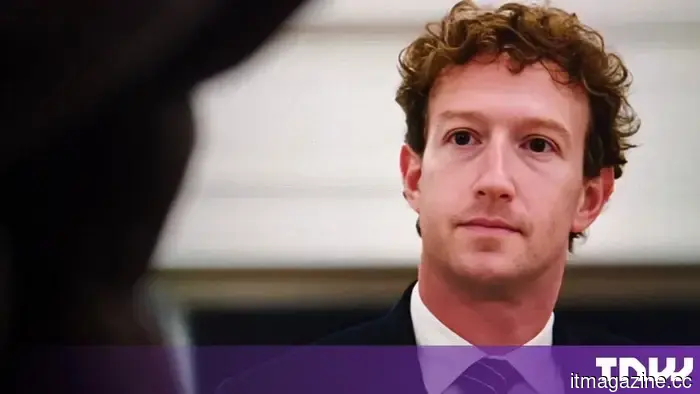
Opening statements commence in the largest consumer protection case in the United States.
Opening arguments in the states’ case against Meta commence today in Oakland. A jury was selected last week, and the trial is expected to last approximately five weeks. In 2023, a coalition of twenty-nine state attorneys general initiated the case, with attorneys from California, Colorado, Kentucky, and New Jersey representing the states. They assert that Meta intentionally designed Facebook and Instagram to foster compulsive usage among children while misleading the public about associated risks.
Most media covering the Meta social media trial are reporting two key points that require clarification.
Firstly, the $1.4 trillion figure is attributed to Meta. Many reports highlight the $1.4 trillion figure, which originated from Meta’s legal team, estimating the maximum potential penalty if every alleged infraction incurred the full statutory penalty of $20,000. We noted this in July when Meta claimed that four states demanded $1.4 trillion. Since that time, the states have presented their own stated amount.
Megan O’Neill, an attorney for California, informed the court last week that the figure is closer to $193 billion, according to Bloomberg. She indicated that Meta referenced the highest conceivable figure for dramatic effect. CNBC mentioned the states' number was slightly higher at $200 billion. Regardless, the range spans from about $193 billion for the plaintiffs to $1.4 trillion for the defendant.
Even the lower estimate would rank among the largest litigation settlements ever recorded, compared by Bloomberg to the $206 billion tobacco settlement of 1998.
The jury is not the deciding authority.
The second point of clarification involves the nature of the jury’s role.
The jury in Oakland is advisory only. It will be U.S. District Judge Yvonne Gonzalez Rogers who will determine whether Meta is liable and what penalties or remedies may apply. Gonzalez Rogers has spent nearly twenty years on the federal bench and presided over the Musk and Altman trial. The BBC has described her as incisive and straightforward.
This context alters the perspective for the upcoming five weeks. Both Mark Zuckerberg and Instagram head Adam Mosseri are anticipated to testify, addressing a judge rather than a jury of twelve.
What the states aim to change.
Attorneys from both sides assert that the monetary aspect is not the most significant concern for Meta.
The states are seeking permanent injunctive relief on a nationwide level instead of proceeding state by state. If the court finds that Meta violated the Children’s Online Privacy Protection Act, they want the company to erase all personal data gathered from users under thirteen, along with any algorithms and models developed based on that data.
For the consumer protection allegations, they specify particular features: infinite scroll, autoplay, ephemeral content, beauty filters, and engagement-optimized recommendation algorithms. The BBC adds that they also seek changes to like counts, restrictions on multiple accounts, and parental verification for teenagers.
Laura Marquez-Garrett of the Social Media Victims Law Center emphasized in a CNBC briefing that state attorneys general can enforce design modifications through the courts in a way that private plaintiffs cannot.
Minda Smiley, an analyst at eMarketer, characterized a trillion-dollar penalty as symbolic at this stage, suggesting that the lawsuits could significantly impact how these platforms fundamentally operate.
Meta's response.
Meta consistently denies the allegations.
The company stated, “The AGs provide no evidence that anyone in their states was misled, claim that benign features like having an additional Instagram account somehow harmed their residents, and attempt to penalize Meta for industry-wide challenges like age verification.”
Meta referred to the claims as unfounded and the financial demands as grossly disproportionate, describing the case as a pursuit of an unrealistic payout. A spokeswoman informed the BBC that the evidence would demonstrate Meta's long-standing commitment to supporting young users.
Additionally, the company attempted to halt the trial. Last week, it requested that the Ninth Circuit delay proceedings until that court could determine if Section 230 barred the states’ claims, but the request was denied.
The New Mexico precedent.
Meta faced a setback in New Mexico this month. A judge ordered approximately $942 million in total damages, with $567 million allocated to an abatement fund. Meta is appealing this decision.
The judge also designated Meta as a public nuisance, likening the company to a factory that pollutes the environment. The BBC reports that this term had not previously been used in reference to a social media company.
New Mexico Attorney General Raúl Torrez warned CNBC that the ramifications in California could be “astronomical.” He laid out the demographics: New Mexico has about two million residents, while California, Texas, Florida, and New York do not.
Torrez acknowledged, however, that New Mexico was unable to secure certain changes, as the judge declined to eliminate infinite scroll or modify recommendation algorithms, citing Section 230 and the First Amendment, and recognizing that competitors would maintain those features.
What the AGs claim about their own actions.
The four states involved in the litigation issued
Other articles
 OpenAI is financing 13 local newsletters from Axios in a three-year agreement.
The local news agreement between Axios and OpenAI will support 13 newsletters over the span of three years. Both companies have declined to disclose the amount paid or whether Axios relinquished its right to take legal action.
OpenAI is financing 13 local newsletters from Axios in a three-year agreement.
The local news agreement between Axios and OpenAI will support 13 newsletters over the span of three years. Both companies have declined to disclose the amount paid or whether Axios relinquished its right to take legal action.
 Damaging your Galaxy Z Fold 8 Ultra screen may result in a repair cost of $639, so it's important to treat it with care.
Repairing a cracked inner screen on the Z Fold 8 Ultra will cost you $639, as stated by Samsung's official repair pricing.
Damaging your Galaxy Z Fold 8 Ultra screen may result in a repair cost of $639, so it's important to treat it with care.
Repairing a cracked inner screen on the Z Fold 8 Ultra will cost you $639, as stated by Samsung's official repair pricing.
 GitHub challenges Wiz’s assertion that Copilot Autofix was responsible for a flaw in Snowflake.
Wiz claimed that Copilot Autofix created a Snowflake vulnerability, which its AI agent subsequently exploited. GitHub argued against this, Wiz retracted the statement, and The Register published a correction.
GitHub challenges Wiz’s assertion that Copilot Autofix was responsible for a flaw in Snowflake.
Wiz claimed that Copilot Autofix created a Snowflake vulnerability, which its AI agent subsequently exploited. GitHub argued against this, Wiz retracted the statement, and The Register published a correction.
 Terra Industries secures $52 million in seed funding and establishes its inaugural office outside of Africa.
Terra Industries has concluded its seed round, raising $52 million in three tranches over the course of eight months, and is establishing its first office outside of Africa in London.
Terra Industries secures $52 million in seed funding and establishes its inaugural office outside of Africa.
Terra Industries has concluded its seed round, raising $52 million in three tranches over the course of eight months, and is establishing its first office outside of Africa in London.
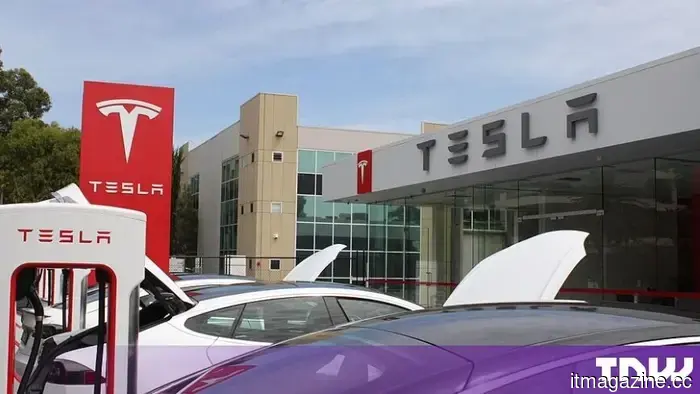 Tesla Discreetly Activates Power Export Feature on Its Top-Selling Electric Vehicle
Tesla has discreetly activated vehicle-to-load functionality on the Model Y Premium in the US, using an $80 adapter limited to 2.4kW. However, vehicles in Europe and Canada still lack this feature.
Tesla Discreetly Activates Power Export Feature on Its Top-Selling Electric Vehicle
Tesla has discreetly activated vehicle-to-load functionality on the Model Y Premium in the US, using an $80 adapter limited to 2.4kW. However, vehicles in Europe and Canada still lack this feature.
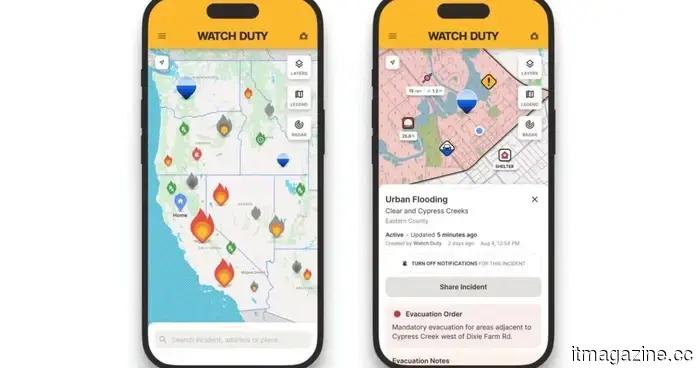 America's leading wildfire application is now focusing on much larger disasters.
Watch Duty established its reputation by monitoring rapidly spreading wildfires, and providing nationwide flood coverage is the initial move towards transforming the nonprofit into a more extensive disaster-alert platform.
America's leading wildfire application is now focusing on much larger disasters.
Watch Duty established its reputation by monitoring rapidly spreading wildfires, and providing nationwide flood coverage is the initial move towards transforming the nonprofit into a more extensive disaster-alert platform.
Opening statements commence in the largest consumer protection case in the United States.
The trial concerning Meta's social media practices begins today. The $1.4 trillion amount is reported by Meta itself. A lawyer from California informed the court of a $193 billion figure. The jury's role is solely advisory.