
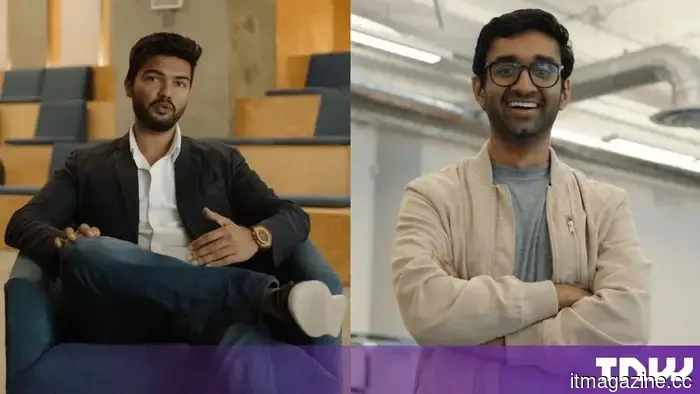
Wispr secured $280 million at a $2 billion valuation to assert that the text box era is over.
Wispr has successfully secured $280 million at a valuation of $2 billion, with Menlo Ventures leading this funding round, as they did in the previous one. The company's total funding now totals $361 million. Wispr develops Wispr Flow, a dictation application that converts spoken words into polished text in any active application. According to Reuters, the last funding round in November valued the company at $700 million, indicating a near tripling of value within nine months.
Menlo Ventures announced their reasoning for the investment in a notably straightforward manner. Partner Matt Kraning stated, “The frontier labs have produced superhuman AI intelligences. They have not produced delightful and effective human interfaces.” He emphasized that the challenge now lies more in the interface than the model itself. Kraning further articulated this to Fortune, saying, “It isn’t a dictation market. Dictation is how you get in the door. The labs have mostly solved intelligence. Nobody has solved how a normal person tells it what they want.” Menlo considers this to be one of its largest investments in the AI sector.
Another startup, amber, located in Aachen, raised €7 million, echoing similar sentiments about the competition for models being largely settled, and emphasizing that the crucial factor now is the context provided to the models.
On the same day as the funding announcement, Wispr previewed Canto, its first proprietary speech recognition model. CEO Tanay Kothari highlighted the model’s performance: “In the hardest conditions, with background noise, wind, heavy accents, or music, error rates fall from over 30% of words to between 5% and 10%.” Reading this carefully reveals that under challenging conditions today, before Canto’s release, the product misinterprets more than three out of ten words. Users have started to notice this; TechCrunch reported multiple complaints about a decline in output quality in recent weeks. The launch of Canto is both a solution to that issue and a significant milestone.
Despite Wispr claiming over 150% revenue growth in each of the last four quarters, Menlo estimates an increase of over 30 times yearly. Michael Ashley Schulman, a partner at Cerity Partners, cautioned against taking those numbers at face value. He stated, “Triple-digit quarterly growth off a small base is the easiest number in venture capital to generate for a few quarters and the hardest one to keep producing once the early adopters stop being the entire customer base.” This sentiment applies broadly across the industry, as illustrated by Higgsfield’s recent $400 million raise on a run rate that surged from $20 million to $700 million in a year, highlighting that these rounds reflect a growth trajectory rather than an established business.
Founders Tanay Kothari and Sahaj Garg launched the company in 2021 after meeting in a Stanford freshman dorm. They invested years into wearables and silent speech technology, both of which were unsuccessful before the introduction of Flow, which emerged about two years ago.
Discrepancies exist regarding the company’s customer counts, with Fortune reporting 100,000 businesses, Menlo suggesting tens of thousands, and Reuters stating more than 10,000 enterprises. These figures might reflect different interpretations rather than distinct counts, and no public reconciliation has been offered. However, what remains consistent is the presence of millions of consumer users across 162 countries and more than 100 languages. The company’s website mentions employers such as Microsoft, Amazon, Notion, Klarna, Groupon, Rivian, Vercel, and Mercury where staff utilize its services.
The competitive landscape includes major companies like Apple, Google, Microsoft, Anthropic, and OpenAI, all engaged in voice input technologies. Beneath them are a range of smaller dictation applications, including Willow, Monologue, Aqua, and Superwhisper, as well as free tools targeting the same user base. Menlo directly addresses this challenge, indicating they anticipate pushback: Kraning argues that despite the existence of free dictation options for almost a decade, very few people utilize them, as the functionality may transcribe but fulfilling user intent necessitates a dedicated company.
Wispr offers a free tier allowing 2,000 words weekly, with Pro, team, and enterprise tiers available for purchase. It has achieved certifications for SOC 2 Type II, ISO 27001, and HIPAA compliance, and ensures that the Privacy Mode keeps dictation data out of its training sets. Investors in the Wispr Series B include Notable Capital, NEA, Neo Ventures, 8VC, Acrew, Forerunner, Goodwater, Peak XV, Together Fund, and PLUS Capital. Additionally, athletes like Joe Burrow, Shaun White, Klay Thompson, and Paul George participated in the funding.
The goal extends beyond simple dictation. In July, Wispr launched a research lab under Ariya Rastrow, who contributed to the early development of Amazon Alexa
Other articles
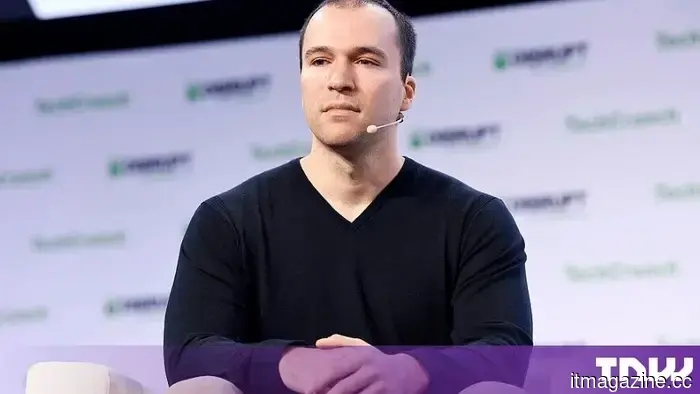 Greg Brockman mentioned that OpenAI did not fully recognize the cyber capabilities of its own models.
Greg Brockman dismissed OpenAI's departures on television. In a blog post he authored, he stated that the company didn't fully grasp the cyber abilities of its models.
Greg Brockman mentioned that OpenAI did not fully recognize the cyber capabilities of its own models.
Greg Brockman dismissed OpenAI's departures on television. In a blog post he authored, he stated that the company didn't fully grasp the cyber abilities of its models.
 OpenAI is financing 13 local newsletters from Axios in a three-year agreement.
The local news agreement between Axios and OpenAI will support 13 newsletters over the span of three years. Both companies have declined to disclose the amount paid or whether Axios relinquished its right to take legal action.
OpenAI is financing 13 local newsletters from Axios in a three-year agreement.
The local news agreement between Axios and OpenAI will support 13 newsletters over the span of three years. Both companies have declined to disclose the amount paid or whether Axios relinquished its right to take legal action.
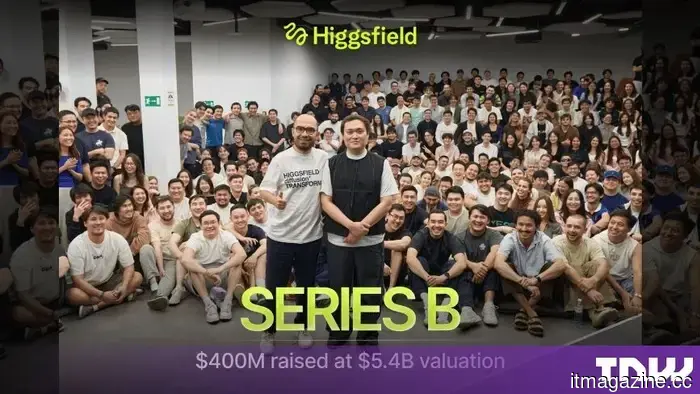 Higgsfield secured $400 million at a valuation of $5.4 billion, which is four times its valuation from January.
The Higgsfield Series B secured $400 million at a valuation of $5.4 billion, supported by Goldman and Intel. Its revenue run rate increased from $20 million to $700 million over the course of a year.
Higgsfield secured $400 million at a valuation of $5.4 billion, which is four times its valuation from January.
The Higgsfield Series B secured $400 million at a valuation of $5.4 billion, supported by Goldman and Intel. Its revenue run rate increased from $20 million to $700 million over the course of a year.
 A TikTok video led to scientists uncovering a rare underground fish species in India.
A fuzzy TikTok video showing a fish emerging from a borewell directed scientists to the discovery of a new species residing underground beneath the border of India and Nepal. Introducing Gangaichthys indonepalicus.
A TikTok video led to scientists uncovering a rare underground fish species in India.
A fuzzy TikTok video showing a fish emerging from a borewell directed scientists to the discovery of a new species residing underground beneath the border of India and Nepal. Introducing Gangaichthys indonepalicus.
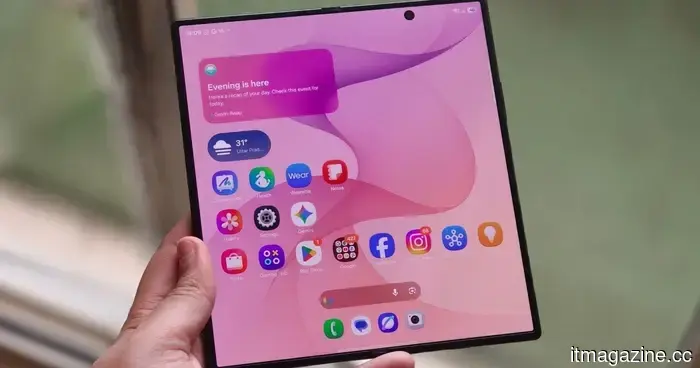 Damaging your Galaxy Z Fold 8 Ultra screen may result in a repair cost of $639, so it's important to treat it with care.
Repairing a cracked inner screen on the Z Fold 8 Ultra will cost you $639, as stated by Samsung's official repair pricing.
Damaging your Galaxy Z Fold 8 Ultra screen may result in a repair cost of $639, so it's important to treat it with care.
Repairing a cracked inner screen on the Z Fold 8 Ultra will cost you $639, as stated by Samsung's official repair pricing.
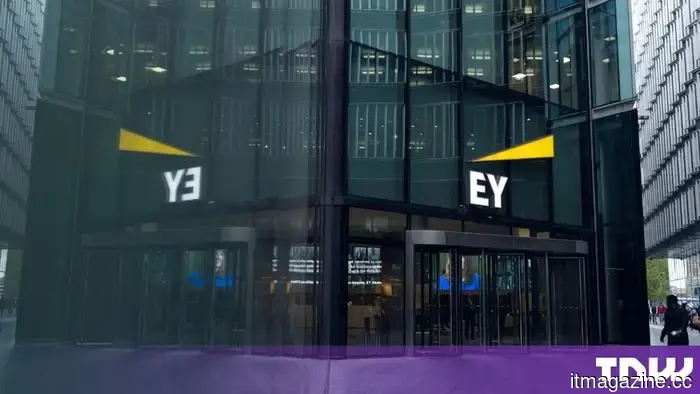 EY will retain interns for a year prior to extending a job offer to them.
EY will retain assurance interns on a part-time basis for 8 to 12 months following their internship, as AI takes over the junior tasks that new employees used to learn.
EY will retain interns for a year prior to extending a job offer to them.
EY will retain assurance interns on a part-time basis for 8 to 12 months following their internship, as AI takes over the junior tasks that new employees used to learn.
Wispr secured $280 million at a $2 billion valuation to assert that the text box era is over.
The Wispr Series B secured $280 million at a valuation of $2 billion. Menlo claims that the text box is the upcoming interface to become obsolete. Its own error rate exceeds 30% in noisy conditions.