
Azerbaijan aims to establish itself as a technology hub, as its startups secured $2.6 million in funding last year.
Every petrostate ultimately realizes that oil reserves are finite, and Azerbaijan has reached a point in its journey where the government is starting to emphasize technology. According to the IMF, hydrocarbons previously constituted about 75% of the nation's economic output and 90% of its exports—a comfortable scenario until it becomes unsustainable.
Consequently, Baku has begun to gather the typical tools associated with emerging tech hubs, and this initiative is worth observing, particularly because the disparity between the initial promises and the actual results is where these narratives typically unfold. This impulse is not unique to the Caspian Sea area: throughout the region, revenue from oil has been invested in servers and startups for years, with varying degrees of success, as evidenced by the recent developments in the Gulf's AI data centers.
In 2025, technology represented 2.1% of gross domestic product, up from 1.9% in the previous year—an increase that is both real and nearly undetectable compared to the energy sector, with the venture landscape being even smaller. A total of 22 startups secured $2.62 million in 2025, a sum that could be easily consumed by a single mid-sized seed funding round in cities like Berlin or London.
Three local investment funds—Caucasus Ventures, INMerge Ventures, and Tumar Ventures—collectively manage about $11 million in disclosed capital. In July, the parliament approved a legal framework for investment vehicles, and the government is in the process of establishing a fund that merges local and international capital. When asked about its size, Deputy Digital Development Minister Rashad Hasanov refrained from providing a specific number. “The scale will depend on the quality of projects and the partners we attract, rather than the other way around,” he stated, which could be seen as either commendable prudence or a polite way of acknowledging that no financial commitments have been made yet.
The central bank, led by governor Taleh Kazimov, anticipates new participants once the regulations are established, and has six months to approve rules for equity and debt-based crowdfunding. The incentives presented are, at least on paper, generous. Azerbaijani media report on two decades of zero income tax for eligible migrants and returning researchers, a similar corporate tax exemption for firms focused on digital, AI, and cybersecurity, and customs exemptions on imported equipment—all measures designed partly to counteract the brain drain that has silently depleted the talent pool.
Officials consider Singapore and Estonia as reference points, aspiring for Baku to become the tech capital of the Caspian region. While the ambition is easy to articulate, realizing it is significantly more challenging. Azerbaijan lags behind its closest neighbors by a troubling margin: Kazakhstan boasts over 20 private venture funds and attracted approximately $130 million in 2025, while Armenia has already produced several unicorns.
The Technology News Website’s recent report from Kazakhstan's tech ecosystem found a market considerably ahead of what Baku is just beginning to develop. A government goal of reaching 500 startups by the end of 2026, up from about 151 today, appears to be more of a target for a presentation than a feasible plan.
Startup founders appear cautiously appreciative yet somewhat apprehensive. Tural Selimli, head of the startup Sera AI, endorsed the legal framework but emphasized the greater challenge of persuading foreign investors and angels that Azerbaijan merits their interest in the first place.
No legislation can create that reality. This reflects the enduring challenge with state-driven diversification, from the Gulf to the Caspian: the administrative work is the straightforward part. Norway, with its sovereign wealth fund that transformed oil into a trillion-dollar portfolio, exemplifies that resource revenues can be turned into something sustainable, but this required patience, credible institutions, and a readiness for prolonged periods of seemingly little action. Baku has enacted the laws; whether the capital, entrepreneurs, and successful exits will follow remains uncertain, and the honest answer at this point is that no one truly knows.
Other articles
 Nvidia is not supporting OpenAI's lease; it is supporting the structures.
Nvidia limited its OpenAI support to $105 billion and finalized the deal in Ohio. This guarantee pertains to the value of the data centers, rather than OpenAI's rental costs.
Nvidia is not supporting OpenAI's lease; it is supporting the structures.
Nvidia limited its OpenAI support to $105 billion and finalized the deal in Ohio. This guarantee pertains to the value of the data centers, rather than OpenAI's rental costs.
 The Supreme Court has decided not to assist Verizon in regaining $47 million related to location data.
The Supreme Court has declined to assist Verizon in reclaiming $47 million that was paid for selling access to customer location information. Meanwhile, AT&T may still be able to retrieve its $57 million.
The Supreme Court has decided not to assist Verizon in regaining $47 million related to location data.
The Supreme Court has declined to assist Verizon in reclaiming $47 million that was paid for selling access to customer location information. Meanwhile, AT&T may still be able to retrieve its $57 million.
 The AI mathematical advancements that are frequently referenced are counterexamples rather than proofs.
Fields medalist Timothy Gowers asserts that the renowned AI mathematics findings surfaced as counterexamples rather than proofs. In fact, one of them is not even that.
The AI mathematical advancements that are frequently referenced are counterexamples rather than proofs.
Fields medalist Timothy Gowers asserts that the renowned AI mathematics findings surfaced as counterexamples rather than proofs. In fact, one of them is not even that.
 MelGeek MADE68 Ultra V2 Review: Excellent for gaming and surprisingly better than anticipated for typing.
After a month of daily usage, I was impressed by the gaming performance and software of the MADE68 Ultra V2, but the most surprising aspect was its typing experience.
MelGeek MADE68 Ultra V2 Review: Excellent for gaming and surprisingly better than anticipated for typing.
After a month of daily usage, I was impressed by the gaming performance and software of the MADE68 Ultra V2, but the most surprising aspect was its typing experience.
 Deutsche Telekom acquires Macquarie’s Polish fiber and TV assets in a €1 billion investment aimed at convergence.
Deutsche Telekom is acquiring Fiberhost and INEA from Macquarie for approximately €1 billion and integrating them into T-Mobile Polska, aiming to successfully combine mobile, broadband, and television services in Poland.
Deutsche Telekom acquires Macquarie’s Polish fiber and TV assets in a €1 billion investment aimed at convergence.
Deutsche Telekom is acquiring Fiberhost and INEA from Macquarie for approximately €1 billion and integrating them into T-Mobile Polska, aiming to successfully combine mobile, broadband, and television services in Poland.
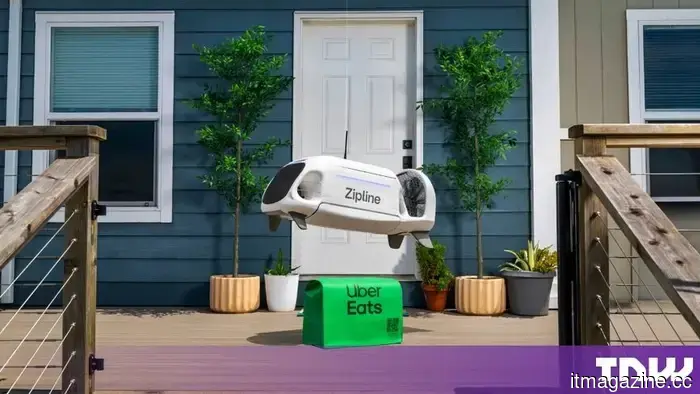 Uber is collaborating with the drone-delivery company Zipline and aims for one million drone deliveries each day.
Uber is collaborating with the drone delivery company Zipline and acquiring a strategic investment to transport Uber Eats orders throughout the United States, aiming for a goal of one million deliveries daily by the end of 2029.
Uber is collaborating with the drone-delivery company Zipline and aims for one million drone deliveries each day.
Uber is collaborating with the drone delivery company Zipline and acquiring a strategic investment to transport Uber Eats orders throughout the United States, aiming for a goal of one million deliveries daily by the end of 2029.
Azerbaijan aims to establish itself as a technology hub, as its startups secured $2.6 million in funding last year.
Baku is introducing financial support, tax incentives, and crowdfunding regulations to develop a technology sector beyond oil. While the aspiration is genuine, the investment figures are minimal, and competitors in the region are several years ahead.