
Deutsche Telekom acquires Macquarie’s Polish fiber and TV assets in a €1 billion investment aimed at convergence.
Deutsche Telekom has reached an agreement to acquire two prominent fiber companies in Poland, Fiberhost and INEA, from the Australian investment group Macquarie, in a deal valued at approximately €1 billion. This acquisition is strategically targeted at the country's efforts to consolidate mobile, broadband, and television services into a single monthly bill.
On Monday, the German operator confirmed that its local subsidiary, T-Mobile Polska, will integrate both companies once regulators approve the deal. This acquisition subtly transforms one of Europe’s quickest-growing broadband markets into a more consolidated landscape. Poland, which was once seen primarily as a promising but inconsistent startup environment, has emerged as a notable success story in fiber deployment across the continent.
By late 2025, over 80% of Polish households are projected to have access to fiber connectivity, significantly surpassing the European average. The country boasts a robust, modern infrastructure that a prominent player would prefer to own entirely rather than lease.
The combined assets are considerable. Fiberhost operates an open-access network that serves approximately 1.4 million homes across eight of Poland's 16 regions, mainly in rural areas, connecting thousands of towns, villages, and schools that have traditionally been overlooked by commercial providers. INEA, a regional leader in the Wielkopolska region around Poznań, has over 300,000 retail broadband and television customers and a wholesale network that extends its reach to almost four million households, along with local brand recognition that turns basic service into a viable business.
The investment fund acquired both companies in 2018, restructured them in 2021 to separate infrastructure from retail functions, and is now capitalizing on the peak of an infrastructure cycle, adhering to the buy-tidy-sell strategy that has positioned it as one of the most active owners of essential telecommunications infrastructure.
Deutsche Telekom's goal is convergence, the industry's preferred term for offering comprehensive packages to customers. T-Mobile Polska already manages a reputable mobile network but has fallen behind its competitors in fixed-line services. By acquiring fiber assets, it can compete with Orange Polska and Play, both of which already provide bundled mobile and broadband services.
Dominique Leroy, the group’s board member for Europe, expressed the assurance necessary for such deals, stating that combining “strong mobile and fiber capabilities” would establish “an even better foundation for simple, reliable services.” This sentiment reflects the current trend among European telecom leaders advocating for consolidation, as they argue that scale is essential for funding the continent's networks.
However, this reasoning is not universally convincing, as Europe's pursuit of large infrastructure projects has led to its share of costly failures, ranging from ambitious satellite mergers and beyond. Nonetheless, fiber remains one of the more reliable ventures within the sector, and Poland’s infrastructure is among the best in Europe.
The deal awaits approval from Poland’s competition authority, which previously took nearly a year to clear Deutsche Telekom’s acquisition of the wholesale fiber operator Nexera. Antitrust regulators typically scrutinize any transaction that would give an incumbent both the network and its customers.
Deutsche Telekom aims to finalize the transaction by the end of 2026, assuming regulatory approval is granted. For Polish households, the immediate impact will be minimal, as the ownership of the fiber infrastructure does not affect its accessibility.
The long-term stakes revolve around who will control the service bundles and how much genuine competition will remain once the infrastructure, packages, and marketing are all managed by a single company. Deutsche Telekom believes that in an increasingly connected Europe, owning the physical network is the most reliable way to secure customer relationships.
Other articles
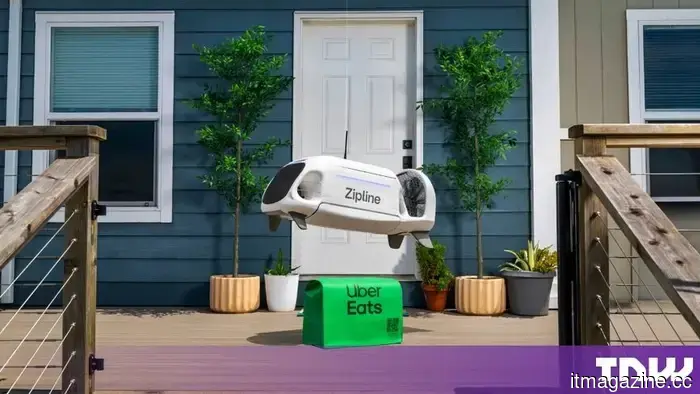 Uber is collaborating with the drone-delivery company Zipline and aims for one million drone deliveries each day.
Uber is collaborating with the drone delivery company Zipline and acquiring a strategic investment to transport Uber Eats orders throughout the United States, aiming for a goal of one million deliveries daily by the end of 2029.
Uber is collaborating with the drone-delivery company Zipline and aims for one million drone deliveries each day.
Uber is collaborating with the drone delivery company Zipline and acquiring a strategic investment to transport Uber Eats orders throughout the United States, aiming for a goal of one million deliveries daily by the end of 2029.
 Groq has successfully completed a $350 million Series A funding round, achieving a valuation of $3.5 billion, with Nvidia participating in the investment.
Groq, the AI-inference chip firm previously valued at $6.9 billion, has secured $350 million at a valuation of $3.5 billion. The funding round was spearheaded by Disruptive and, notably, included participation from Nvidia.
Groq has successfully completed a $350 million Series A funding round, achieving a valuation of $3.5 billion, with Nvidia participating in the investment.
Groq, the AI-inference chip firm previously valued at $6.9 billion, has secured $350 million at a valuation of $3.5 billion. The funding round was spearheaded by Disruptive and, notably, included participation from Nvidia.
 Synchrony aims to integrate your Amazon and Walmart store cards into ChatGPT.
Synchrony is collaborating with OpenAI to enable shoppers to make payments using store cards within ChatGPT, but one of its executives stated that the integration process could take as long as a year.
Synchrony aims to integrate your Amazon and Walmart store cards into ChatGPT.
Synchrony is collaborating with OpenAI to enable shoppers to make payments using store cards within ChatGPT, but one of its executives stated that the integration process could take as long as a year.
 Nvidia is not supporting OpenAI's lease; it is supporting the structures.
Nvidia limited its OpenAI support to $105 billion and finalized the deal in Ohio. This guarantee pertains to the value of the data centers, rather than OpenAI's rental costs.
Nvidia is not supporting OpenAI's lease; it is supporting the structures.
Nvidia limited its OpenAI support to $105 billion and finalized the deal in Ohio. This guarantee pertains to the value of the data centers, rather than OpenAI's rental costs.
 ByteDance has entered into a copyright agreement with Hollywood's MPA to regulate its Seedance AI video tool.
ByteDance has entered into a copyright agreement with the Motion Picture Association to implement safeguards for its Seedance and Seedream AI generators.
ByteDance has entered into a copyright agreement with Hollywood's MPA to regulate its Seedance AI video tool.
ByteDance has entered into a copyright agreement with the Motion Picture Association to implement safeguards for its Seedance and Seedream AI generators.
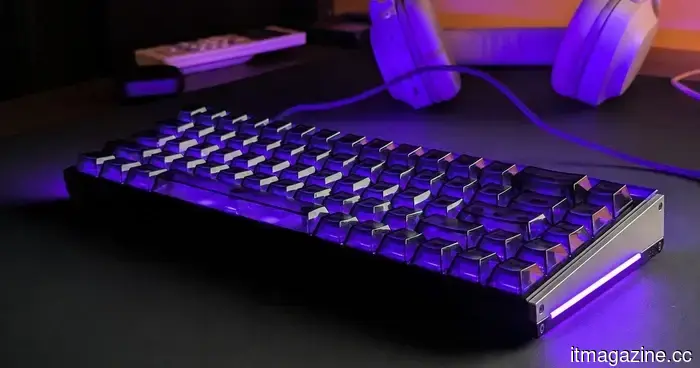 MelGeek MADE68 Ultra V2 Review: Excellent for gaming and surprisingly better than anticipated for typing.
After a month of daily usage, I was impressed by the gaming performance and software of the MADE68 Ultra V2, but the most surprising aspect was its typing experience.
MelGeek MADE68 Ultra V2 Review: Excellent for gaming and surprisingly better than anticipated for typing.
After a month of daily usage, I was impressed by the gaming performance and software of the MADE68 Ultra V2, but the most surprising aspect was its typing experience.
Deutsche Telekom acquires Macquarie’s Polish fiber and TV assets in a €1 billion investment aimed at convergence.
Deutsche Telekom is acquiring Fiberhost and INEA from Macquarie for approximately €1 billion and integrating them into T-Mobile Polska, aiming to successfully combine mobile, broadband, and television services in Poland.