

DJI's latest 360 camera addresses one of the major challenges of owning such a device.
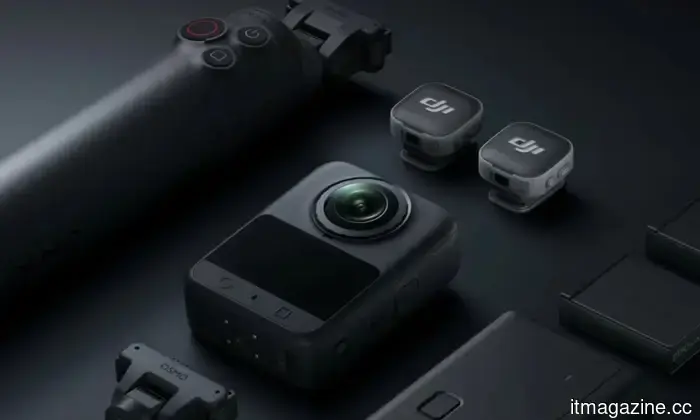
Insta360 has hardly had a moment to rejoice over its new X6, and DJI is already vying for the spotlight. The company has introduced the Osmo 360 II in China, its second iteration of a 360-degree camera that, while appearing similar externally, boasts some significant internal enhancements.
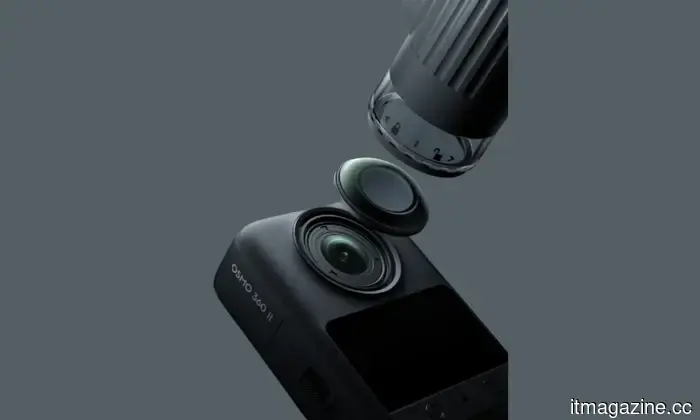
The Osmo 360 II is now capable of capturing 8K 360-degree video at 60fps, offers improved low-light capabilities, includes a larger battery, and even allows users to swap out a damaged lens on their own. This last feature is particularly beneficial given how vulnerable the lenses on a 360-degree camera can be. However, there’s a downside: as of now, the Osmo 360 II is only available in China, and DJI has not indicated when or if it will be introduced in other regions.
Damaged lens? Now you can take action
DJI has finally made it possible to replace lenses, which is a truly practical advancement for a 360-degree camera. Since the lenses protrude significantly, there’s always a risk of scratching one when transporting the camera in a bag, traveling, or using it for action photography. With the Osmo 360 II, if a lens gets damaged, you don't have to be stuck with it anymore; you can replace it yourself. Additionally, DJI has also improved the camera’s specifications. The Osmo 360 II can now record 360-degree video at up to 8K/60fps, an upgrade from the 8K/50fps of the previous model. For those who prefer slow-motion footage, it can shoot at up to 4K/240fps in 360 degrees or 4K/120fps with a single lens.
DJI
DJI is also focusing on nighttime shooting. Its enhanced AI Super Night View 2.0 now supports 8K/60fps video, and the camera is capable of up to 14.5 stops of dynamic range, a rise from the 13.5 stops found in its predecessor. However, D-Log M recording remains capped at 13.5 stops. For those interested in experimenting with their content, the Osmo 360 II can produce 16K time-lapses, doubling the 8K resolution previously available, and can take 120MP HDR 360-degree images. Furthermore, the video bitrate has been increased from 170Mbps to 220Mbps, with 16K time-lapses reaching up to 600Mbps.
More power without extra costs
DJI has also upgraded the battery capacity from 1,950mAh to 2,150mAh, which should be beneficial for longer recording sessions at high resolutions. Additional features include NFC Quick Connect, an improved bidirectional magnetic mounting system, and new software options like subject tracking.
DJI
Fortunately, DJI hasn't used these enhancements as a reason to increase the starting price in China. The Osmo 360 II begins at 3,300 yuan (around $490), the same introductory price as its predecessor. Overall, the Osmo 360 II appears to be a robust update for its second generation. While it offers improved video quality, a larger battery, and impressive specifications, the replaceable lenses are what truly excite me. This enhancement could prove to have the most significant impact during actual use of the camera.
Other articles
 The top QLED TVs for 2026, following tests of over 20 models.
We evaluated more than 20 leading QLED TVs for 2026 to identify the finest models in terms of brightness, color accuracy, and gaming performance. Check out our expert selections for all budgets and room dimensions.
The top QLED TVs for 2026, following tests of over 20 models.
We evaluated more than 20 leading QLED TVs for 2026 to identify the finest models in terms of brightness, color accuracy, and gaming performance. Check out our expert selections for all budgets and room dimensions.
 AI's new partner in cancer screening has four legs and an excellent sense of smell.
Indian startup Dognosis integrates trained detection dogs with sensors and artificial intelligence to identify cancer-related signals from breath, and is currently conducting a Phase 3 trial involving 10,000 participants.
AI's new partner in cancer screening has four legs and an excellent sense of smell.
Indian startup Dognosis integrates trained detection dogs with sensors and artificial intelligence to identify cancer-related signals from breath, and is currently conducting a Phase 3 trial involving 10,000 participants.
 Samsung may finally introduce a fundamental privacy feature that was overlooked in Galaxy phones.
A leaked build of One UI 9.5 shows that Galaxy phones will feature a dedicated App Lock, which secures specific apps using biometrics and conceals their notifications, widgets, and shortcuts.
Samsung may finally introduce a fundamental privacy feature that was overlooked in Galaxy phones.
A leaked build of One UI 9.5 shows that Galaxy phones will feature a dedicated App Lock, which secures specific apps using biometrics and conceals their notifications, widgets, and shortcuts.
 Galaxy phones might finally receive a fundamental privacy feature that Samsung overlooked.
A leaked build of One UI 9.5 shows that Galaxy phones will feature a dedicated App Lock, which secures individual apps using biometrics and conceals their notifications, widgets, and shortcuts.
Galaxy phones might finally receive a fundamental privacy feature that Samsung overlooked.
A leaked build of One UI 9.5 shows that Galaxy phones will feature a dedicated App Lock, which secures individual apps using biometrics and conceals their notifications, widgets, and shortcuts.
 Mark Rober's latest CrunchLabs mysteries transform reading into an interactive STEM experience.
The CrunchLabs Mysteries book series, created by scientist and inventor Mark Rober, merges illustrated detective stories designed to inspire young thinkers and enhance their problem-solving abilities.
Mark Rober's latest CrunchLabs mysteries transform reading into an interactive STEM experience.
The CrunchLabs Mysteries book series, created by scientist and inventor Mark Rober, merges illustrated detective stories designed to inspire young thinkers and enhance their problem-solving abilities.
 EV prices increased for the first time in 2026, and the reasons can be attributed to the discounts.
In July, the average price of electric cars sold in the US was $56,126, marking the first increase since 2026, following a nearly 25% reduction in EV incentives by manufacturers over the course of a year.
EV prices increased for the first time in 2026, and the reasons can be attributed to the discounts.
In July, the average price of electric cars sold in the US was $56,126, marking the first increase since 2026, following a nearly 25% reduction in EV incentives by manufacturers over the course of a year.
DJI's latest 360 camera addresses one of the major challenges of owning such a device.
DJI's second-generation 360 camera offers significant improvements in key areas, but there is a downside: it isn't available for purchase worldwide just yet.