
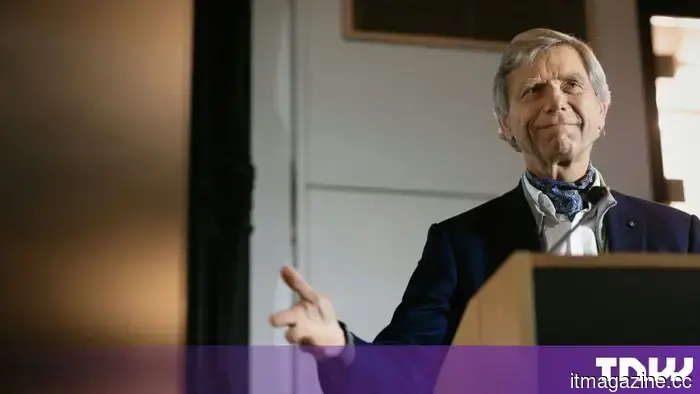
The co-founder of Arm asserts that AI will generate greater value than any prior revolution and will be a thrilling ride.
Hauser participated in a discussion on CNBC’s The Tech Download podcast this month. The write-up by Arjun Kharpal and Kai Nicol-Schwarz was published on August 14.
His extensive experience makes his insights important. He co-founded Acorn Computers in 1978, assisted in the creation of Arm, and currently supports European deep-tech startups through Amadeus Capital. With four decades of observing technological trends, his perspective on the current wave is particularly valuable.
The entire conversation lasts 40 minutes and is available as a video episode. It addresses topics like AI, semiconductors, quantum computing, and European sovereignty.
Not predicting a bubble and not defending the current situation, Hauser begins with a more optimistic view than many skeptics. “This is a revolution that will create more value than probably any other technology revolution that we’ve ever seen,” he stated. He then added that it will be a “rollercoaster.”
When it comes to pricing, he offers specifics rather than broad statements, noting that some valuations have “clearly gotten ahead of themselves.” He identified structural risks, highlighting recently announced circular financing arrangements.
Why this is significant:
Circular financing occurs when a chip manufacturer invests in an AI lab that subsequently purchases its chips. The Bank for International Settlements signaled a warning in June that a downturn in AI could impact credit markets similarly to the 2008 crisis.
Hauser does not forecast this negative outcome. He believes the largest companies will endure a market reset. According to him, OpenAI and Anthropic have substantial capital reserves and should be able to withstand any rough patches, even if expectations around them change.
Thus, his perspective is both narrow and unconventional. The revolution is valid, but not all prices are, and the biggest players aren't the ones at risk.
This raises a clear question he does not answer directly: If the labs weather a reset, who will be affected, and where will the repercussions of the circular deals manifest?
In contrast to other views, Masayoshi Son claimed in June that labeling AI as a bubble is disrespectful, even calling such commentary blasphemy. Hauser takes a different approach from either side by distinguishing between technology and pricing, discussing them in opposite contexts—a more nuanced and insightful perspective.
The chip discussion is particularly relevant:
Having co-created much of the architecture in today’s phones, Hauser's perspective on future developments is influential. He believes AI is prompting a reevaluation of computing architecture.
There are practical pressures at play: AI is costly to operate, chips are challenging to cool, memory is pricey, and bottlenecks exist throughout the industry. He mentioned two potential solutions: in-memory computing and photonic computing, both of which aim to reduce the energy consumed in data transfer between processors and memory.
His comparison is striking; these innovations could be as significant as the architectural advancements that allowed Arm to compete against traditional chip manufacturers. “I never thought that we’d have a very fundamental change in the computer architecture as a result of AI,” he remarked.
Investment is already shifting in this direction:
The photonics aspect is not hypothetical. Nvidia allocated $6.5 billion to photonics companies within three months, seeking to replace copper with light in AI data centers. This indicates that a bottleneck is being addressed financially rather than circumvented technologically. The issue Hauser describes has already incurred costs.
In-memory computing is still in earlier stages. It processes arithmetic in memory instead of transporting data to a processor. Both methods target the same challenge: the cost of data movement rather than the cost of computation.
Arm serves as a precedent Hauser references, succeeding through power efficiency at a time when the industry prioritized raw speed, thus creating an opportunity.
European capabilities in innovation and expertise are strong enough to compete with the US and China, according to Hauser's assessment. However, the challenge lies in scaling up; European companies often struggle to evolve from small startups into true global competitors. This isn’t a new observation, but coming from an investor who has invested in these efforts, it carries weight. Amadeus Capital exists to facilitate this transition.
He connects this issue to a larger theme he frequently revisits: technological sovereignty.
His concerns about dependence:
Hauser expresses alarm over Europe’s reliance on foreign suppliers for vital technologies, which include everything from AI models to semiconductor design software. The latter point is often overlooked but is crucial, as chip design software is a niche market with limited suppliers, and it is foundational to everything else.
The desk has noted shifts in this area; Synopsys recently withdrew from chip fabrication software to pursue AI design profit margins.
Hauser's warning is resolute. Close collaboration with allies is crucial, and dependence entails risks, particularly amid geopolitical tensions and export controls.
Export controls can turn a supplier into a chokepoint; a tool available today can become a dependency, rather than a mere purchase.
In his blunt conclusion, he stated that while
Other articles
 A judge has instructed Google to cease making it difficult to install competing app stores.
The compliance order from Epic v Google requires Google to eliminate the additional taps and warning screens that hinder the installation of competing Android app stores within a week.
A judge has instructed Google to cease making it difficult to install competing app stores.
The compliance order from Epic v Google requires Google to eliminate the additional taps and warning screens that hinder the installation of competing Android app stores within a week.
 The ban on social media for individuals under 15 in France has been overturned just two weeks before it was set to take effect.
France's prohibition on social media for those under 15 was dismissed by the Constitutional Council, just two weeks prior to its implementation. However, the ban on phones in schools remains intact.
The ban on social media for individuals under 15 in France has been overturned just two weeks before it was set to take effect.
France's prohibition on social media for those under 15 was dismissed by the Constitutional Council, just two weeks prior to its implementation. However, the ban on phones in schools remains intact.
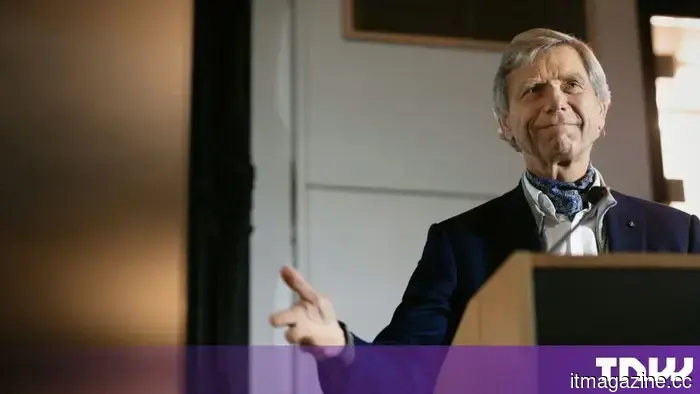 The co-founder of Arm believes that AI will generate more value than any previous revolution and will be an exciting ride.
Hermann Hauser, a co-founder of Arm, states that AI will generate greater value than any previous revolution, but cautions that some valuations have become overly optimistic.
The co-founder of Arm believes that AI will generate more value than any previous revolution and will be an exciting ride.
Hermann Hauser, a co-founder of Arm, states that AI will generate greater value than any previous revolution, but cautions that some valuations have become overly optimistic.
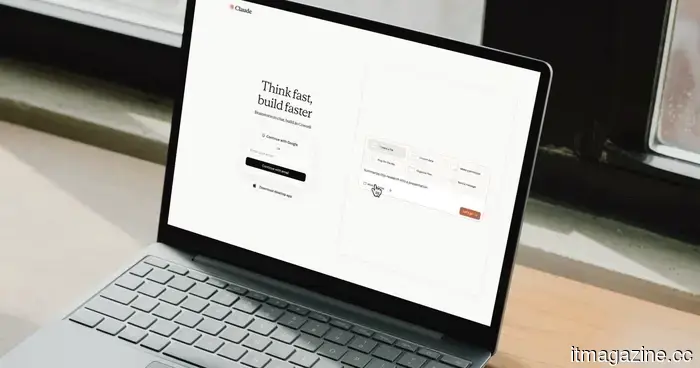 Reports indicate that Samsung is utilizing Claude to accelerate its chip design process.
Samsung is said to be utilizing Anthropic's Claude Code to enhance chip design and verification processes.
Reports indicate that Samsung is utilizing Claude to accelerate its chip design process.
Samsung is said to be utilizing Anthropic's Claude Code to enhance chip design and verification processes.
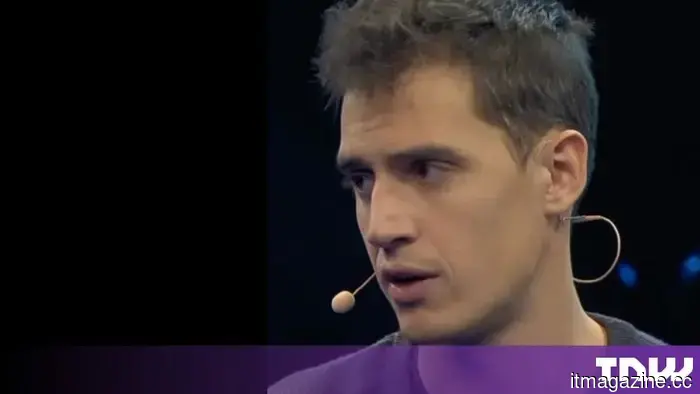 Five of Europe's largest companies have just purchased computing resources that Mistral has not developed.
ASML, Amadeus, Capgemini, Caisse des Dépôts, and CMA CGM are supporting the construction of the Mistral data centre by purchasing multi-year computing units that are not currently available.
Five of Europe's largest companies have just purchased computing resources that Mistral has not developed.
ASML, Amadeus, Capgemini, Caisse des Dépôts, and CMA CGM are supporting the construction of the Mistral data centre by purchasing multi-year computing units that are not currently available.
 Tesla concluded Sweden's longest strike by purchasing the contracts of all striking workers.
The strike at Tesla Sweden concludes after 1,021 days. IF Metall reports that Tesla has negotiated buyouts for approximately 80 members who were on strike, resulting in a lack of participants for the strike.
Tesla concluded Sweden's longest strike by purchasing the contracts of all striking workers.
The strike at Tesla Sweden concludes after 1,021 days. IF Metall reports that Tesla has negotiated buyouts for approximately 80 members who were on strike, resulting in a lack of participants for the strike.
The co-founder of Arm asserts that AI will generate greater value than any prior revolution and will be a thrilling ride.
Hermann Hauser, a co-founder of Arm, asserts that AI will generate more value than any prior revolution, but he cautions that certain valuations have become inflated.