

The co-founder of Arm believes that AI will generate more value than any previous revolution and will be an exciting ride.
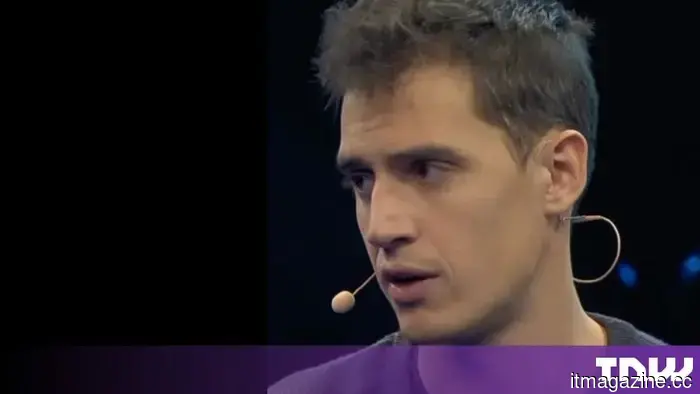
This month, Hauser joined CNBC's The Tech Download podcast, with a write-up published by Arjun Kharpal and Kai Nicol-Schwarz on August 14. His impressive history warrants attention; he co-founded Acorn Computers in 1978, contributed to the creation of Arm, and now invests in European deep-tech startups through Amadeus Capital. His four decades of observing technological trends lend credibility to his insights regarding the current landscape.
The entire conversation lasts 40 minutes as a video episode, discussing AI, semiconductors, quantum computing, and European sovereignty.
Hauser adopts a more optimistic stance than most skeptics, stating, “This is a revolution that will create more value than probably any other technology revolution that we’ve ever seen.” He later added that it will be a “rollercoaster.” His comments on pricing are specific; he notes that some valuations have “clearly gotten ahead of themselves.” He identifies a structural risk, pointing to recent circular financing arrangements.
The importance of this issue lies in the nature of circular financing, where a chipmaker invests in an AI lab that subsequently purchases its chips. The Bank for International Settlements highlighted this in June, warning that an AI downturn could impact credit markets as severely as the 2008 crisis. However, Hauser does not predict such an outcome, suggesting that the largest players will endure a market correction. He believes that companies like OpenAI and Anthropic possess substantial capital reserves, enabling them to weather any economic turbulence.
Hauser’s perspective is nuanced and distinct. He acknowledges the tangible revolution while questioning the validity of certain prices, suggesting that the largest names in the industry are not the most vulnerable. This raises a pertinent, though unaddressed, question: if the labs weather a reset, who else will bear the consequences, particularly in relation to the circular deals?
In contrast, Masayoshi Son told SoftBank shareholders in June that labeling AI as a bubble is offensive, labeling such views as blasphemy. Hauser, however, distinguishes his viewpoint from both extremes. He separates the technological issue from the pricing issue, approaching them from opposite angles, which makes his insights both complex and informative.
Hauser’s thoughts on chips represent the most current aspect of his discussion. Having been integral in developing the architecture found in most smartphones, his insight regarding AI's influence on computing architecture is significant. He argues that AI necessitates a reevaluation of computing frameworks due to practical pressures, noting that AI's operational costs are high, chips are hard to cool, memory is costly, and there are widespread bottlenecks across the industry.
He highlights two emerging solutions: in-memory computing and photonic computing, both aimed at reducing energy consumption during data transfers between processors and memory. His comparison underscores the potential impact of these innovations, which could prove as significant as the architectural advancements that allowed Arm to compete with established chipmakers. "I never thought that we’d have a very fundamental change in the computer architecture as a result of AI,” he stated.
Financial investment in these areas is already underway. The photonics aspect is not merely speculative; Nvidia has invested $6.5 billion in photonics companies within three months to replace copper with light in AI data centers. This suggests a proactive approach to addressing bottlenecks rather than merely engineering around them. In-memory computing is at an earlier stage, shifting computation into memory instead of transferring data back and forth to processors. Both approaches target the expense associated with data movement rather than arithmetic costs.
Hauser references Arm’s history as a relevant example. It succeeded by prioritizing power efficiency at a time when the industry emphasized sheer processing speed, creating an opportunity.
When discussing Europe’s capabilities, Hauser is straightforward in both praise and criticism. European companies possess the innovation and talent to compete with the US and China but struggle to scale from small startups to true global players. This is a long-standing issue, and coming from an investor involved in addressing it, it carries weight, as Amadeus Capital aims to facilitate that growth.
He links this challenge to a broader issue of technological sovereignty.
Hauser expresses concern about Europe's reliance on foreign suppliers for crucial technologies, including AI models and semiconductor design software. The latter is often overlooked; chip design software is a niche market with few providers and precedes all other related technologies.
As highlighted, Synopsys recently reduced its involvement in chip fabrication software to focus on AI design margins. Hauser asserts that close cooperation with allies is vital, as dependency on others poses risks amid geopolitical tensions and export controls. Export controls can transform a supplier into a chokepoint, turning a purchase into a reliance.
His conclusion is direct and quotable: Europe must maintain its partnership with the US while avoiding becoming “a technology colony of the U.S.” Brussels is already acting on this concern, as the Commission proposed measures in June to limit US cloud providers from handling sensitive government data and introduced a Chips Act 2.0.
Other articles
 SpaceX has finalized its $60 billion deal with Cursor, which made a purchase of a company just the day prior.
The acquisition of Cursor by SpaceX was finalized on 14 August. Cursor claims it now has access to the largest GPU fleet globally, along with more affordable models.
SpaceX has finalized its $60 billion deal with Cursor, which made a purchase of a company just the day prior.
The acquisition of Cursor by SpaceX was finalized on 14 August. Cursor claims it now has access to the largest GPU fleet globally, along with more affordable models.
 Canva's investors reduced its valuation by $7.1 billion, while its own appraiser made an even larger cut.
Blackbird and Airtree reduced Canva's valuation to $34.9 billion, and Canva's internal valuation also dropped, following a revenue downgrade prompted by AI expenses.
Canva's investors reduced its valuation by $7.1 billion, while its own appraiser made an even larger cut.
Blackbird and Airtree reduced Canva's valuation to $34.9 billion, and Canva's internal valuation also dropped, following a revenue downgrade prompted by AI expenses.
 Bid farewell to Chronicle. ChatGPT's new Computer History feature outperforms it.
The desktop app for ChatGPT has introduced Computer History, a more private and screenshot-free enhancement of Chronicle that transforms your daily activities into a searchable timeline.
Bid farewell to Chronicle. ChatGPT's new Computer History feature outperforms it.
The desktop app for ChatGPT has introduced Computer History, a more private and screenshot-free enhancement of Chronicle that transforms your daily activities into a searchable timeline.
 The co-founder of Arm asserts that AI will generate greater value than any prior revolution and will be a thrilling ride.
Hermann Hauser, a co-founder of Arm, asserts that AI will generate more value than any prior revolution, but he cautions that certain valuations have become inflated.
The co-founder of Arm asserts that AI will generate greater value than any prior revolution and will be a thrilling ride.
Hermann Hauser, a co-founder of Arm, asserts that AI will generate more value than any prior revolution, but he cautions that certain valuations have become inflated.
 The ban on social media for individuals under 15 in France has been overturned just two weeks before it was set to take effect.
France's prohibition on social media for those under 15 was dismissed by the Constitutional Council, just two weeks prior to its implementation. However, the ban on phones in schools remains intact.
The ban on social media for individuals under 15 in France has been overturned just two weeks before it was set to take effect.
France's prohibition on social media for those under 15 was dismissed by the Constitutional Council, just two weeks prior to its implementation. However, the ban on phones in schools remains intact.
 Five of the largest companies in Europe have recently acquired computing resources that Mistral has not developed.
ASML, Amadeus, Capgemini, Caisse des Dépôts, and CMA CGM are supporting the expansion of the Mistral data centre by purchasing multi-year computing units that are currently unavailable.
Five of the largest companies in Europe have recently acquired computing resources that Mistral has not developed.
ASML, Amadeus, Capgemini, Caisse des Dépôts, and CMA CGM are supporting the expansion of the Mistral data centre by purchasing multi-year computing units that are currently unavailable.
The co-founder of Arm believes that AI will generate more value than any previous revolution and will be an exciting ride.
Hermann Hauser, a co-founder of Arm, states that AI will generate greater value than any previous revolution, but cautions that some valuations have become overly optimistic.