
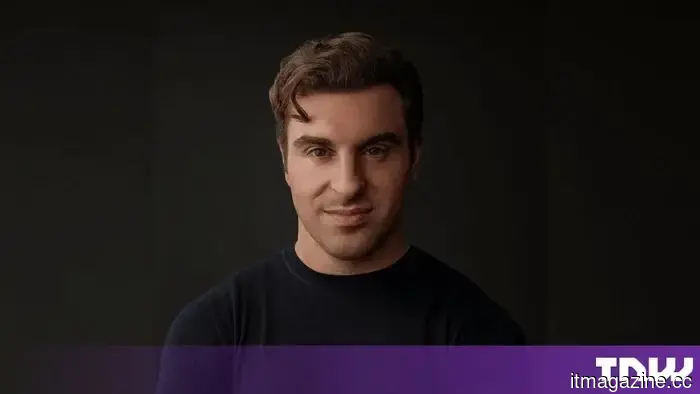
The CEO of Airbnb claims that AI is not being developed for everyday users. He is a member of the board of Y Combinator.
This week, the CEO of Airbnb articulated his views on the Yahoo Finance podcast Power Players with Brian Sozzi. His analysis consists of two components. “Part of it is a narrative issue; we’re not discussing AI correctly,” he stated. The second aspect concerns the product itself: “We need to be creating more products that everyday people can utilize.”
The statistic he provided implicates him directly. Chesky shared the figure himself, emphasizing its significance. In the latest batch from Y Combinator, out of 175 companies, 159 were focused on enterprise rather than consumer applications. Chesky serves on Y Combinator’s board, which adds complexity to the observation but doesn’t make it inaccurate.
He described this situation as a loss of confidence. He believes that, compared to when he launched Airbnb 18 years ago, entrepreneurs today appear “afraid” to create for consumers. “Almost all AI is enterprise,” he remarked, adding that there is a substantial gap in the consumer sector.
His perspective on the current state of the field is more candid than many in the industry would dare express. “There’s been minimal progress in consumer AI,” he stated. “ChatGPT is essentially what we’ve witnessed.” He anticipates a shift within the next two to three years, which he referred to as a renaissance in consumer AI. He cited medical AI as an example, arguing that it could afford individuals on-demand access to doctors who might otherwise not be able to afford such services. However, it’s important to note that this proposed product has yet to materialize.
Chesky reaffirmed the medical example while also sidestepping the complexities involved. He pointed out that medical counsel is regulated, and the challenge of providing on-demand doctor access lies more in licensing and liability than in the quality of the models.
During the same conversation, he confirmed something significant: Airbnb has an AI laboratory, which the company had never publicly recognized before. “I can confirm it exists, but I’m not going to say anything further about it right now,” he stated. This confirmation aligns with his critique that the industry is misrepresenting AI narratives. While he raises valid concerns about the narrative, he also illustrated one instance of it.
Chesky outlined Airbnb's commercial aspirations during the interview, suggesting the company is about a year to 18 months away from transforming into a more substantial service that includes rental cars and hotel bookings. He openly questioned whether a comprehensive app similar to those in China could succeed in the U.S. market.
He also expects search functionalities to evolve first, with chatbots assisting in destination exploration and itinerary planning before managing reservations. Airbnb is set to become “a completely different search paradigm,” he claimed.
However, Europe's approach for the largest platforms points in a different direction. The Digital Markets Act aims to separate bundles, although it only applies to designated gatekeepers, and Airbnb is not among them. Nonetheless, this still influences their ambitions, as a successful travel super app could eventually attract such scrutiny.
His strongest point is supported by polling data. A June Pew Research survey revealed that 40% of U.S. adults anticipate AI will have negative societal implications over the next two decades, while only 16% expect a positive outcome. This reflects a two-to-one disadvantage for a technology where the industry is investing hundreds of billions.
The industry's response has largely been about communication. Various AI companies have executed uplifting advertising campaigns, and executives frequently release manifestos, including Mark Zuckerberg’s recent essay on superintelligence.
Public sentiment toward technology is increasingly fatigued. A recent poll indicated that 61% of Americans support stricter regulation of social media. Some individuals are opting out in smaller ways, as evidenced by coverage of workers experiencing screen fatigue who are returning to pen and paper.
Chesky attributes the enterprise dominance to fear, while a more pragmatic explanation may be arithmetic, which warrants mention in the discussion. Enterprise clients are willing to invest, sign multi-year agreements, and accept less polished software. In contrast, consumers tend to switch providers frequently, require costly acquisition efforts, and expect high-quality offerings for free. Therefore, AI companies that are burning cash on inference will naturally gravitate toward where the revenue lies; this is not cowardice but rather a necessary survival strategy for most startups.
Airbnb's performance underscores this point: AI-driven customer service addressed 45% of inquiries last quarter and reduced support costs per booking by 16%. These are cost-related victories rather than consumer-oriented products. The most frequently mentioned AI achievement at Airbnb, advocating for consumer AI, is an internal efficiency measure.
There are counterexamples, including those from Europe. While the gap exists, it is not without activity. Stockholm's Lovable secured $400 million at a $13.3 billion valuation for a product that enables individuals to create software by describing it in plain language. This aligns more closely with Chesky's vision than much of what has emerged from Silicon Valley this year, and it originated in
Other articles
 Europe's 'Made in EU' regulations begin at 5%, and there is no reference to software.
The EU's origin regulations stipulate a minimum of 5% for concrete and 25% for aluminium. Engineering software and cloud hosting are completely excluded from the Act.
Europe's 'Made in EU' regulations begin at 5%, and there is no reference to software.
The EU's origin regulations stipulate a minimum of 5% for concrete and 25% for aluminium. Engineering software and cloud hosting are completely excluded from the Act.
 Darksiders 4 and the upcoming Kingdom Come title may be released by March 2028.
Darksiders 4 and the upcoming Kingdom Come title are slated for Embracer's fiscal year 2027/28, indicating a possible release period from April 2027 to March 2028.
Darksiders 4 and the upcoming Kingdom Come title may be released by March 2028.
Darksiders 4 and the upcoming Kingdom Come title are slated for Embracer's fiscal year 2027/28, indicating a possible release period from April 2027 to March 2028.
 Private US companies are now permitted to conduct cyber operations outside the country. However, state-sponsored hackers are not included in this allowance.
A memo from the White House permits approved US companies to conduct offensive cyber operations targeting foreign criminal organizations. However, state-sponsored hackers are not included.
Private US companies are now permitted to conduct cyber operations outside the country. However, state-sponsored hackers are not included in this allowance.
A memo from the White House permits approved US companies to conduct offensive cyber operations targeting foreign criminal organizations. However, state-sponsored hackers are not included.
 Google Meet can now take notes for your in-person meetings.
Google Meet's meeting notes function is broadening its scope beyond video calls, allowing Gemini to record notes during your in-person meetings and convert them into a document that includes action items and a complete transcript.
Google Meet can now take notes for your in-person meetings.
Google Meet's meeting notes function is broadening its scope beyond video calls, allowing Gemini to record notes during your in-person meetings and convert them into a document that includes action items and a complete transcript.
 Scientists developed a small wearable patch that detects cholesterol levels through sweat.
Researchers at Caltech have developed a wearable patch that continuously monitors cholesterol and triglyceride levels through sweat, eliminating the need for needles or laboratory appointments.
Scientists developed a small wearable patch that detects cholesterol levels through sweat.
Researchers at Caltech have developed a wearable patch that continuously monitors cholesterol and triglyceride levels through sweat, eliminating the need for needles or laboratory appointments.
 Apple aims to compensate publishers based on usage rather than an annual fee for providing news through Siri.
According to the Wall Street Journal, Apple’s Siri agreements would compensate news organizations each time their articles are utilized, with a potential budget in the nine-figure range.
Apple aims to compensate publishers based on usage rather than an annual fee for providing news through Siri.
According to the Wall Street Journal, Apple’s Siri agreements would compensate news organizations each time their articles are utilized, with a potential budget in the nine-figure range.
The CEO of Airbnb claims that AI is not being developed for everyday users. He is a member of the board of Y Combinator.
Brian Chesky claims that the gap in consumer AI is the reason many Americans have a negative perception of AI. According to him, 159 out of 175 Y Combinator startups focus on enterprise solutions.