

Scientists developed a small wearable patch that detects cholesterol levels through sweat.
In the future, it may be feasible to forgo lab visits altogether.
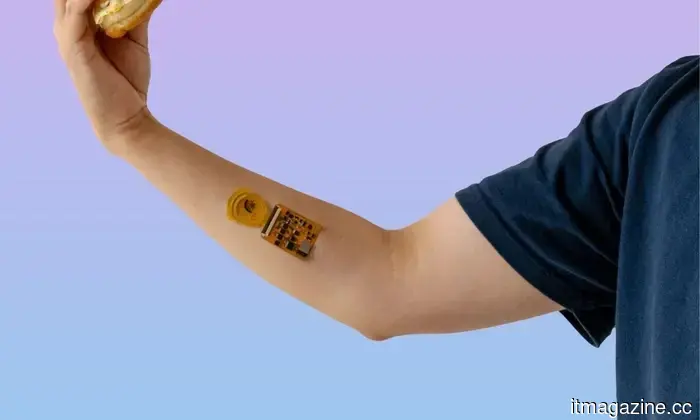
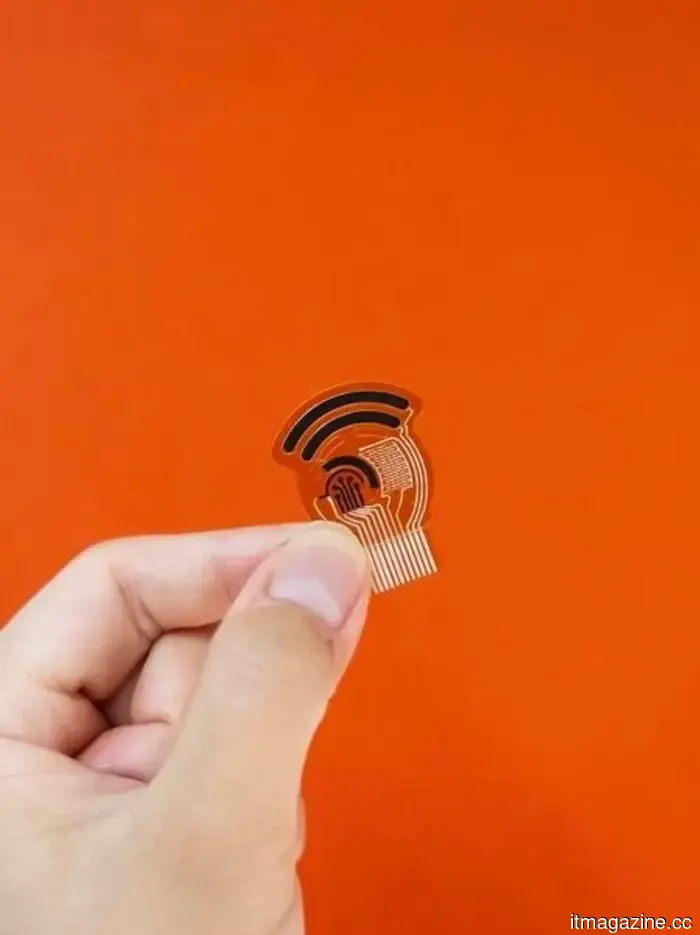
Consider when you last had your cholesterol checked. For many, it has likely been years, as it typically involves scheduling an appointment and having blood drawn. Researchers at Caltech have developed a device that could entirely change this — a small adhesive patch that continuously monitors your cholesterol and triglyceride levels using sweat rather than blood.
Understanding how the sweat patch monitors cholesterol
Sweat and blood do not share a straightforward, predictable correlation, so measuring cholesterol in sweat does not reliably reflect blood test results. To address this, a team led by Professor Wei Gao combined the physical sensor with a machine learning model that considers factors such as body mass index, gender, and sweat levels, allowing it to accurately estimate blood lipid levels.
The affordable adhesive sweat sensor measures lipid levels, providing a noninvasive method to continuously observe cholesterol and triglycerides.
There was also a complex chemistry issue to overcome. The majority of cholesterol in sweat is in a form that cannot be directly measured, so the researchers created a two-step chemical reaction that transforms it into a detectable form for the sensor. The details of this process are presented in their published study.
This is not the first exploration of sweat for health monitoring. Similar patches have been tested by the US Air Force to monitor hydration and stress in challenging conditions.
Addressing the triglyceride challenge and future steps
Measuring triglycerides required a separate solution, as the sensing reaction needs a consistent supply of ATP (adenosine triphosphate), which cells need for energy. The team incorporated a special polymer into the patch that gradually releases stored ATP, thereby providing the sensor with the necessary supply to maintain accurate triglyceride readings for over 20 hours instead of ceasing after a few minutes.
The device has only been trialed on 24 participants in an early study, indicating that it is still years away from becoming available at pharmacies. However, the foundational science marks significant advancement toward continuous, needle-free health monitoring. If this research continues to progress, future smartwatches could eventually analyze sweat for valuable health insights.
Manisha Priyadarshini is a writer specializing in technology and entertainment with over nine years of editorial experience.
AI’s New Cancer-Screening Companion: A Canine Partner
A 10-minute breath sample could enable cancer-detecting dogs to offer critical insights.
It seems AI does not need to supersede every biological system, as dogs retain their roles for the time being. An Indian startup based in Bengaluru, Karnataka, is training dogs equipped with sensors and machine learning. Patients breathe normally into a face mask for approximately ten minutes, send the sealed sample to a lab, and allow the dogs to begin their task.
These dogs are trained to detect alterations in volatile organic compounds (VOCs) linked to cancer. At the same time, sensors monitor various signals such as movement, respiration, brain activity, and body language, which Dognosis’ AI converts into standardized data, reducing reliance on human handlers to interpret animal behavior.
AI Agents are Attending Students’ Online Classes, Leaving Colleges Struggling to Combat It
Technology has transitioned from merely assisting with homework to effectively impersonating students in virtual classrooms.
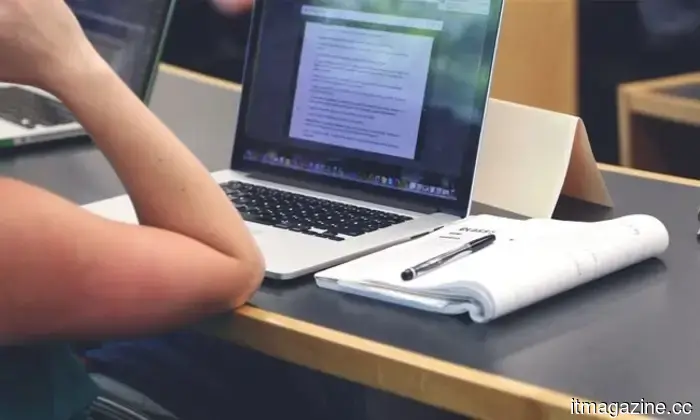
AI cheating has evolved from requesting a chatbot to compose an essay to employing tools that can make AI-generated work appear human. We have previously discussed AI tools designed to facilitate student cheating and the increasing challenges faced by AI detectors, as well as the prevalence of AI usage among students for homework. Now, the technology is not just assisting students with their work; in some cases, it can genuinely act as the student itself.
Simply instruct the AI to attend the class.
Chinese Startup Claims Its Brain Implant Requires Just 10 Minutes to Insert, Negating Skull Surgery
StairMed Technology's vein-based brain-computer interface (BCI) may outperform Neuralink’s two-hour surgery in speed, although the device has yet to undergo human trials.
Traditionally, brain implants, like those created by Elon Musk's Neuralink, necessitate open-skull surgery. However, a Chinese startup asserts it can eliminate that requirement by navigating its device through a vein in a procedure that reportedly takes as little as ten minutes. According to the South China Morning Post, the Shanghai-based company StairMed Technology is among several firms exploring this method as the country seeks to develop its domestic brain-computer interface (BCI) industry.
Faster than Neuralink, on paper.



Other articles
 The 'Made in EU' regulations of Europe begin at 5%, and there is no mention of software.
The origin rules for products made in the EU begin with a requirement of 5% for concrete and 25% for aluminium. Engineering software and cloud hosting are completely excluded from the Act.
The 'Made in EU' regulations of Europe begin at 5%, and there is no mention of software.
The origin rules for products made in the EU begin with a requirement of 5% for concrete and 25% for aluminium. Engineering software and cloud hosting are completely excluded from the Act.
 Microsoft is discontinuing its AI mascot, just ten months after its creation.
On August 18, Microsoft Copilot will discontinue Group Chat, Podcasts, Labs, and Deep Research. Mico, the mascot introduced in October, will transition to the education sector.
Microsoft is discontinuing its AI mascot, just ten months after its creation.
On August 18, Microsoft Copilot will discontinue Group Chat, Podcasts, Labs, and Deep Research. Mico, the mascot introduced in October, will transition to the education sector.
 Europe's 'Made in EU' regulations begin at 5%, and there is no reference to software.
The EU's origin regulations stipulate a minimum of 5% for concrete and 25% for aluminium. Engineering software and cloud hosting are completely excluded from the Act.
Europe's 'Made in EU' regulations begin at 5%, and there is no reference to software.
The EU's origin regulations stipulate a minimum of 5% for concrete and 25% for aluminium. Engineering software and cloud hosting are completely excluded from the Act.
 Meta deleted 756,000 accounts in Australia. The company's actual request is for Apple to handle the verification.
Meta's recent update regarding the social media ban in Australia concludes with a request for policy changes: verify age just once at the operating system or app store level, rather than requiring verification on each individual platform.
Meta deleted 756,000 accounts in Australia. The company's actual request is for Apple to handle the verification.
Meta's recent update regarding the social media ban in Australia concludes with a request for policy changes: verify age just once at the operating system or app store level, rather than requiring verification on each individual platform.
 In 2010, Microsoft informed Google that it was exaggerating. The company has been gradually withdrawing from China for the past five years.
Microsoft China represents 1.5% of its revenue, and over 15 offices have closed in the past five years. The company considered exiting the market in 2023. Its continued presence is maintained by Azure exports.
In 2010, Microsoft informed Google that it was exaggerating. The company has been gradually withdrawing from China for the past five years.
Microsoft China represents 1.5% of its revenue, and over 15 offices have closed in the past five years. The company considered exiting the market in 2023. Its continued presence is maintained by Azure exports.
 Flock Safety reduces data retention period to seven days following numerous incidents of police misuse.
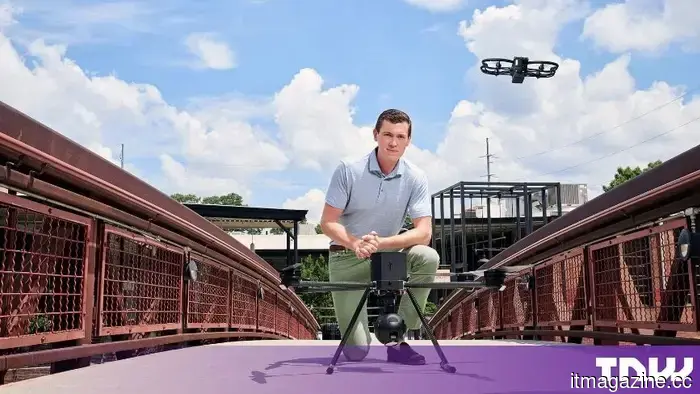
Flock Safety has revised its privacy policies, reducing data retention from 30 days to seven days and requiring mandatory search audits, following numerous instances of police misconduct.
Flock Safety reduces data retention period to seven days following numerous incidents of police misuse.
Flock Safety has revised its privacy policies, reducing data retention from 30 days to seven days and requiring mandatory search audits, following numerous instances of police misconduct.
Scientists developed a small wearable patch that detects cholesterol levels through sweat.
Researchers at Caltech have developed a wearable patch that continuously monitors cholesterol and triglyceride levels through sweat, eliminating the need for needles or laboratory appointments.