
Five of Europe's largest companies have just acquired computing resources that Mistral has not developed.
Mistral unveiled its plan on August 11, which encompasses three key points. Regional endpoints are now widely available, allowing customers to choose between Europe or the US for their inference needs. A Priority Tier, currently in public preview, introduces custom rate limits along with a commitment to uptime. The third element serves as funding for the other two.
What constitutes a European Compute Unit is essentially a forward sale, where enterprises make financial commitments now in exchange for multi-year access to computation resources that Mistral plans to develop later. These European Compute Units can be utilized across Mistral's computing offerings as capacity becomes available. The agreements span a lengthy duration, with partners committing for approximately five years without the option for early termination, as noted by chief technology officer Timothée Lacroix in an interview with European Business Magazine. This arrangement benefits Mistral by providing a demand signal for financing, while buyers assume delivery risk on infrastructure that is still largely in the planning phase.
Five companies form what Mistral refers to as the anchor group, according to Sifted. This group includes ASML from the Netherlands, Amadeus from Spain, Capgemini and Caisse des Dépôts from France, and the shipping company CMA CGM. Each company's chief executive is mentioned in the announcement: Christophe Fouquet for ASML, Luis Maroto for Amadeus, Aiman Ezzat for Capgemini, Olivier Sichel for Caisse des Dépôts, and Rodolphe Saadé for CMA CGM. Fouquet emphasized the importance of scalability, stating that Mistral “is taking on that challenge with the scale, ambition, and staying power." It's noteworthy to mention Caisse des Dépôts as a French state financial institution, making one of the five anchor customers the state itself.
ASML operates in a dual role, being both a customer and an investor. The Dutch firm led Mistral's €1.7 billion funding round in September 2025, which valued Mistral at €11.7 billion. It has now committed to purchasing the computing resources that this funding round will help create, with both points publicly acknowledged by the companies. This context alters the interpretation of the demand signal; an anchor order from an investor provides less clarity about the market than one from an external entity.
Separately, Microsoft made a commitment three weeks earlier, funding Nvidia Vera Rubin chips for Mistral's European infrastructure while intentionally bypassing an equity stake.
The development goals set forth include achieving up to 1GW by 2030, with an initial target of about 200MW by the end of 2027. Arthur Mensch has previously calculated that attaining a gigawatt of computing capacity would require roughly $50 billion in investment. The first facility, however, is smaller than the targeted capacity, featuring 44MW of power, located south of Paris, and supported by an $830 million loan. The challenge lies in bridging the gap between the current 44MW and the ultimate 1,000MW goal, with the anchor group's purchases contingent on this progress.
Mistral has other initiatives underway, according to DatacenterDynamics. It has a 40MW GPU cluster operational in the Paris region at an Eclairion facility hosted by Scaleway. A larger project is in joint venture discussions involving Mistral, Bpifrance, the UAE fund MGX, and Nvidia, targeting a 1.4GW site in the same area, potentially starting in 2028.
Mistral is set to support third-party open models on its infrastructure, adhering to the same regional regulations. The first of these will be GLM-5.2 from the Beijing lab Z.ai, also known as Zhipu. This model features a one-million-token context window and is priced at $1.40 per million input tokens. Z.ai has released GLM-5.2 with open weights and no usage restrictions. Mistral argues, as noted by The New Stack, that the infrastructure layer is more critical than any individual model. Customers have a unified platform for running open models without the need to start anew with each switch.
Matan Grinberg, CEO of Factory, articulated the customer perspective by stating that Mistral “allows us to run open models under strict regional controls and service commitments.” Here, "sovereignty" refers to jurisdiction regarding where the models operate, distinct from their origin, which is the primary focus of the announcement.
The discussion around this initiative enters a complex debate. For two years, Europe has been engaged in similar conversations, with Mistral warning that American providers could potentially cut off European customers, a scenario described as a "sovereignty moment" by the desk. The counterargument focuses on the underlying layer; some argue that renting GPU capacity creates a false sense of sovereignty while relying on American chips. Ownership of the physical infrastructure addresses part of this concern but not entirely. M
Other articles
 Canva's investors reduced its valuation by $7.1 billion, and its own appraiser made an even larger cut.
Blackbird and Airtree reduced Canva's valuation to $34.9 billion, while Canva's internal metrics also declined further after expenses related to AI led to a revenue downgrade.
Canva's investors reduced its valuation by $7.1 billion, and its own appraiser made an even larger cut.
Blackbird and Airtree reduced Canva's valuation to $34.9 billion, while Canva's internal metrics also declined further after expenses related to AI led to a revenue downgrade.
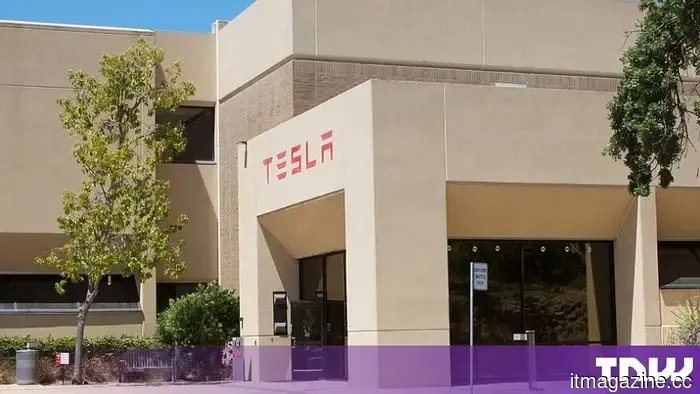 Tesla concluded Sweden's longest strike by purchasing the contracts of all striking workers.
The strike at Tesla Sweden concludes after 1,021 days. IF Metall reports that Tesla has negotiated buyouts for approximately 80 members who were on strike, resulting in a lack of participants for the strike.
Tesla concluded Sweden's longest strike by purchasing the contracts of all striking workers.
The strike at Tesla Sweden concludes after 1,021 days. IF Metall reports that Tesla has negotiated buyouts for approximately 80 members who were on strike, resulting in a lack of participants for the strike.
 SpaceX has finalized its $60 billion deal with Cursor, which had acquired a company the day prior.
The acquisition of Cursor by SpaceX was finalized on 14 August. Cursor claims it now has access to the world's largest fleet of GPUs, including more affordable models.
SpaceX has finalized its $60 billion deal with Cursor, which had acquired a company the day prior.
The acquisition of Cursor by SpaceX was finalized on 14 August. Cursor claims it now has access to the world's largest fleet of GPUs, including more affordable models.
 The co-founder of Arm states that AI will generate more value than any previous revolution and predicts it will be a thrilling ride.
Hermann Hauser, co-founder of Arm, believes that AI will generate greater value than any previous revolution, though he cautions that certain valuations have become overly inflated.
The co-founder of Arm states that AI will generate more value than any previous revolution and predicts it will be a thrilling ride.
Hermann Hauser, co-founder of Arm, believes that AI will generate greater value than any previous revolution, though he cautions that certain valuations have become overly inflated.
 Samsung is said to be utilizing Claude to accelerate the chip design process.
Samsung is said to be utilizing Anthropic's Claude Code to enhance the speed of chip design and verification.
Samsung is said to be utilizing Claude to accelerate the chip design process.
Samsung is said to be utilizing Anthropic's Claude Code to enhance the speed of chip design and verification.
 Five of the largest companies in Europe have recently acquired computing resources that Mistral has not developed.
ASML, Amadeus, Capgemini, Caisse des Dépôts, and CMA CGM are supporting the expansion of the Mistral data centre by purchasing multi-year computing units that are currently unavailable.
Five of the largest companies in Europe have recently acquired computing resources that Mistral has not developed.
ASML, Amadeus, Capgemini, Caisse des Dépôts, and CMA CGM are supporting the expansion of the Mistral data centre by purchasing multi-year computing units that are currently unavailable.
Five of Europe's largest companies have just acquired computing resources that Mistral has not developed.
ASML, Amadeus, Capgemini, Caisse des Dépôts, and CMA CGM are supporting the expansion of the Mistral data center by purchasing multi-year computing units that are not yet available.