

Pony.ai and Uber will deploy over 2,000 Chinese robotaxis on the streets of Europe.
Pony.ai and Uber have enhanced their partnership to deploy over 2,000 robotaxis on European roads, enabling one of China's autonomous-driving leaders to enter the continent’s market via an American app and a mix of local fleet operators.
In this arrangement, Pony.ai supplies the Level 4 self-driving technology and operational expertise, while Uber provides the platform for booking, payments, customer service, and its substantial market presence, with local partners managing the actual fleets. In Zagreb, that local partner is Verne from Croatia.
Zagreb will be the first city to launch on the Uber platform in 2026, followed by four more European cities in subsequent phases and a rollout planned for the Middle East.
This approach is familiar for Uber, which has spent the past year partnering with self-driving suppliers rather than developing its own technology, including Wayve robotaxis in London and a growing list of collaborators elsewhere.
The strategy is asset-light, which is savvy for a Chinese company aiming at the European market. By allowing local partners to bear the costs of the vehicles and much of the regulatory processes, Pony.ai avoids a significant portion of the capital and compliance challenges that have made robotaxi expansion prohibitively expensive elsewhere.
Moreover, it complements what Pony.ai already offers. The company operates paid, fully driverless robotaxis in four Chinese cities and claims to have achieved city-wide breakeven unit economics in several regions—a assertion that few Western competitors can confidently make.
This track record is what makes Pony.ai valuable to Uber, which prefers to collaborate with a supplier that has undergone the arduous and costly testing phase, rather than starting from ground zero.
"By merging Pony.ai’s established autonomous driving technology and operational expertise with Uber’s global mobility platform and extensive market reach, we aim to create sustainable commercial operations at scale across Europe and beyond," stated Pony.ai CEO Dr. James Peng.
Uber and Pony.ai first partnered in May 2025, and this new agreement significantly expands that initial collaboration. Sarfraz Maredia, who heads Uber’s autonomous mobility division, identified Europe as the next testing ground for the partnership.
However, there is a significant concern. A Chinese self-driving system that collects detailed mapping and movement data while transporting passengers in European cities surfaces at a time when Brussels is growing increasingly cautious about Chinese technology, from electric vehicles to telecommunications equipment.
The data handling issues are particularly concerning. Level 4 robotaxis primarily function as mobile sensor arrays, and questions arise regarding where the captured footage and location data will be processed, stored, and potentially accessed—precisely the kind of scrutiny European regulators have begun applying to Chinese automotive manufacturers.
Uber has been notably transparent about losing its once-leading position in the self-driving sector. After having divested its own autonomous unit years ago, it now presents itself as a neutral platform where various robots can compete, while also positioning itself as an influencer in regulatory discussions.
This practicality extends to Uber's broader European plans. The company is already testing Volkswagen’s MOIA minibuses and has encountered safety challenges as well, with U.S. regulators investigating partner Avride following a series of accidents in Dallas.
Whether European riders will be concerned about the origin of the vehicle that arrives for them is uncertain. For the majority, the key factors are likely to be price, availability, and above all, timely braking.
This deal clarifies that the robotaxi competition is no longer confined to the U.S. or China, playing out on home soil. Pony.ai's entry through Uber’s app and a Croatian startup signifies that the contest has officially reached European streets, compelling Europe to evaluate how comfortable it is with the source of the driving technology involved.
Other articles
 The iPhone X has become outdated, and the same applies to that old MacBook Pro.
Apple has placed the iPhone X and the 15-inch 2018 MacBook Pro on its obsolete list, which means that official hardware service and parts ordering will no longer be available for these devices.
The iPhone X has become outdated, and the same applies to that old MacBook Pro.
Apple has placed the iPhone X and the 15-inch 2018 MacBook Pro on its obsolete list, which means that official hardware service and parts ordering will no longer be available for these devices.
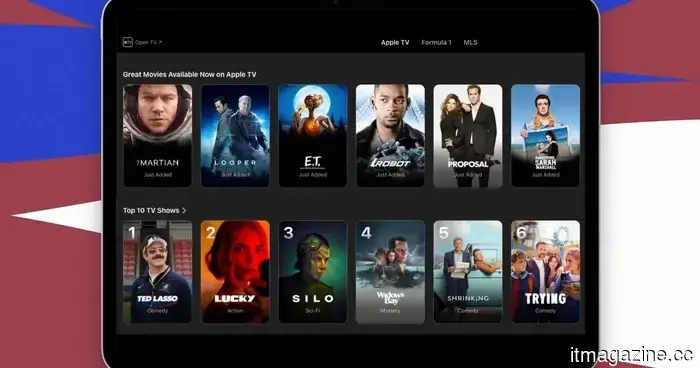 Apple TV has just added several classic films, and they are all deserving of a rewatch.
Apple TV has expanded its streaming library by incorporating a selection of classic and well-known films, featuring titles like Arrival, The Martian, Gone Girl, and E.T.
Apple TV has just added several classic films, and they are all deserving of a rewatch.
Apple TV has expanded its streaming library by incorporating a selection of classic and well-known films, featuring titles like Arrival, The Martian, Gone Girl, and E.T.
 The iPhone X is now outdated, as is that old MacBook Pro.
Apple has placed the iPhone X and the 15-inch 2018 MacBook Pro on its obsolete list, which means that official hardware support and parts ordering for these devices have been discontinued.
The iPhone X is now outdated, as is that old MacBook Pro.
Apple has placed the iPhone X and the 15-inch 2018 MacBook Pro on its obsolete list, which means that official hardware support and parts ordering for these devices have been discontinued.
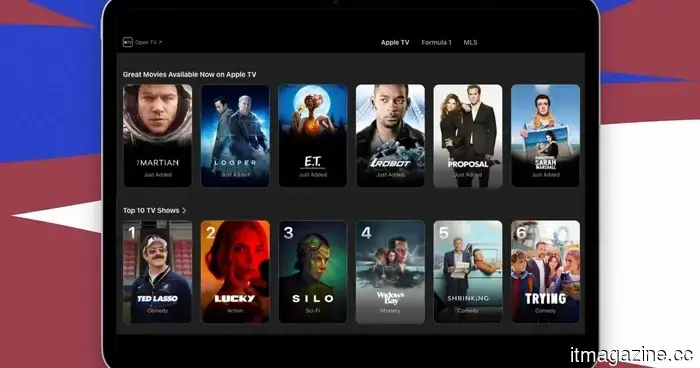 Apple TV has recently added several classic films, and each of them deserves to be revisited.
Apple TV has expanded its streaming library with a selection of classic and well-known movies, featuring titles like Arrival, The Martian, Gone Girl, and E.T.
Apple TV has recently added several classic films, and each of them deserves to be revisited.
Apple TV has expanded its streaming library with a selection of classic and well-known movies, featuring titles like Arrival, The Martian, Gone Girl, and E.T.
 Cl0p asserts that they have conducted a major hack involving Shell, Philips, and numerous other companies.
The ransomware group Cl0p, which has links to Russia, claims to have stolen data from Shell, Philips, and many other companies in a campaign that researchers attribute to a vulnerability in Oracle software.
Cl0p asserts that they have conducted a major hack involving Shell, Philips, and numerous other companies.
The ransomware group Cl0p, which has links to Russia, claims to have stolen data from Shell, Philips, and many other companies in a campaign that researchers attribute to a vulnerability in Oracle software.
Pony.ai and Uber will deploy over 2,000 Chinese robotaxis on the streets of Europe.
Pony.ai and Uber are enhancing their collaboration to launch more than 2,000 robotaxis throughout Europe, beginning in Zagreb. This strategy is an asset-light initiative aimed at introducing Chinese self-driving technology onto European streets.