
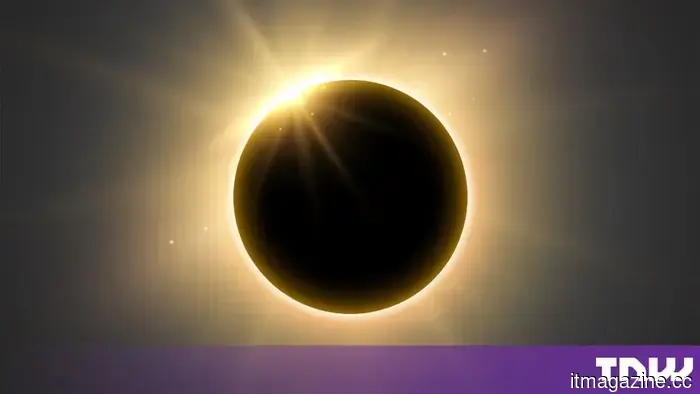
Italian scientists prepare a new solar instrument for a crucial eclipse evaluation.
Italian researchers have assembled a new solar instrument, cautiously transported it by road across the continent to avoid the risks associated with aircraft cargo, and prepared it for one of the most nerve-wracking physics experiments: a test that must succeed on its first attempt during the total solar eclipse crossing Europe on 12 August. The device, named the Circular Slit Spectrometer (CISS), will be aimed at the Sun from the Javalambre Astrophysical Observatory in Spain, which is situated directly under the path of totality.
The allure of an eclipse is straightforward, and it explains why these phenomena are considered such valuable natural laboratories. When the Moon obscures the Sun's bright surface, the faint outer atmosphere known as the corona becomes visible, presenting a delicate halo typically overshadowed by light a million times stronger. For a solar physicist, those fleeting moments provide a rare opportunity to access a difficult-to-reach area, which is why teams continue to pursue eclipses worldwide instead of waiting for the Sun to cooperate.
CISS is not a coronagraph—an instrument that creates its own eclipse by blocking the Sun's disc. Instead, it is a spectrometer, designed to separate the corona’s light into its various wavelengths and interpret the information contained within, from temperature and composition to the flow of the solar wind. The innovation lies in its geometry. Unlike traditional linear spectrometers that scan the corona one strip at a time, a process that can take hours, CISS employs a circular slit to capture the spectrum of the entire ring in a single image.
“There is neither space nor time for the unexpected,” noted senior researcher Paola Zuppella from the Institute for Photonics and Nanotechnologies in Padua, succinctly summarizing the risks involved. Totality at Javalambre lasts only a few minutes, so an instrument that can capture everything at once, rather than moving a slit across the sky, makes the difference between acquiring a complete dataset and facing a frustrating near-miss.
The team consists of representatives from two Italian institutions, with the Astrophysical Observatory of Turin spearheading the scientific efforts under principal investigator Federico Landini, while the Padua lab contributes the optics. Landini clearly articulates the potential benefit of this design: it could achieve, in one frame, what traditional equipment requires an entire morning to compile.
If successful, researchers anticipate that CISS will provide unprecedented insights into the behavior of the corona and, in the long term, pave the way for a new era in solar observation. There is also an interesting juxtaposition in the timing of these efforts. While European scientists are relying on a rare natural eclipse for their research, Europe’s space agencies are concurrently developing artificial eclipses.
Two satellites, flying in close formation, can now create solar eclipses on demand, with one satellite casting a precise shadow over the other, allowing for the corona to be examined whenever mission planners choose, rather than waiting for the universe to comply. This initiative is already yielding results, as an artificially generated solar eclipse in orbit has begun producing new views of the corona, offering the kind of consistent, readily accessible data that a ground-based team peering from a Spanish mountaintop can only hope for.
In contrast, CISS seems almost antiquated, a clever optical tool reliant on a few uninterrupted moments and a clear sky. However, the two methods are complementary rather than competing. Space-based coronagraphs provide consistency, while a genuine eclipse still delivers a clearer, more complete perspective of the inner corona than any occulting disc can offer. Therefore, a rapid spectrometer capturing that view could supply data that orbiting instruments cannot obtain.
As always, the primary challenge remains the weather and the single chance at success. Everything on the mountain must function perfectly the first time, as there is no opportunity for a redo. The Sun, after all, won’t wait around.
Other articles
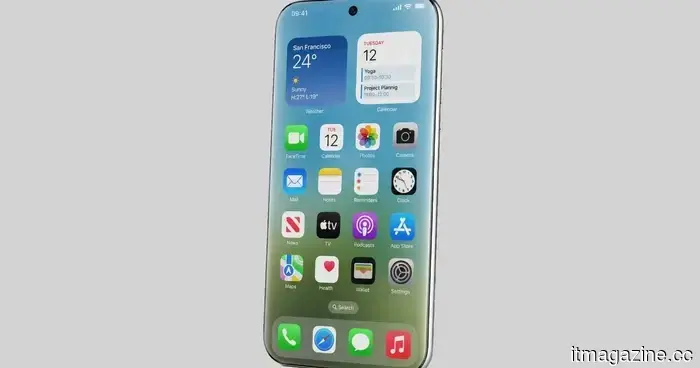 The iPhone marking Apple's 20th anniversary has recently dodged a cancellation threat.
A recent report suggested that Apple has abandoned its glass-heavy iPhone redesign; however, sources indicate that the 20th anniversary design is still on schedule for release next year.
The iPhone marking Apple's 20th anniversary has recently dodged a cancellation threat.
A recent report suggested that Apple has abandoned its glass-heavy iPhone redesign; however, sources indicate that the 20th anniversary design is still on schedule for release next year.
 River AI secured $1.1 billion to enable companies to develop and maintain their own models.
Igor Babuschkin's River AI has secured $1.1 billion in funding, spearheaded by General Catalyst and AMP PBC, just four months after its establishment, to enable companies to possess their own models.
River AI secured $1.1 billion to enable companies to develop and maintain their own models.
Igor Babuschkin's River AI has secured $1.1 billion in funding, spearheaded by General Catalyst and AMP PBC, just four months after its establishment, to enable companies to possess their own models.
 Italian researchers prepare a new solar instrument for a crucial eclipse experiment.
Italian scientists will evaluate a new spectrometer, CISS, on 12 August during the total solar eclipse in Spain, aiming for a quicker assessment of the Sun’s corona.
Italian researchers prepare a new solar instrument for a crucial eclipse experiment.
Italian scientists will evaluate a new spectrometer, CISS, on 12 August during the total solar eclipse in Spain, aiming for a quicker assessment of the Sun’s corona.
 Apple might make it more difficult for fake photos to be presented as if they were taken with an iPhone.
Apple is reportedly working on Reference Image for iOS 27, a camera authentication feature that may verify if a photo was taken using an iPhone's camera hardware.
Apple might make it more difficult for fake photos to be presented as if they were taken with an iPhone.
Apple is reportedly working on Reference Image for iOS 27, a camera authentication feature that may verify if a photo was taken using an iPhone's camera hardware.
 Meta's latest AI model operates completely offline, but your GPU must be capable of keeping pace.
Meta has launched Muse Glimmer, a complimentary AI model with 30 billion parameters that you can operate entirely offline. There are no subscriptions or data centers required; all you need is a GPU with a minimum of 24GB of VRAM.
Meta's latest AI model operates completely offline, but your GPU must be capable of keeping pace.
Meta has launched Muse Glimmer, a complimentary AI model with 30 billion parameters that you can operate entirely offline. There are no subscriptions or data centers required; all you need is a GPU with a minimum of 24GB of VRAM.
 Meta and TikTok have reached an agreement to fact-check content related to the border following the tragedy in Ceuta.
Meta and TikTok have committed to fact-checking misinformation regarding Spain’s Ceuta border in response to pressure from the EU, following a surge in July that resulted in nearly 100 fatalities.
Meta and TikTok have reached an agreement to fact-check content related to the border following the tragedy in Ceuta.
Meta and TikTok have committed to fact-checking misinformation regarding Spain’s Ceuta border in response to pressure from the EU, following a surge in July that resulted in nearly 100 fatalities.
Italian scientists prepare a new solar instrument for a crucial eclipse evaluation.
Italian scientists will evaluate a new spectrometer, CISS, during the total solar eclipse on August 12 in Spain, aiming for a quicker analysis of the Sun's corona.