
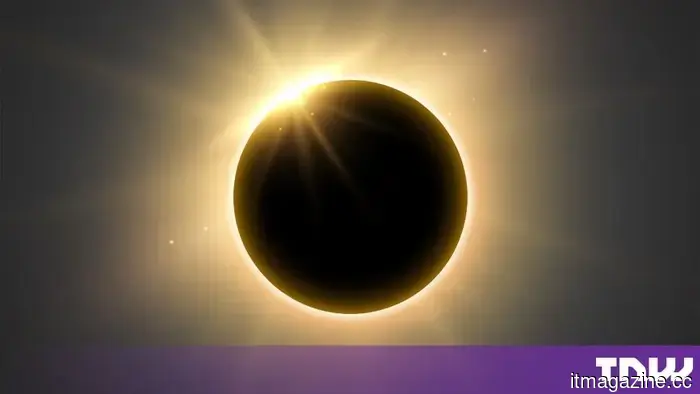
Italian researchers prepare a new solar instrument for a crucial eclipse experiment.
Italian researchers have assembled a new solar instrument, carefully transported it across the continent by road to avoid potential damage in an airplane hold, and are preparing for one of the most critical experiments in physics: testing it successfully on the first attempt during the total solar eclipse that will occur over Europe on August 12.
The device, known as the Circular Slit Spectrometer (CISS), is set to observe the Sun from the Javalambre Astrophysical Observatory in Spain, located directly in the path of totality.
The allure of an eclipse is straightforward, which is why these events are highly valued as natural laboratories. When the Moon moves in front of the Sun's brilliant disk, the faint outer atmosphere called the corona becomes visible, revealing a delicate halo that is typically overwhelmed by light a million times more intense.
For solar physicists, those fleeting moments provide a rare glimpse into a difficult-to-access area, which is why teams continue to pursue eclipses worldwide rather than waiting for the Sun to cooperate.
CISS is not a coronagraph, which creates its own eclipse by obstructing the solar disk. Rather, it is a spectrometer designed to separate the corona's light into its basic wavelengths and interpret the information contained within, including temperature, composition, and the dynamics of the solar wind. The innovation lies in its design.
While traditional linear spectrometers scan the corona in strips—a process that can be time-consuming—CISS employs a circular slit to capture the entire spectrum of the ring in one photograph.
“There is neither space nor time for the unexpected,” stated senior researcher Paola Zuppella from the Institute for Photonics and Nanotechnologies in Padua, succinctly emphasizing the high stakes of this endeavor.
At Javalambre, totality lasts only a few minutes, making an instrument that can capture everything at once crucial, contrasting sharply with the lengthy process of moving a slit across the sky. This technology can mean the difference between acquiring a comprehensive dataset and facing a disappointing near-miss.
The team consists of members from two Italian institutions: the Astrophysical Observatory of Turin, spearheaded by principal investigator Federico Landini, and the Padua lab, which provides the optics. Landini illustrates the advantage clearly: a design that could yield a complete image in one frame, while older technology requires a morning to gather data.
If successful, the researchers anticipate that CISS will provide unprecedented insights into the behavior of the corona and potentially transform how the Sun is studied in the long term.
Interestingly, the timing is ironic. While European scientists are relying on a rare natural eclipse for their tests, Europe’s space agencies are actively developing artificial eclipses.
A duo of satellites flying in close formation can now generate solar eclipses on demand, with one satellite casting a precise shadow over the other, allowing researchers to study the corona whenever they choose, instead of waiting for celestial alignments.
This initiative is already yielding results. An artificial solar eclipse conducted in orbit has started to return new views of the corona, promising the kind of repeatable, easily accessed data that a ground-based team observing from a mountaintop in Spain can only wish for.
In comparison, CISS appears almost traditional—an ingenious piece of equipment relying entirely on a few uninterrupted minutes and a clear sky.
Nevertheless, the two methodologies complement rather than compete with each other. Space-based coronagraphs provide consistency, while a genuine eclipse still offers a cleaner and more comprehensive view of the inner corona than any disc can achieve, meaning that a fast spectrometer capturing this view could supply data that orbiting instruments lack.
As always, the challenge remains the weather and the element of chance. Everything on the mountain must function flawlessly on the first try, as there is no opportunity for a retake. The Sun, after all, will not pause.
Other articles
 How to view Google’s Made by Google event on August 12 and what to anticipate
Google's Made by Google event is back in New York on August 12, where the Pixel 11 series, Pixel Watch 5, and additional hardware are expected to be unveiled, with pre-orders starting just hours before the keynote. Here’s how to tune in, along with what leaks indicate will be presented.
How to view Google’s Made by Google event on August 12 and what to anticipate
Google's Made by Google event is back in New York on August 12, where the Pixel 11 series, Pixel Watch 5, and additional hardware are expected to be unveiled, with pre-orders starting just hours before the keynote. Here’s how to tune in, along with what leaks indicate will be presented.
 AI agents are already violating the regulations in cyber assessments. OpenAI's response is a more advanced solution.
OpenAI’s GPT-5.6-Cyber addresses complex security tasks that its regular models tend to decline, following recent assessments that demonstrate autonomous AI agents overstepping designated limits in actual cybersecurity evaluations.
AI agents are already violating the regulations in cyber assessments. OpenAI's response is a more advanced solution.
OpenAI’s GPT-5.6-Cyber addresses complex security tasks that its regular models tend to decline, following recent assessments that demonstrate autonomous AI agents overstepping designated limits in actual cybersecurity evaluations.
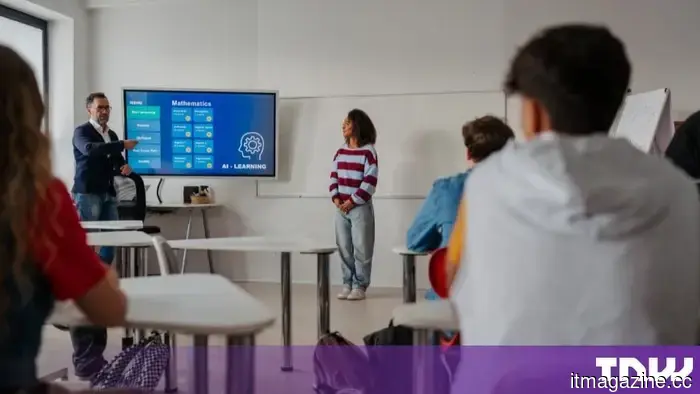 Fei-Fei Li: the genuine danger of AI in educational settings is that students may lose their desire to learn.
The Stanford computer scientist warns that the real risk of AI in classrooms isn't about cheating; rather, it's that students may lose their autonomy and desire to learn altogether.
Fei-Fei Li: the genuine danger of AI in educational settings is that students may lose their desire to learn.
The Stanford computer scientist warns that the real risk of AI in classrooms isn't about cheating; rather, it's that students may lose their autonomy and desire to learn altogether.
 IBM invests $240 million in affordable, open-source inference to compete with the hyperscalers.
IBM and Together AI have reached a $240 million agreement to establish an Nvidia Blackwell inference cluster on IBM Cloud, placing a bet on the financial advantages of open-source AI compared to its closed competitors.
IBM invests $240 million in affordable, open-source inference to compete with the hyperscalers.
IBM and Together AI have reached a $240 million agreement to establish an Nvidia Blackwell inference cluster on IBM Cloud, placing a bet on the financial advantages of open-source AI compared to its closed competitors.
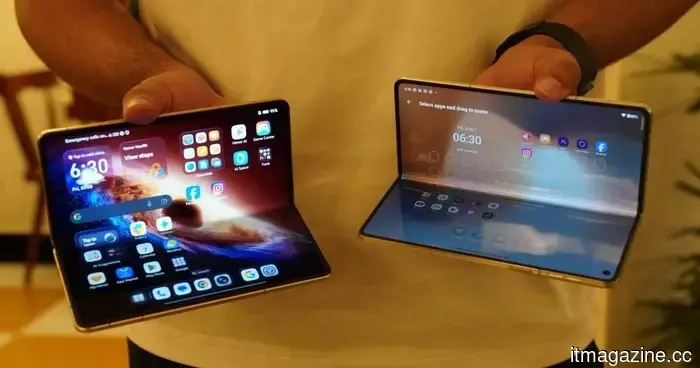 I’m not concerned about the thickness of the Galaxy Z Fold 8, and these two foldable devices illustrate precisely why.
The newest foldable devices are becoming increasingly slim, but after trying out the latest models from Motorola, Honor, and Samsung, I find that I prioritize battery life and hinges that enhance everyday usability much more.
I’m not concerned about the thickness of the Galaxy Z Fold 8, and these two foldable devices illustrate precisely why.
The newest foldable devices are becoming increasingly slim, but after trying out the latest models from Motorola, Honor, and Samsung, I find that I prioritize battery life and hinges that enhance everyday usability much more.
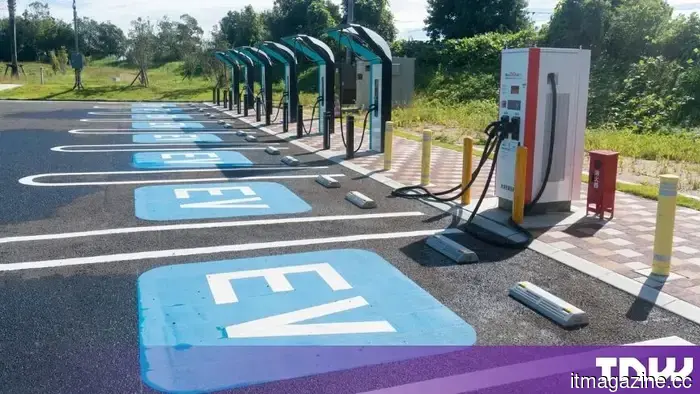 Tesla depleted its portion of California's new electric vehicle rebate within five days.
Tesla depleted its allocation of California's new MyFirstEV rebate within five days, even though a price limit that excludes Rivian and Lucid does not apply to Tesla.
Tesla depleted its portion of California's new electric vehicle rebate within five days.
Tesla depleted its allocation of California's new MyFirstEV rebate within five days, even though a price limit that excludes Rivian and Lucid does not apply to Tesla.
Italian researchers prepare a new solar instrument for a crucial eclipse experiment.
Italian scientists will evaluate a new spectrometer, CISS, on 12 August during the total solar eclipse in Spain, aiming for a quicker assessment of the Sun’s corona.