

Apple might make it more difficult for fake photos to be presented as if they were taken with an iPhone.
iPhone photos may soon generate a digital paper trail in iOS 27
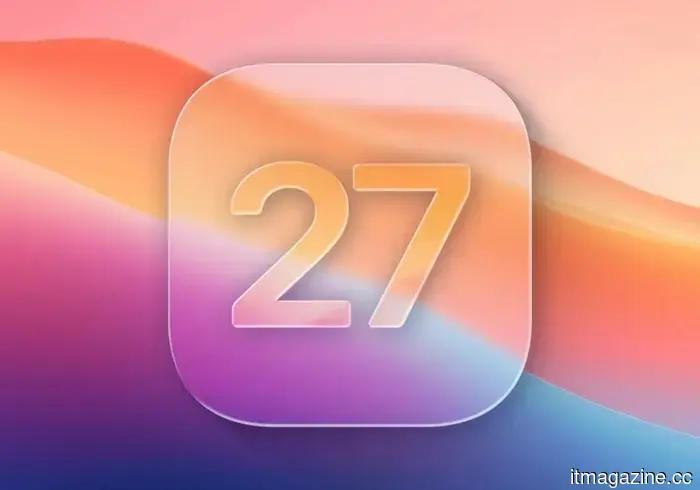
In the current era of AI, the issue of fake images has become a valid worry. However, Apple appears to be preparing to address this with the upcoming major release of iOS. Code found in the iOS 27 beta 5 by 9to5Mac suggests a new feature called Apple Reference Image.
This system aims to verify that an image was taken with an iPhone camera by utilizing information linked to the hardware used for capturing it. This means that photos taken with an iPhone might soon come with a traceable record of their origin.
Your iPhone camera could confirm its own images
According to reports, the Reference Image feature will not be applicable to every photo you take. Users will need to first enable Reference Mode in Settings > Camera > Reference Image, and then take pictures using a specific Reference option in the Camera app. Consequently, images captured with standard camera modes will not carry the provenance information necessary for future authentication.
When an image is selected for authentication, the raw photo and its provenance data will be processed via Apple’s Private Cloud Compute infrastructure. Apple will obtain specific sensor data and photo metadata, while the authenticated image will be assigned a unique ID.
Additionally, Apple may have the ability to revoke previous authentications if it determines that a specific camera sensor has been compromised. These authenticated images can be shared with other Apple users, whose devices should be able to check their authenticity locally. The company is also said to be developing a Transfer with Provenance feature for transferring images via USB while maintaining their Reference Image information.
The significance of photo authentication is growing
Apple's proposed new feature comes as technology companies increasingly look for methods to verify the origins of digital images. Google has adopted technologies like SynthID, while standards such as C2PA provide provenance data that can indicate how an image was created or altered.
However, this method leverages the iPhone camera itself. Instead of concentrating on identifying AI-generated content, Apple is offering each legitimate camera capture a distinct identity to clarify its origin. It’s important to remember that this remains an unverified feature found in the iOS 27 beta. Apple has not publicly announced it, and there is no assurance it will be included in the final iOS 27 release this fall. Nevertheless, I hope to see this feature survive the beta testing phase.





Other articles
 Meta and TikTok have reached an agreement to fact-check content related to the border following the tragedy in Ceuta.
Meta and TikTok have reached an agreement to verify misinformation regarding the Ceuta border in Spain, responding to pressure from the EU, following a July increase in incidents that resulted in nearly 100 fatalities.
Meta and TikTok have reached an agreement to fact-check content related to the border following the tragedy in Ceuta.
Meta and TikTok have reached an agreement to verify misinformation regarding the Ceuta border in Spain, responding to pressure from the EU, following a July increase in incidents that resulted in nearly 100 fatalities.
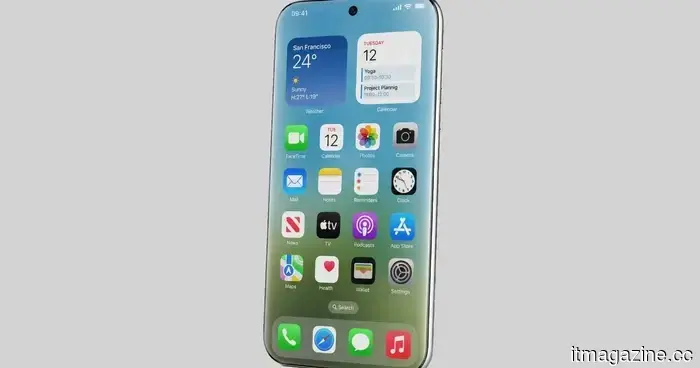 The iPhone marking Apple's 20th anniversary has recently dodged a cancellation threat.
A recent report suggested that Apple has abandoned its glass-heavy iPhone redesign; however, sources indicate that the 20th anniversary design is still on schedule for release next year.
The iPhone marking Apple's 20th anniversary has recently dodged a cancellation threat.
A recent report suggested that Apple has abandoned its glass-heavy iPhone redesign; however, sources indicate that the 20th anniversary design is still on schedule for release next year.
 YouTube has just doubled the requirements for creators to begin earning money from ads.
YouTube is increasing its watch-time and Shorts-view thresholds for new creators aiming for ad revenue, significantly raising the bar for entry into its Partner Program starting in 2027.
YouTube has just doubled the requirements for creators to begin earning money from ads.
YouTube is increasing its watch-time and Shorts-view thresholds for new creators aiming for ad revenue, significantly raising the bar for entry into its Partner Program starting in 2027.
 Italian scientists prepare a new solar instrument for a crucial eclipse evaluation.
Italian scientists will evaluate a new spectrometer, CISS, during the total solar eclipse on August 12 in Spain, aiming for a quicker analysis of the Sun's corona.
Italian scientists prepare a new solar instrument for a crucial eclipse evaluation.
Italian scientists will evaluate a new spectrometer, CISS, during the total solar eclipse on August 12 in Spain, aiming for a quicker analysis of the Sun's corona.
 River AI secured $1.1 billion to enable companies to develop and maintain their own models.
Igor Babuschkin's River AI has secured $1.1 billion in funding, spearheaded by General Catalyst and AMP PBC, just four months after its establishment, to enable companies to possess their own models.
River AI secured $1.1 billion to enable companies to develop and maintain their own models.
Igor Babuschkin's River AI has secured $1.1 billion in funding, spearheaded by General Catalyst and AMP PBC, just four months after its establishment, to enable companies to possess their own models.
 IBM invests $240 million in affordable, open-source inference to compete with hyperscalers.
IBM and Together AI have reached a $240 million agreement to create an Nvidia Blackwell inference cluster on IBM Cloud, betting on the financial advantages of open-source AI compared to proprietary competitors.
IBM invests $240 million in affordable, open-source inference to compete with hyperscalers.
IBM and Together AI have reached a $240 million agreement to create an Nvidia Blackwell inference cluster on IBM Cloud, betting on the financial advantages of open-source AI compared to proprietary competitors.
Apple might make it more difficult for fake photos to be presented as if they were taken with an iPhone.
Apple is reportedly working on Reference Image for iOS 27, a camera authentication feature that may verify if a photo was taken using an iPhone's camera hardware.