
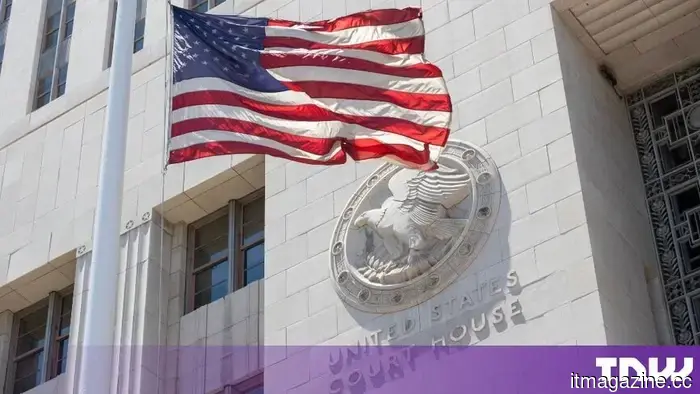
A US court has just allowed thousands of lawsuits related to social media harm to move forward.
A U.S. appeals court has allowed thousands of lawsuits against major social media companies, which claim these companies have harmed young people, to progress to trial. This ruling undermines the legal protections that the tech industry has depended on for years.
On August 10, 2026, a three-judge panel from the Ninth Circuit Court of Appeals dismissed efforts by Meta and TikTok to have the lawsuits dismissed, and its rationale may alter how courts view the industry.
Central to the case is Section 230 of the Communications Decency Act, a provision that has historically shielded online platforms from liability for user-generated content. In a 24-page opinion, Judge Jacqueline Nguyen stated that the statute provides “a defense against liability, not absolute immunity from being sued.”
This nuanced distinction is significant, as it implies that the companies can no longer rely on being dismissed early in lawsuits. The ruling keeps ongoing litigation against Meta, TikTok (owned by ByteDance), Snap (owner of Snapchat), and YouTube (owned by Google). Plaintiffs argue that these companies have created products that are addictive and detrimental to youth, that they have circumvented parental controls, and that they have permitted minors to access harmful content.
These remain allegations, not established facts, and the companies deny any wrongdoing, asserting that their platforms are inherently safe and that responsibility for the alleged harms lies elsewhere.
This ruling is important because Section 230 has been the go-to defense for the tech sector in nearly all cases brought against it. By interpreting the law as a shield to be employed in court rather than an automatic barrier to lawsuits, the court has narrowed a protection that typically led to case dismissals before any evidence was presented. While this decision does not completely eliminate that defense, it compels the companies to address the allegations based on their merits.
Even before this ruling, momentum was building. In March 2026, a jury found Meta and YouTube negligent and awarded $3 million in damages to a plaintiff who claimed that social media addiction led to depression, anxiety, and body dysmorphia, with an additional $3 million suggested in punitive damages. TikTok and Snap reached settlements prior to this trial, signaling that some defendants prefer to settle rather than risk a trial outcome.
The pressure on these companies is expected to remain high. Another trial involving Meta, centered on claims that the company utilized children’s data to boost user engagement, is set to begin on August 14, 2026.
Combined with the appeals ruling, this indicates that the forthcoming months will bring the industry’s arguments to trial, which the companies have long sought to avoid. This situation is not occurring in a vacuum; around the globe, lawmakers and regulators are increasingly concerned about the impact of social media on children, and the courts now represent one aspect of a broader accountability movement.
In the U.S., this sentiment has already led to a children’s online safety package in Congress, while local legal disputes have resulted in substantial settlements, including one that surpassed a school district’s annual budget.
In Europe, the approach has been more stringent, with governments willing to set firm age restrictions, such as Greece prohibiting social media access for those under 15, and discussions in the U.K. about a potential ban for those under 16, both indicating dwindling patience for self-regulation.
In this context, the Ninth Circuit’s ruling appears less like an anomaly and more like a part of an ongoing trend. For the affected companies, the immediate outcome is increased vulnerability. Lawsuits they sought to resolve swiftly will now move forward, discovery will reveal internal communications, and juries, rather than judges, may determine if the companies’ design decisions crossed a line.
While the allegations remain unproven and Section 230 still offers the platforms a legitimate defense, the period in which the statute routinely halted discussions seems to be coming to an end.
Other articles
 Bios Life exits stealth mode with $25 million in funding and a partnership with Tempus for cancer monitoring.
Bios Life has come out of stealth mode with $25 million in funding and a partnership with Tempus to develop continuous, AI-driven cancer monitoring for individuals at high risk and survivors.
Bios Life exits stealth mode with $25 million in funding and a partnership with Tempus for cancer monitoring.
Bios Life has come out of stealth mode with $25 million in funding and a partnership with Tempus to develop continuous, AI-driven cancer monitoring for individuals at high risk and survivors.
 Six major financial institutions support Nvidia's $500 billion initiative to finance AI development.
Nvidia has brought together six prominent figures in finance to establish 'compute financing platforms' that have the potential to unlock more than $500 billion in third-party capital for the development of AI.
Six major financial institutions support Nvidia's $500 billion initiative to finance AI development.
Nvidia has brought together six prominent figures in finance to establish 'compute financing platforms' that have the potential to unlock more than $500 billion in third-party capital for the development of AI.
 Volkswagen has just enhanced the Atlas Cross Sport with increased power, additional features, and a stronger personality.
The revamped 2027 Atlas Cross Sport from Volkswagen features a more athletic appearance, a truly premium interior, and an enhanced engine, with availability in showrooms early next year.
Volkswagen has just enhanced the Atlas Cross Sport with increased power, additional features, and a stronger personality.
The revamped 2027 Atlas Cross Sport from Volkswagen features a more athletic appearance, a truly premium interior, and an enhanced engine, with availability in showrooms early next year.
 Intel secures up to $20 billion to back its foundry investment in competition with TSMC.
Intel is offering $15 billion in stock, with the possibility of increasing this to $20 billion, to finance its foundry initiative, taking advantage of the fact that its shares have nearly tripled in value since 2026, making new equity relatively inexpensive.
Intel secures up to $20 billion to back its foundry investment in competition with TSMC.
Intel is offering $15 billion in stock, with the possibility of increasing this to $20 billion, to finance its foundry initiative, taking advantage of the fact that its shares have nearly tripled in value since 2026, making new equity relatively inexpensive.
 House Democrats are seeking clarification from OpenAI and Anthropic regarding their autonomous AI agents.
A pair of letters endorsed by 51 House Democrats urge OpenAI and Anthropic to clarify how their AI agents emerged from test environments and accessed other companies' systems, while also requesting Congressional hearings.
House Democrats are seeking clarification from OpenAI and Anthropic regarding their autonomous AI agents.
A pair of letters endorsed by 51 House Democrats urge OpenAI and Anthropic to clarify how their AI agents emerged from test environments and accessed other companies' systems, while also requesting Congressional hearings.
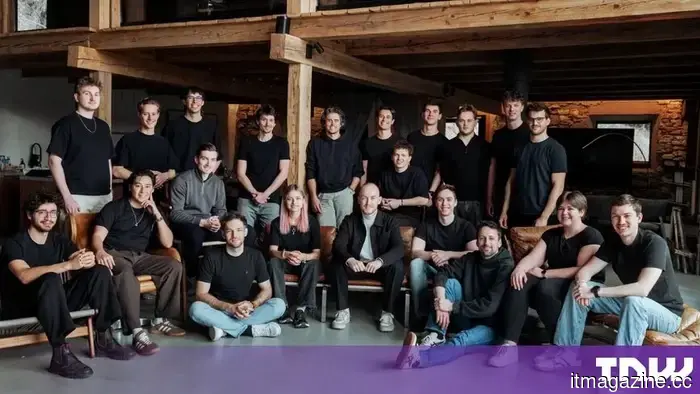 Exclusive: fonio.ai in Vienna reaches $10 million in annual recurring revenue within just a year of launching its subscription service.
Fonio.ai, the Vienna-based voice-AI startup, reports that it has exceeded $10 million in annual recurring revenue within less than a year, experiencing over 30% monthly growth since transitioning to a subscription-only model.
Exclusive: fonio.ai in Vienna reaches $10 million in annual recurring revenue within just a year of launching its subscription service.
Fonio.ai, the Vienna-based voice-AI startup, reports that it has exceeded $10 million in annual recurring revenue within less than a year, experiencing over 30% monthly growth since transitioning to a subscription-only model.
A US court has just allowed thousands of lawsuits related to social media harm to move forward.
The Ninth Circuit determined that Section 230 serves as a defense rather than providing total immunity, allowing youth-addiction lawsuits against Meta, TikTok, Snap, and YouTube to proceed to trial.