
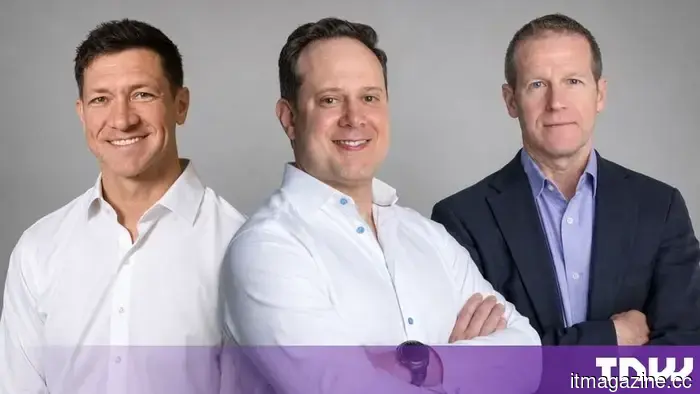
Bios Life exits stealth mode with $25 million in funding and a partnership with Tempus for cancer monitoring.
A group of former BioNTech employees believes that cancer screening has lagged behind, and they have secured $25M to address this issue. Bios Life has officially launched with a strategy to replace traditional one-time screenings with continuous, AI-driven monitoring, backed by a data partnership with Tempus.
The seed funding round has been effectively distributed for a successful start, led by Redmile, Vsquared Ventures, and Kindred Capital, along with a diverse group of healthcare and tech investors from both the United States and Europe, providing the Boston-based company with solid support from the outset.
The target audience is substantial and, according to the company, inadequately served. Bios Life highlights that over 40 million Americans are either cancer survivors or at increased risk, two demographics experiencing fragmented, reactive care that only engages once a problem has emerged.
The implications are significant. Bios Life indicates that more than 40% of individuals will receive a cancer diagnosis during their lives, with many of these cases being diagnosed late, at stages three or four, when treatment becomes more challenging and prognosis is poorer.
The company's solution involves transitioning from episodic care to a continuous approach. Instead of a scan every year or two, Bios Life aims to maintain what it describes as a digital twin for each patient, an ever-updating representation of their biology that transforms disjointed screenings into ongoing monitoring.
The service is designed to be primarily virtual. Bios Life intends to operate the platform through an online care system staffed by licensed clinicians throughout the U.S. and in collaboration with cancer centers, targeting a launch in the latter half of 2026, with a waitlist already available.
The technology is grounded in advanced genomics. The company possesses commercial rights to the Nucleotide Transformer, a genomics foundation model from BioNTech-InstaDeep, which it claims is one of the most referenced and downloaded in the industry, capable of analyzing genetic signals at the nucleotide level.
The partnership with Tempus provides essential learning for the models. Under the multi-year agreement, Bios Life will have access to Tempus’ de-identified, multi-modal oncology data sets to train and validate its predictive systems, which are crucial for establishing any credible medical AI.
Genetics also plays a vital role. Through Ambry Genetics, a division of Tempus specializing in hereditary cancer testing, Bios Life plans to integrate genetic screening into its platform, combining inherited risks with the lifestyle and clinical data it monitors over time.
Clinical supporters believe this development is long overdue. Kevin Oeffinger from Duke University stated that screening has been in a “relative standstill” for decades, asserting that an AI-enhanced virtual model could significantly benefit high-risk groups, a strong endorsement from a prominent academic advisor.
The expertise of the founders strengthens the company's case. CEO Ryan Richardson served as BioNTech’s chief strategy officer and led its AI division InstaDeep, along with other veterans from BioNTech and InstaDeep who were integral in the mRNA and genomics-AI advancements.
The technology has already demonstrated the capability to detect breast cancer from scans and, in certain studies, has outperformed biopsies in assessing rare tumors, indicating substantial momentum in the field.
Furthermore, there is a growing trend of founder-led health-AI initiatives, with experienced professionals leaving significant positions to develop their own data-driven medical solutions, and Bios Life exemplifies this blend of expertise and patient data.
However, important cautions must be acknowledged, especially in health. The platform is not yet operational, AI risk predictions need clinical validation before being trusted, and continuous monitoring can pose its own risks, such as false alarms, over-screening, and the anxiety and costs associated with pursuing findings that may ultimately prove irrelevant.
This represents the balancing act facing the entire sector, where enthusiasm for AI health technology has often outpaced actual outcomes. Bios Life now possesses the right team, data partner, and funding; what it must demonstrate is that long-term monitoring truly benefits patients rather than merely increasing observation.
Other articles
 Intel secures up to $20 billion to support its foundry strategy in competition with TSMC.
Intel is offering $15 billion in stock, with the possibility of increasing this to $20 billion, to finance its foundry investment, capitalizing on the fact that a nearly threefold increase in its shares by 2026 makes issuing new equity more economical.
Intel secures up to $20 billion to support its foundry strategy in competition with TSMC.
Intel is offering $15 billion in stock, with the possibility of increasing this to $20 billion, to finance its foundry investment, capitalizing on the fact that a nearly threefold increase in its shares by 2026 makes issuing new equity more economical.
 The Minimal Phone 2 features an AMOLED screen and 5G connectivity, all while retaining its vintage appeal.
The second-generation phone from Minimal replaces its distraction-proof E Ink display with OLED technology and adds 5G capabilities, all encapsulated in a curved aluminum shell that completely eliminates the headphone jack.
The Minimal Phone 2 features an AMOLED screen and 5G connectivity, all while retaining its vintage appeal.
The second-generation phone from Minimal replaces its distraction-proof E Ink display with OLED technology and adds 5G capabilities, all encapsulated in a curved aluminum shell that completely eliminates the headphone jack.
 Intel secures up to $20 billion to back its foundry investment in competition with TSMC.
Intel is offering $15 billion in stock, with the possibility of increasing this to $20 billion, to finance its foundry initiative, taking advantage of the fact that its shares have nearly tripled in value since 2026, making new equity relatively inexpensive.
Intel secures up to $20 billion to back its foundry investment in competition with TSMC.
Intel is offering $15 billion in stock, with the possibility of increasing this to $20 billion, to finance its foundry initiative, taking advantage of the fact that its shares have nearly tripled in value since 2026, making new equity relatively inexpensive.
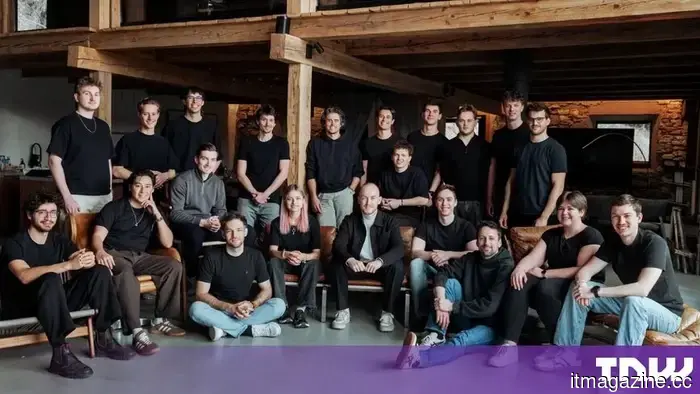 Exclusive: fonio.ai in Vienna reaches $10 million in annual recurring revenue within just a year of launching its subscription service.
Fonio.ai, the Vienna-based voice-AI startup, reports that it has exceeded $10 million in annual recurring revenue within less than a year, experiencing over 30% monthly growth since transitioning to a subscription-only model.
Exclusive: fonio.ai in Vienna reaches $10 million in annual recurring revenue within just a year of launching its subscription service.
Fonio.ai, the Vienna-based voice-AI startup, reports that it has exceeded $10 million in annual recurring revenue within less than a year, experiencing over 30% monthly growth since transitioning to a subscription-only model.
 Volkswagen has just enhanced the Atlas Cross Sport with increased power, additional features, and a stronger personality.
The revamped 2027 Atlas Cross Sport from Volkswagen features a more athletic appearance, a truly premium interior, and an enhanced engine, with availability in showrooms early next year.
Volkswagen has just enhanced the Atlas Cross Sport with increased power, additional features, and a stronger personality.
The revamped 2027 Atlas Cross Sport from Volkswagen features a more athletic appearance, a truly premium interior, and an enhanced engine, with availability in showrooms early next year.
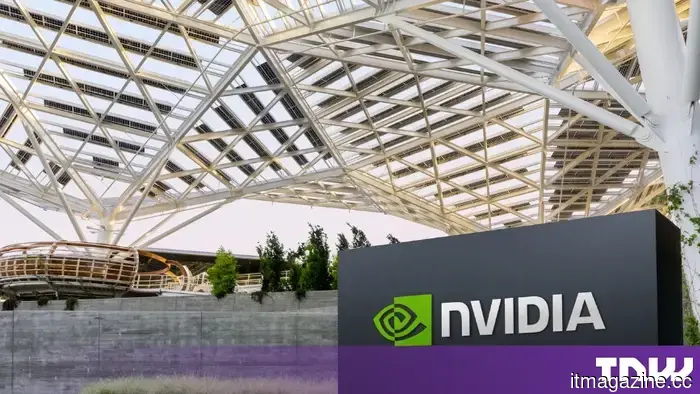 Six major financial institutions support Nvidia's $500 billion initiative to finance AI development.
Nvidia has brought together six prominent figures in finance to establish 'compute financing platforms' that have the potential to unlock more than $500 billion in third-party capital for the development of AI.
Six major financial institutions support Nvidia's $500 billion initiative to finance AI development.
Nvidia has brought together six prominent figures in finance to establish 'compute financing platforms' that have the potential to unlock more than $500 billion in third-party capital for the development of AI.
Bios Life exits stealth mode with $25 million in funding and a partnership with Tempus for cancer monitoring.
Bios Life has come out of stealth mode with $25 million in funding and a partnership with Tempus to develop continuous, AI-driven cancer monitoring for individuals at high risk and survivors.