
Intel secures up to $20 billion to back its foundry investment in competition with TSMC.
Intel has announced a common-stock offering of $15 billion, which could increase to $20 billion if underwriters exercise their overallotment options. This is a significant step for a company that recently seemed to be in a precarious position, highlighting the dramatic shift in the chipmaker’s fortunes over the past year.
The timing is strategic. Intel shares have nearly tripled in 2026, surpassing AMD, Nvidia, and the Philadelphia Semiconductor Index, which has increased by around 75% during the same period. When stock performance is so strong, issuing new shares is one of the most cost-effective ways to generate funding, and Intel is clearly taking advantage of favorable market conditions.
The offering was priced at approximately $95 a share, representing a minor discount of around 2.6% compared to Monday’s closing price of $97.52. This slight concession is modest for substantial equity raises, indicating the strong interest investors have in a company many had previously dismissed during its toughest restructuring phases.
The funds raised are designated for a critical segment of Intel’s business, aiming to support its foundry division. This will finance new manufacturing facilities and advanced packaging as the company endeavors to challenge TSMC in the capital-intensive contract chipmaking industry, which involves manufacturing chips for other firms.
As demand has surged, this ambition has become increasingly costly. Orders for AI-driven processors have exceeded Intel’s current capabilities, leading the company to raise its 2026 capital spending forecast from $18 billion to $20 billion and commit to producing on its advanced 14A process by 2028. The new equity will help support these commitments without accruing more debt.
There's real momentum driving this initiative as well. Intel has identified Tesla as a customer for its 14A process, and reports hint at a potential partnership with Apple, both of which would enhance the credibility of a foundry that has historically struggled to attract leading clients away from its Taiwanese competitor.
Investors are showing significant enthusiasm, with reported demand for the offering exceeding $100 billion, a remarkable figure that illustrates the shift in sentiment. One analyst succinctly pointed out that raising funds “makes perfect sense” after a nearly five-fold increase in stock value since last August.
However, this turnaround didn’t occur without support. It has been partially fueled by the US government’s investment in Intel, along with a series of high-profile investments and strategic initiatives, such as partnering with Musk’s Terafab as a foundry collaborator and committing billions to manufacturing in Ireland.
Nonetheless, the market’s immediate response served as a reality check. Intel shares dropped about 4 to 5% upon the announcement of the sale, reflecting dilution rather than a loss of confidence. More outstanding shares mean existing shareholders now own a slightly smaller portion of the company, leading to an adjustment in stock price.
The more profound question lies in whether the foundry initiative will succeed. Closing the gap with TSMC is a daunting task, one that has previously humbled Intel, and the commercial viability of the 14A roadmap remains uncertain in terms of the volumes and yield needed for success. Securing agreements with Tesla and pursuing Apple are positive developments but do not equate to sustained, profitable contract manufacturing.
Intel is also enhancing the products built on its manufacturing capabilities, including its 18A process and new chips, as well as packaging technologies it hopes will set it apart. The share sale provides the time and capacity required for these endeavors, but ultimately, execution will be the deciding factor that shapes the outcome.
For now, Intel is doing exactly what a recovering firm should when opportunities arise. It is converting its significant stock rally into essential funding for its most important and uncertain venture, banking on the goodwill to endure long enough to validate the skeptics.
Other articles
 Google is experimenting with a homepage that prioritizes AI, and it seems that the Search button is becoming less prominent.
Seen in Chrome, Edge, and Comet, Google's updated homepage design replaces the classic Search button with three AI-centric shortcuts.
Google is experimenting with a homepage that prioritizes AI, and it seems that the Search button is becoming less prominent.
Seen in Chrome, Edge, and Comet, Google's updated homepage design replaces the classic Search button with three AI-centric shortcuts.
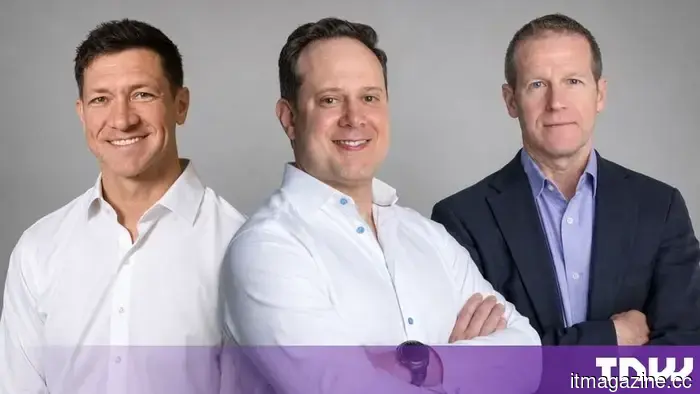 Bios Life exits stealth mode with $25 million in funding and a partnership with Tempus for cancer monitoring.
Bios Life has come out of stealth mode with $25 million in funding and a partnership with Tempus to develop continuous, AI-driven cancer monitoring for individuals at high risk and survivors.
Bios Life exits stealth mode with $25 million in funding and a partnership with Tempus for cancer monitoring.
Bios Life has come out of stealth mode with $25 million in funding and a partnership with Tempus to develop continuous, AI-driven cancer monitoring for individuals at high risk and survivors.
 Six major financial institutions support Nvidia's $500 billion initiative to finance AI development.
Nvidia has brought together six prominent figures in finance to establish 'compute financing platforms' that have the potential to unlock more than $500 billion in third-party capital for the development of AI.
Six major financial institutions support Nvidia's $500 billion initiative to finance AI development.
Nvidia has brought together six prominent figures in finance to establish 'compute financing platforms' that have the potential to unlock more than $500 billion in third-party capital for the development of AI.
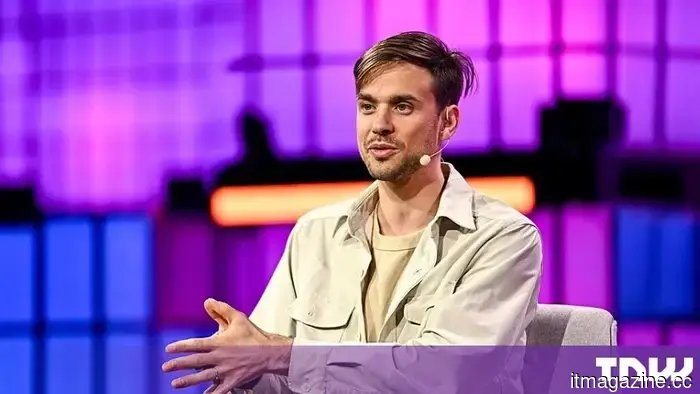 Lovable's solution to the risks of enterprise AI is an insurance policy offered by Lloyd's.
Lovable is the inaugural coding agent platform to receive certification under AIUC-1, and this certification is backed by Lloyd's underwriting. Three launches, one goal: procurement.
Lovable's solution to the risks of enterprise AI is an insurance policy offered by Lloyd's.
Lovable is the inaugural coding agent platform to receive certification under AIUC-1, and this certification is backed by Lloyd's underwriting. Three launches, one goal: procurement.
 Six major financial institutions are supporting Nvidia's $500 billion initiative to finance the expansion of AI.
Nvidia has brought together six prominent figures from the finance sector to develop 'compute financing platforms' that have the potential to leverage more than $500 billion of external capital for AI development.
Six major financial institutions are supporting Nvidia's $500 billion initiative to finance the expansion of AI.
Nvidia has brought together six prominent figures from the finance sector to develop 'compute financing platforms' that have the potential to leverage more than $500 billion of external capital for AI development.
 Intel secures up to $20 billion to support its foundry strategy in competition with TSMC.
Intel is offering $15 billion in stock, with the possibility of increasing this to $20 billion, to finance its foundry investment, capitalizing on the fact that a nearly threefold increase in its shares by 2026 makes issuing new equity more economical.
Intel secures up to $20 billion to support its foundry strategy in competition with TSMC.
Intel is offering $15 billion in stock, with the possibility of increasing this to $20 billion, to finance its foundry investment, capitalizing on the fact that a nearly threefold increase in its shares by 2026 makes issuing new equity more economical.
Intel secures up to $20 billion to back its foundry investment in competition with TSMC.
Intel is offering $15 billion in stock, with the possibility of increasing this to $20 billion, to finance its foundry initiative, taking advantage of the fact that its shares have nearly tripled in value since 2026, making new equity relatively inexpensive.