
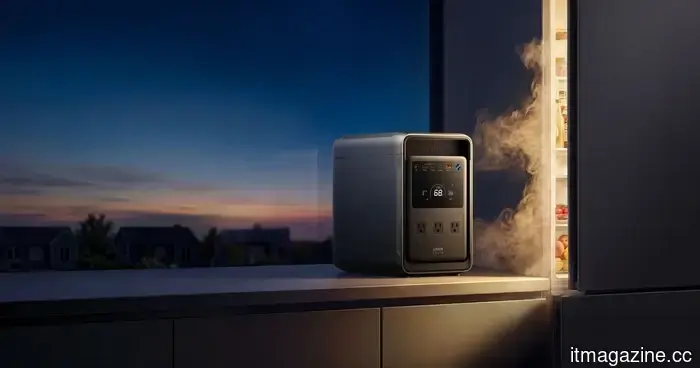
Anker has revealed a significant issue with portable power stations.
Anker
When looking for a portable power station, one figure stands out: battery capacity. A 2 kWh battery ought to deliver around 2 kWh of usable power, correct? Unfortunately, it’s not that straightforward. Anker SOLIX has released new efficiency data regarding its S Series portable power stations, highlighting an aspect that often receives less focus than capacity: the actual energy that reaches your devices from the battery.
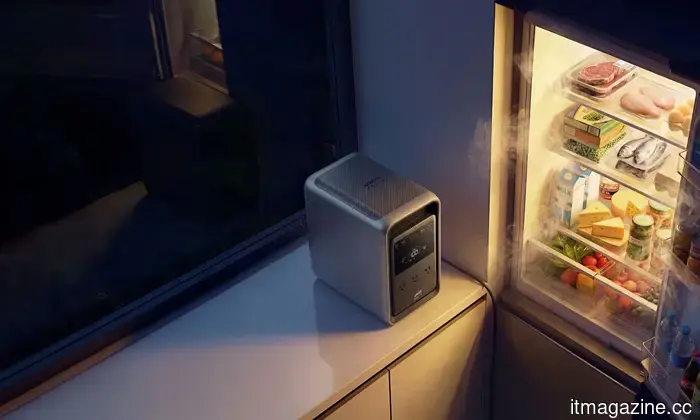
Anker explains that portable power stations are often promoted with efficiency ratings measured under heavier loads, where they achieve about 89% to 92% efficiency. Yet, this isn’t typically how most users utilize these stations during a power outage. Consider what you would actually connect. A Wi-Fi router can use power continuously, a refrigerator toggles its compressor on and off throughout the day, and a CPAP machine may operate overnight. Combined, these devices likely draw a small fraction of what a large power station can deliver, leading to potential efficiency losses.
Your 2 kWh battery may not truly provide you with 2 kWh.
Anker indicates that discharge efficiency for regular portable power stations can fall to around 70% to 80% with lighter loads. Therefore, a significant portion of the energy you’ve paid to store could be lost due to conversion inefficiencies and the power station’s own usage before it powers your fridge or router. The company claims its OptiSave 2.0 technology aims to minimize these losses by adapting the operation of the power station based on what devices are connected.
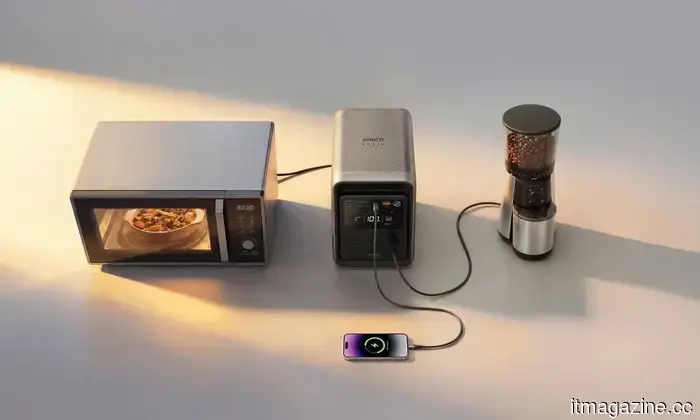
Instead of always operating the inverter at full power, the system tracks demand and adjusts as needed. A high-demand appliance like a microwave receives maximum output when necessary, while lower-demand gadgets such as a router or CPAP machine allow the inverter to lower its operating frequency and energy usage. There’s also a Smart Standby Mode for devices that don’t continuously use power. For instance, when a refrigerator’s compressor turns off, the power station can significantly lower its standby energy draw. When the fridge requires power again, Anker notes that the system can respond within milliseconds. These minor savings can add up significantly during a prolonged outage.
Anker provides some surprisingly detailed data.
Notably, Anker goes beyond just presenting an ideal efficiency figure. The company states that its S Series achieves 88% discharge efficiency at a moderate 100W load and 96% at 400W. In contrast, it claims that similar portable power stations typically struggle to exceed 80% efficiency at 100W and maintain around 89% at 400W. Anker has reduced idle power consumption by up to 50% compared to rival products. For example, the S2000 consumes about 6W when idle, while Anker claims competitors for other 2 kWh stations average 15W to 20W.
Putting it all together, Anker asserts that OptiSave 2.0 can extend the runtime of its S Series by up to 20% compared to similar power stations with the same stated battery capacity. Additionally, the S2000 has earned TÜV SÜD’s A+ energy-efficiency certification under the relevant 2026 portable power standard, adding credibility to its efficiency claims. Ultimately, the actual runtime will depend on what devices you connect, their operational frequency, and environmental conditions. The key takeaway isn’t merely that one battery lasts longer than another, but that judging portable power stations solely by capacity might overlook a critical metric. If other brands adopt Anker’s approach and begin to disclose efficiency metrics across various loads, selecting a power station could shift from focusing on which unit has the largest battery number to a more comprehensive understanding of performance.
Shimul is a contributor at Digital Trends, with over five years of experience in the tech field.
OpenAI’s first gadget resembles a small expressive AI companion
The device features a doughnut-shaped design, equipped with built-in cameras and moving components.
For months, speculation has surrounded OpenAI’s first hardware offering, expected to be a screen-less smart speaker that functions more as an AI companion. It’s already known that this device will recognize its surroundings, be portable throughout the home, and assist users proactively. A recent Bloomberg report provides a clearer idea of what this gadget may resemble.
The report describes OpenAI’s inaugural device as doughnut-shaped and approximately the size of a hockey puck. It will be portable enough to move between rooms or can simply be placed on any convenient surface nearby. Anticipated to be on the pricier side, the company has considered pricing it around $300 to $400, with a launch expected in 2027.
Read more
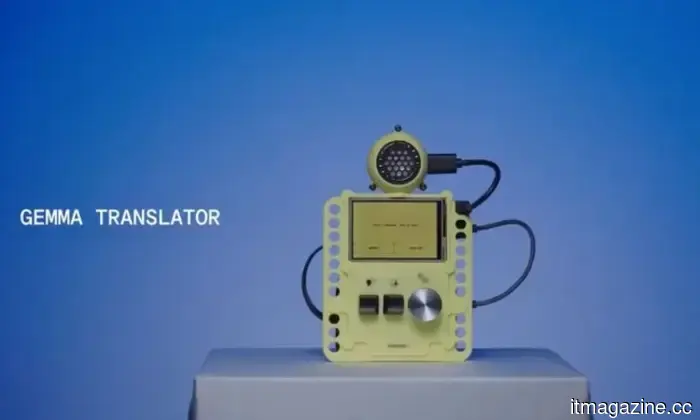
Google Antigravity has developed an AI translator that operates without the internet.
Google has unveiled a new AI initiative aimed at reducing language barriers, and it’s entirely functional without an internet connection. The company has launched the Gemma Translator, a compact prototype created in partnership with Antigravity. Unlike most AI translation services that rely


Other articles
 Apple increases trade-in values for iPhones, iPads, Macs, and certain Android phones as well.
Apple has increased its trade-in estimates for the US on iPhone, iPad, Mac, and Apple Watch, with certain devices seeing a rise of nearly 30 percent since May. Additionally, the update includes several Android phones in the trade-in program.
Apple increases trade-in values for iPhones, iPads, Macs, and certain Android phones as well.
Apple has increased its trade-in estimates for the US on iPhone, iPad, Mac, and Apple Watch, with certain devices seeing a rise of nearly 30 percent since May. Additionally, the update includes several Android phones in the trade-in program.
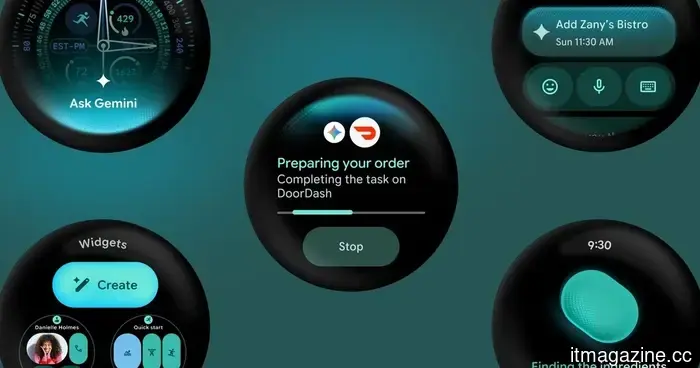 The redesigned Wear OS by Gemini is finally being released, and it was definitely worth the anticipation.
Gemini on Wear OS is replacing its full-screen app with a sleek new overlay that aligns with Android phones, featuring live transcripts and an improved microphone indicator.
The redesigned Wear OS by Gemini is finally being released, and it was definitely worth the anticipation.
Gemini on Wear OS is replacing its full-screen app with a sleek new overlay that aligns with Android phones, featuring live transcripts and an improved microphone indicator.
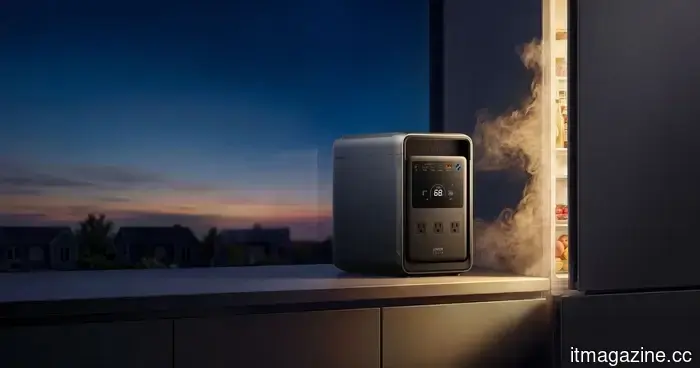 Anker has just revealed a significant issue with portable power stations.
Two portable power stations may possess identical battery capacities but can operate for significantly different durations. Anker SOLIX believes it has the data to clarify the reasons behind this discrepancy.
Anker has just revealed a significant issue with portable power stations.
Two portable power stations may possess identical battery capacities but can operate for significantly different durations. Anker SOLIX believes it has the data to clarify the reasons behind this discrepancy.
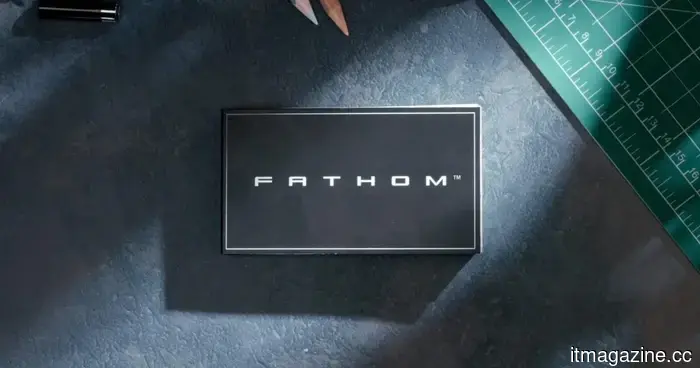 Ford has finally succeeded in delivering the electric truck it promised years ago for under $30,000.
Ford's budget-friendly electric truck has officially been named the Fathom. It will be priced at $29,945, offering a range of 300 miles, with deliveries expected to commence in 2027.
Ford has finally succeeded in delivering the electric truck it promised years ago for under $30,000.
Ford's budget-friendly electric truck has officially been named the Fathom. It will be priced at $29,945, offering a range of 300 miles, with deliveries expected to commence in 2027.
 Samsung's latest 200MP ISOCELL HPC sensor reimagines the way pixels collect light.
Samsung's latest ISOCELL HPC camera sensor features a revamped pixel architecture known as DeepPix, designed to capture additional light while minimizing noise.
Samsung's latest 200MP ISOCELL HPC sensor reimagines the way pixels collect light.
Samsung's latest ISOCELL HPC camera sensor features a revamped pixel architecture known as DeepPix, designed to capture additional light while minimizing noise.
 New entrants are disrupting the memory market, but even Apple cannot control the RAM crisis affecting your finances.
Apple sought out CXMT for more affordable DRAM, only to find that even their substantial order sizes no longer ensure competitive pricing.
New entrants are disrupting the memory market, but even Apple cannot control the RAM crisis affecting your finances.
Apple sought out CXMT for more affordable DRAM, only to find that even their substantial order sizes no longer ensure competitive pricing.
Anker has revealed a significant issue with portable power stations.
Two portable power stations may possess identical battery capacities yet provide varying durations of usage. Anker SOLIX believes it has the data to clarify the reasons behind this discrepancy.