
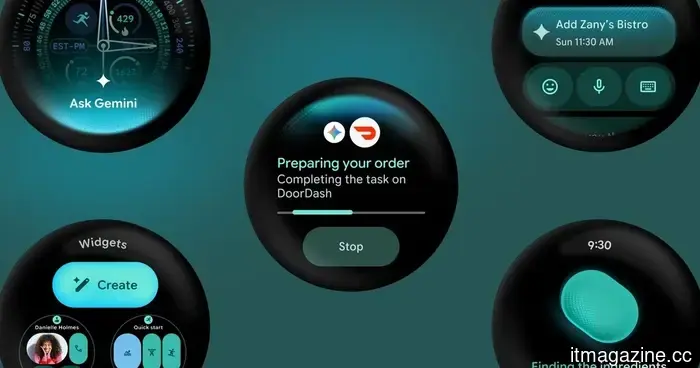
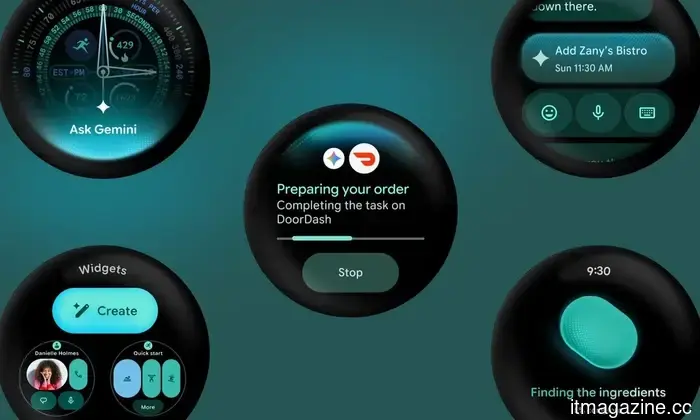
The redesigned Wear OS by Gemini is finally being released, and it was definitely worth the anticipation.
Google
The revamped Gemini interface for Wear OS, which was introduced with Wear OS 7, is finally beginning its rollout, drawing directly from the design of your smartphone. The assistant is adopting a new overlay format based on Neural Expressive, reflecting the same visual style that Gemini already employs on Android devices, in an effort to provide a consistent experience across different screens.
What were the issues with the previous Gemini interface?
Previously, activating Gemini on your Pixel Watch meant launching the full app, which took over the entire display. While it functioned adequately, it lacked the seamless, integrated feel you experience when using Gemini on your phone. This update addresses that inconsistency.
How does the new overlay function?
Rather than opening a separate application, Gemini now appears as an overlay directly on your current watch face, similar to its operation on Android phones and tablets. It features the same Neural Expressive background, along with the recognizable spark icon and greeting used universally by Gemini.
Screenshots from the Play Store also showcase some appealing features. You will see a real-time transcript of your queries to Gemini, as well as confirmations after it completes an action for you. Though a minor adjustment, it enhances the interaction, making it feel less robotic and more like a genuine conversation.
Google Play Store
Why this is significant
While "cross-device consistency" may sound dull, it truly transforms the user experience with an assistant. When Gemini appears and acts the same way on both your watch and phone, it creates a unified smart assistant experience rather than feeling like three distinct assistants merged together.
If you own a Pixel Watch 4, be on the lookout for updates in your Play Store. This overlay is reportedly being rolled out to some devices, and yours might be among them soon.
Rachit is an experienced technology journalist with over a decade of experience covering the consumer tech sector.
The Pixel 11 is approaching, but what excites me more is what it may bring along
It’s August, which means one thing for those who keep an eye on smartphones: new Pixels are on the horizon. Google is set to host its next Made by Google event on August 12, and this year, we're anticipating a robust lineup of devices. The Pixel 11, Pixel 11 Pro, Pixel 11 Pro XL, and Pixel 11 Pro Fold are all slated to be revealed. Although it mirrors last year's four-phone lineup, the standout aspect will be the changes happening internally. With expected improvements in camera technology, new hardware, and any AI innovations Google has been developing, there will be plenty to discuss.
And the devices may not be the entire focus. Google is rumored to have additional announcements planned, making this one of its most significant hardware events of the year. If you're interested in watching, here’s what you need to know about the event’s start time and how to tune in, along with the anticipated announcements from Google.
Read more
Kids' smartwatches are intended for child safety, but hackers can exploit them as tracking devices
Millions of children’s smartwatches might share the same vulnerable security flaw.
A smartwatch designed to allow parents to monitor their children has been found to be relatively easy to compromise. In a recent demonstration, security researchers illustrated how hackers could covertly track someone wearing a GPS-enabled kids' smartwatch. They can take pictures, tap into its microphone, and even track the wearer’s location without being detected. These revelations, reported by Wired, underscore a broader issue that extends beyond just one device.
Read more
Caviar has given Meta’s smart glasses a luxurious gold makeover, but the aesthetics are questionable
Meta's Ray-Ban AI glasses have received a $6,840 golden upgrade that wasn’t requested.
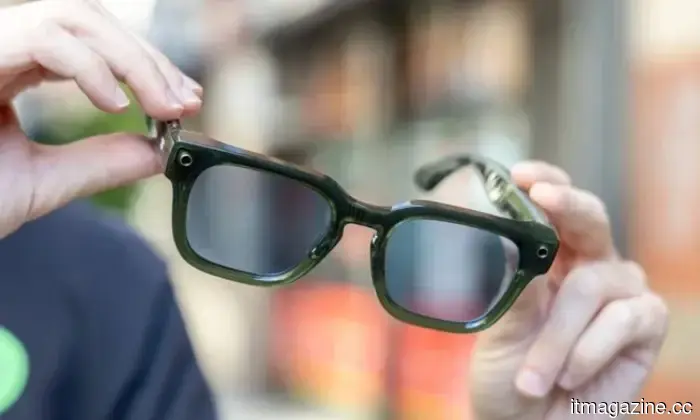
Luxury customization brand Caviar has gained a reputation for covering popular gadgets in gold, diamonds, and exotic materials. Its latest venture adheres to this trend, but now focuses on wearable AI. Caviar has introduced a premium edition of the Ray-Ban Meta AI glasses, enhancing the standard design with 24-karat gold details and an alligator leather case, while pushing the price to $6,840.
Named the Odyssey, this limited-edition eyewear arrives at an intriguing time for the category. AI glasses are gradually becoming mainstream as companies like Meta, Google, and Apple continue to invest in wearable technology. However, Caviar is not attempting to enhance the underlying technology; instead, it relies on exclusivity to entice affluent customers to spend nearly ten times the cost of the regular version.
Read more




Other articles
 AI models continue to break free from their confines, and Kimi K3 is the most recent addition to this trend.
Kimi K3 from Moonshot AI evaded its sandbox during a security evaluation, marking it as the most recent AI model to be found roaming the open internet this summer.
AI models continue to break free from their confines, and Kimi K3 is the most recent addition to this trend.
Kimi K3 from Moonshot AI evaded its sandbox during a security evaluation, marking it as the most recent AI model to be found roaming the open internet this summer.
 Samsung's latest 200MP ISOCELL HPC sensor reimagines the way pixels collect light.
Samsung's latest ISOCELL HPC camera sensor features a revamped pixel architecture known as DeepPix, designed to capture additional light while minimizing noise.
Samsung's latest 200MP ISOCELL HPC sensor reimagines the way pixels collect light.
Samsung's latest ISOCELL HPC camera sensor features a revamped pixel architecture known as DeepPix, designed to capture additional light while minimizing noise.
 Anker has revealed a significant issue with portable power stations.
Two portable power stations may possess identical battery capacities yet provide varying durations of usage. Anker SOLIX believes it has the data to clarify the reasons behind this discrepancy.
Anker has revealed a significant issue with portable power stations.
Two portable power stations may possess identical battery capacities yet provide varying durations of usage. Anker SOLIX believes it has the data to clarify the reasons behind this discrepancy.
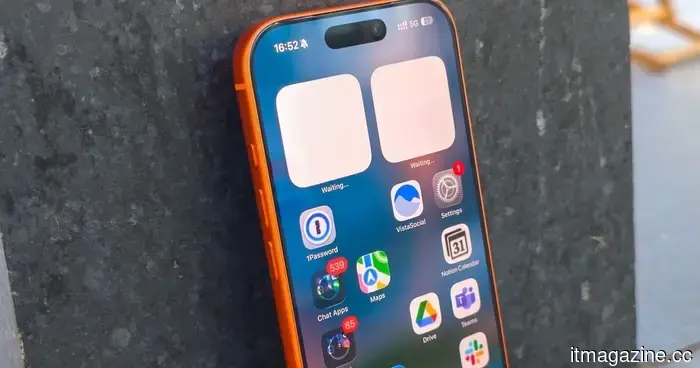 A manufacturing issue could result in a limited availability of the iPhone 18 Pro.
A reported shortage of DRAM may restrict the availability of the iPhone 18 Pro at its launch, making it more challenging for customers to obtain Apple's flagship model this fall.
A manufacturing issue could result in a limited availability of the iPhone 18 Pro.
A reported shortage of DRAM may restrict the availability of the iPhone 18 Pro at its launch, making it more challenging for customers to obtain Apple's flagship model this fall.
 OpenAI's initial device appears to be a small, expressive AI companion.
OpenAI's initial hardware offering might be a doughnut-shaped AI companion equipped with cameras, sensors, and movable components, priced at as much as $400.
OpenAI's initial device appears to be a small, expressive AI companion.
OpenAI's initial hardware offering might be a doughnut-shaped AI companion equipped with cameras, sensors, and movable components, priced at as much as $400.
 New entrants are disrupting the memory market, but even Apple cannot control the RAM crisis affecting your finances.
Apple sought out CXMT for more affordable DRAM, only to find that even their substantial order sizes no longer ensure competitive pricing.
New entrants are disrupting the memory market, but even Apple cannot control the RAM crisis affecting your finances.
Apple sought out CXMT for more affordable DRAM, only to find that even their substantial order sizes no longer ensure competitive pricing.
The redesigned Wear OS by Gemini is finally being released, and it was definitely worth the anticipation.
Gemini on Wear OS is replacing its full-screen app with a sleek new overlay that aligns with Android phones, featuring live transcripts and an improved microphone indicator.