
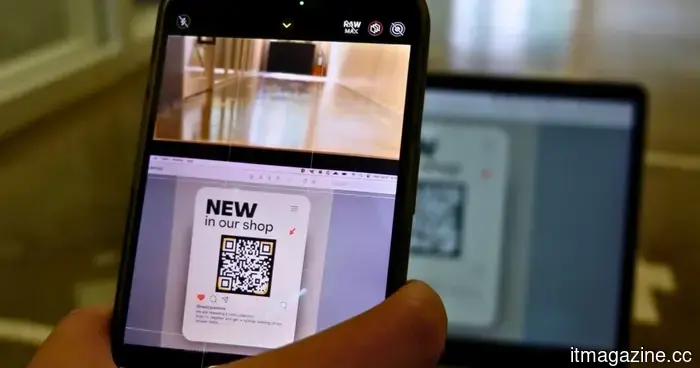
This innovative technology could simplify the identification of counterfeit products for everyone.
Counterfeit products are becoming more advanced, which compels brands to invest in costly authentication systems often requiring specialized scanners or proprietary devices. Researchers now suggest that a smartphone could perform much of this verification work. A team has created a new printing system that produces anti-counterfeit labels that are more robust, easier to manufacture in large quantities, and verifiable using just a phone. This research was published in the International Journal of Materials and Product Technology.
Initially, the technology may appear as a minor enhancement in product security. However, it tackles a significant limitation of current anti-counterfeit systems: their accessibility. If authentication depends on expensive machinery, implementing it on a large scale becomes challenging. By allowing verification via smartphones, this technology could make counterfeit detection feasible for manufacturers, retailers, and even consumers.
An advanced label that responds to light and temperature
The new system integrates three technologies into a single printable label. Researchers have designed microcapsules that react to temperature and light, combined them with UV ink optimized for high-speed printing, and developed a portable smartphone detection system capable of verifying authenticity. These microcapsules contain materials that respond to changes in the environment, creating optical signatures that are hard to reproduce with traditional printing methods.
Durability was a key aspect of the design. The researchers indicated that linkers based on nanotechnology enhance the strength of the polymer capsules, ensuring that the labels remain stable under heat and humidity. The ink is free from volatile organic solvents, making it suitable for both screen and inkjet printing while also being appropriate for large-scale production. Even after undergoing extensive cold-storage testing, the labels maintained over 83% color fastness, indicating their resilience in demanding supply chains.
Smartphone verification process
Verification is conducted using a smartphone. A portable detector assesses how light interacts with the printed label, and a machine-learning model analyzes the data collected to verify whether the product is authentic. During trials, the system demonstrated nearly 97.5% accuracy, even in distinguishing real labels from convincing fakes.
The significance of smartphone verification
Counterfeiting impacts various industries, including luxury items, pharmaceuticals, electronics, and food packaging. While companies persist in investing in holograms, QR codes, and RFID-based security features, many of these systems either incur additional costs or necessitate dedicated hardware for verification.
A smartphone-compatible authentication system transforms this scenario. As nearly all participants in the supply chain possess smartphones, the hurdles to product verification are significantly reduced. This could accelerate authentication processes in warehouses, simplify them for retailers, and possibly allow consumers to verify products before purchase.
The researchers anticipate that this technology may eventually find applications across various packaging sectors, although commercial implementation will require manufacturers to incorporate the printing process into their current production lines. If so, the next generation of anti-counterfeit labels might not depend solely on increasingly intricate security features but rather on the device that many already have in their pockets.

Other articles
 Meta displayed advertisements featuring AI-generated content related to child sexual abuse, persistently demonstrating a history of failures in ensuring child safety.
Researchers discovered that Meta's advertisement library contained AI-generated imagery of child sexual abuse, with some instances remaining up even after Meta received warnings, indicating a recurring issue over several years.
Meta displayed advertisements featuring AI-generated content related to child sexual abuse, persistently demonstrating a history of failures in ensuring child safety.
Researchers discovered that Meta's advertisement library contained AI-generated imagery of child sexual abuse, with some instances remaining up even after Meta received warnings, indicating a recurring issue over several years.
 EVgo is incorporating Tesla V4 Superchargers into its charging network across the United States.
EVgo will install hundreds of Tesla V4 Superchargers as part of a licensing agreement, featuring 500kW charging, compatibility with Magic Dock, and integration into Tesla's navigation system beginning this fall.
EVgo is incorporating Tesla V4 Superchargers into its charging network across the United States.
EVgo will install hundreds of Tesla V4 Superchargers as part of a licensing agreement, featuring 500kW charging, compatibility with Magic Dock, and integration into Tesla's navigation system beginning this fall.
 EVgo is incorporating Tesla V4 Superchargers into its charging network across the United States.
EVgo is set to install hundreds of Tesla V4 Superchargers as part of a licensing agreement, featuring 500kW charging, compatibility with Magic Dock, and integration into Tesla's navigation system beginning this fall.
EVgo is incorporating Tesla V4 Superchargers into its charging network across the United States.
EVgo is set to install hundreds of Tesla V4 Superchargers as part of a licensing agreement, featuring 500kW charging, compatibility with Magic Dock, and integration into Tesla's navigation system beginning this fall.
 Apple's iCloud Private Relay may not be as secure as you believe.
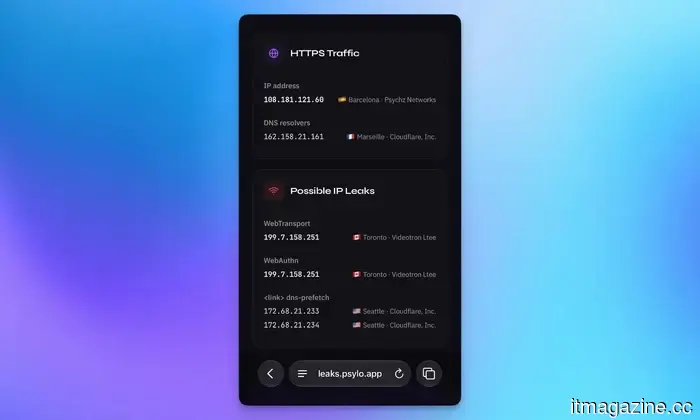
Recent studies indicate that Apple's iCloud Private Relay may inadvertently expose your actual IP address via passkeys, and Apple has announced that it is currently looking into the matter.
Apple's iCloud Private Relay may not be as secure as you believe.
Recent studies indicate that Apple's iCloud Private Relay may inadvertently expose your actual IP address via passkeys, and Apple has announced that it is currently looking into the matter.
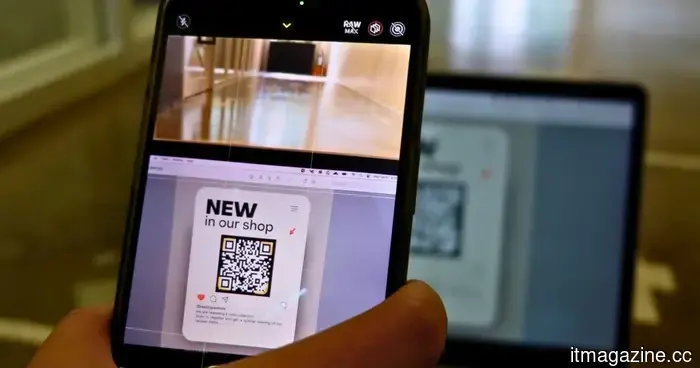 This innovative technology might simplify the process of identifying counterfeit products for everyone.
Researchers have created anti-counterfeit labels that can be checked with a smartphone, reaching almost 97.5% accuracy and making product authentication easier.
This innovative technology might simplify the process of identifying counterfeit products for everyone.
Researchers have created anti-counterfeit labels that can be checked with a smartphone, reaching almost 97.5% accuracy and making product authentication easier.
This innovative technology could simplify the identification of counterfeit products for everyone.
Researchers have created anti-counterfeit labels that can be checked with a smartphone, reaching an accuracy of almost 97.5% while making product verification easier.