

Meta displayed advertisements featuring AI-generated content related to child sexual abuse, persistently demonstrating a history of failures in ensuring child safety.
Meta’s advertising platform has done something it has repeatedly promised not to do again. According to a new investigation by Wired, Meta has run numerous paid ads over the past nine months featuring explicit AI-generated child sexual abuse material, some of which remained active even after the company was specifically alerted to their existence.
If this sounds familiar, it’s likely because it is. Just weeks prior to this report, a BBC investigation discovered that Instagram was running paid advertisements promoting child sexual abuse content in India, directing users to Telegram channels that sell illegal material.
Researchers from the Tech Transparency Project identified the ads in Meta’s own public Ad Library, a tool created for advertising transparency. The ads were active from November 2025 to early August 2026, reaching audiences in the US, UK, and over a dozen European nations, with at least one ad impacting more than 2,500 accounts in Europe alone.
Katie Paul, director of the TTP, shared with Wired that the images did not attempt to conceal their content, emphasizing that these were not user-generated posts but rather ads that Meta reviewed and approved prior to earning revenue from them.
This was not user content; it was advertising that Meta accepted.
Several ads linked directly to apps designed for nudifying purposes, including one called MaskAI, which Apple removed from its App Store after Wired raised concerns. In a particularly alarming detail, researchers initially identified roughly two dozen infringing ads, but discovered around 30 additional ones in the hours just before publication, several of which went live only after Wired had inquired about the issue.
Paul mentioned that some ads matched previously removed content for the same violations, raising serious doubts about whether Meta’s systems can effectively recognize repeat offenders. Many of the accounts running these ads had few or no followers, and when advertiser details were visible, several traced back to Chinese firms, including one identified as a former Meta ad reseller.
Meta’s official reply used familiar language, labeling the content as horrific, stating that most ads had limited reach, and highlighting a new AI detection system, along with a claim of removing 36 million pieces of child exploitation content in the previous year.
This isn’t the first time Meta has faced scrutiny over child safety.
Meta’s ongoing issues with child safety date back much further than this week. As early as 2017, Facebook was handling over 50,000 cases of revenge porn and sexual abuse reports each month, leading the company to hire thousands more content moderators to manage the volume.
By 2019, internal communications revealed in court indicated that Meta had altered how Messenger relayed information to law enforcement, impacting approximately 7.5 million child abuse reports.
In 2021, whistleblower Frances Haugen leaked internal research showing Meta’s findings indicated that Instagram was detrimental to the mental health of teenage girls. That same year, engineer Arturo Bejar personally contacted Zuckerberg regarding his daughter’s experience of being sexually harassed on Instagram.
In 2023, a joint investigation by the Wall Street Journal, Stanford, and UMass Amherst found that Instagram’s algorithms were actively linking and promoting a vast network of pedophile accounts. Bejar later testified to the Senate that Meta’s safety measures were essentially ineffective. Senators labeled it as damning and pledged to take action, yet no enforceable regulations resulted, and Meta’s practices largely remained unchanged.
A decade of consistent broken promises.
These warnings didn’t stay confined to congressional hearings. New Mexico’s Attorney General subsequently sued Meta after undercover research revealed that a fake profile of a 13-year-old girl was immediately inundated with sexual solicitations from adults. This lawsuit concluded in March 2026 with a jury mandating Meta pay $375 million for endangering children and misleading the public.
Testimony during that trial reportedly demonstrated that Meta’s shift toward AI-driven moderation was inundating the system with low-quality reports, hindering actual law enforcement investigations. A $375 million verdict should serve as a wake-up call for any company. This entire category of abuse has become a persistent presence online due to the platform's ineffective enforcement for far too long.
Has Meta failed to address this issue or chosen not to?
At some point, labeling this as a recurring failure gives Meta too much credit. Each incident follows the same pattern. When independent researchers or journalists identify problematic content, Meta removes it only after being publicly confronted. Later, the company points to a high number of removals as evidence of their commitment to addressing the issue. Then the cycle repeats.
After nearly a decade of this pattern, with Meta’s own data indicating it can identify duplicate violations without taking action, the conclusion becomes difficult to ignore. It appears that Meta has simply determined that the cost of being caught is lower than the cost of resolving the underlying system issues.
Moving forward, users do not need another carefully crafted statement from Meta. They require a system that can effectively detect harmful content in the first place. Until that is established, every promise to "take this seriously" serves merely as a placeholder, awaiting


Other articles
 WhatsApp is simplifying the process for channel admins to label posts generated by AI.
WhatsApp is試行一個新的標籤,讓頻道管理員能夠標示由人工智慧生成的照片和視頻,以便追隨者始終了解哪些是真實的,哪些是不是真實的。
WhatsApp is simplifying the process for channel admins to label posts generated by AI.
WhatsApp is試行一個新的標籤,讓頻道管理員能夠標示由人工智慧生成的照片和視頻,以便追隨者始終了解哪些是真實的,哪些是不是真實的。
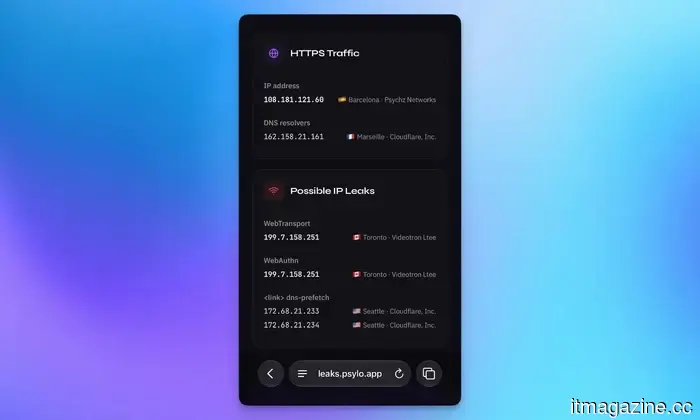 Apple's iCloud Private Relay may not be as secure as you believe.
Recent studies indicate that Apple's iCloud Private Relay may inadvertently expose your actual IP address via passkeys, and Apple has announced that it is currently looking into the matter.
Apple's iCloud Private Relay may not be as secure as you believe.
Recent studies indicate that Apple's iCloud Private Relay may inadvertently expose your actual IP address via passkeys, and Apple has announced that it is currently looking into the matter.
 This innovative technology could simplify the identification of counterfeit products for everyone.
Researchers have created anti-counterfeit labels that can be checked with a smartphone, reaching an accuracy of almost 97.5% while making product verification easier.
This innovative technology could simplify the identification of counterfeit products for everyone.
Researchers have created anti-counterfeit labels that can be checked with a smartphone, reaching an accuracy of almost 97.5% while making product verification easier.
 This innovative technology might simplify the process of identifying counterfeit products for everyone.
Researchers have created anti-counterfeit labels that can be checked with a smartphone, reaching almost 97.5% accuracy and making product authentication easier.
This innovative technology might simplify the process of identifying counterfeit products for everyone.
Researchers have created anti-counterfeit labels that can be checked with a smartphone, reaching almost 97.5% accuracy and making product authentication easier.
 EVgo is incorporating Tesla V4 Superchargers into its charging network across the United States.
EVgo is set to install hundreds of Tesla V4 Superchargers as part of a licensing agreement, featuring 500kW charging, compatibility with Magic Dock, and integration into Tesla's navigation system beginning this fall.
EVgo is incorporating Tesla V4 Superchargers into its charging network across the United States.
EVgo is set to install hundreds of Tesla V4 Superchargers as part of a licensing agreement, featuring 500kW charging, compatibility with Magic Dock, and integration into Tesla's navigation system beginning this fall.
 EVgo is incorporating Tesla V4 Superchargers into its charging network across the United States.
EVgo will install hundreds of Tesla V4 Superchargers as part of a licensing agreement, featuring 500kW charging, compatibility with Magic Dock, and integration into Tesla's navigation system beginning this fall.
EVgo is incorporating Tesla V4 Superchargers into its charging network across the United States.
EVgo will install hundreds of Tesla V4 Superchargers as part of a licensing agreement, featuring 500kW charging, compatibility with Magic Dock, and integration into Tesla's navigation system beginning this fall.
Meta displayed advertisements featuring AI-generated content related to child sexual abuse, persistently demonstrating a history of failures in ensuring child safety.
Researchers discovered that Meta's advertisement library contained AI-generated imagery of child sexual abuse, with some instances remaining up even after Meta received warnings, indicating a recurring issue over several years.