
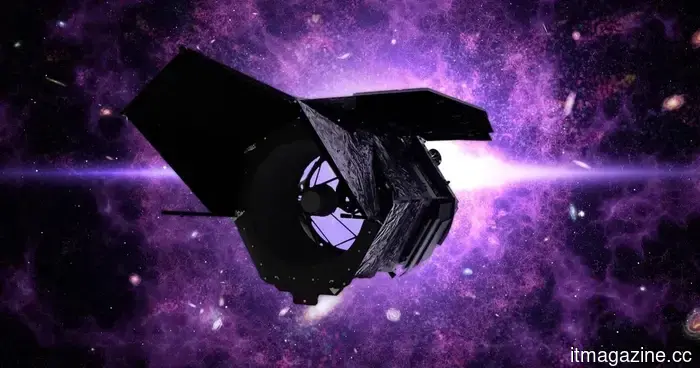
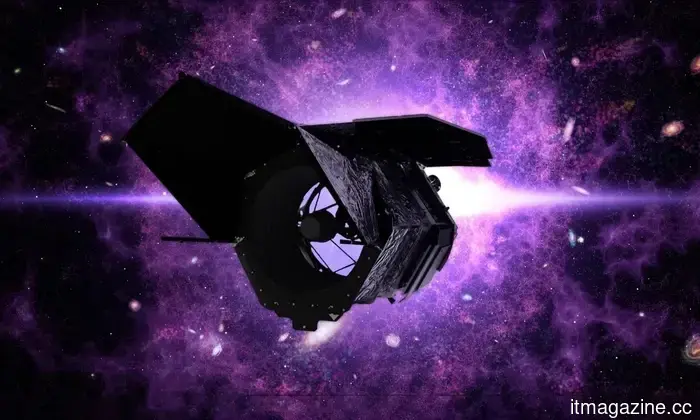
NASA constructed the Roman Space Telescope to investigate dark matter, but it can also assist in safeguarding Earth from harmful asteroids.
The Nancy Grace Roman Space Telescope was not originally designed for asteroid detection, but it has proven highly effective for this purpose.
NASA is preparing to launch a telescope intended to unlock some of the universe's greatest mysteries, and unexpectedly, this design could also aid in protecting Earth.
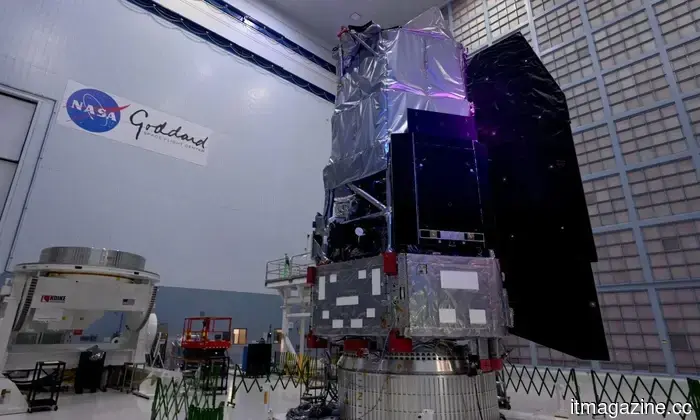
Scheduled for launch from Kennedy Space Center on August 30, 2026, the Nancy Grace Roman Space Telescope's primary mission involves the study of dark matter and dark energy—these unseen forces that influence galaxies and the expansion of the cosmos. However, researchers have now found that its unique design makes it surprisingly proficient at identifying hazardous asteroids that may approach Earth (according to MIT Technology Review).
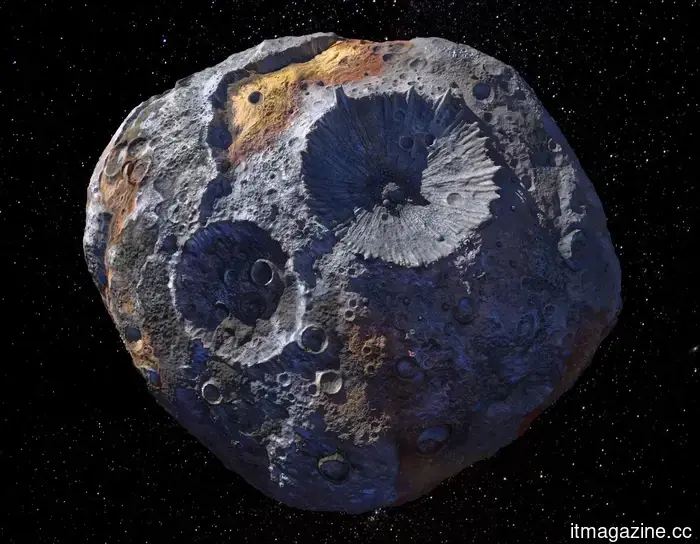
An artistic depiction of the asteroid Psyche, situated in the main asteroid belt between Mars and Jupiter. NASA/JPL-Caltech/ASU
What features of the Roman Telescope enable it to detect potentially dangerous asteroids?
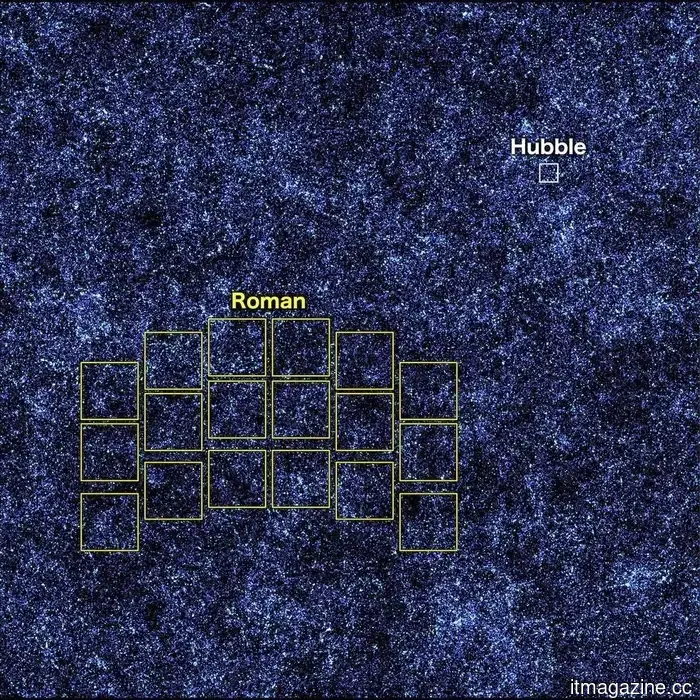
The Roman Telescope is equipped with a super wide-angle, 300-megapixel infrared camera, which allows it to survey a section of the sky approximately 100 times larger than what can be observed by the Hubble Space Telescope in a single view. This extensive field of view, designed for surveying galaxies and distant stars, is equally effective for scanning vast regions of space for asteroids simultaneously.
This image shows millions of simulated galaxies scattered across space and time and highlights the areas captured by Hubble (in white) and Roman (in yellow) in one snapshot. Mapping the entire region depicted would take Hubble around 85 years to achieve at the same depth, whereas the Roman telescope could complete it in just 63 days. Roman’s broader perspective and rapid survey capabilities will reveal the evolving universe in unprecedented ways. NASA’s Goddard Space Flight Center and A. Yung
Scientists estimate that the Roman Telescope could detect asteroids as small as 60 feet in diameter, a size similar to the asteroid that exploded over Chelyabinsk, Russia, in 2013, releasing energy equivalent to 500,000 tons of TNT. Some software modifications are still required since Roman's system currently filters out image streaks that might actually be asteroids.
The Roman Telescope will contribute to Earth's defense efforts.
NASA
The Roman Telescope will not lead the efforts in asteroid detection alone. NASA's dedicated Near-Earth Object Surveyor, launching in 2027, will take the lead in detection. Roman will assist it, alongside the James Webb Space Telescope and the Vera Rubin Observatory. When other telescopes identify potentially risky asteroids with uncertain trajectories, Roman's extensive field of view can quickly help clarify their paths, enabling scientists to prioritize which asteroids require closer examination.
The timing is notable as well; Roman faced funding threats last year, and researchers believe demonstrating its value in planetary defense could help secure its future with lawmakers. With more than half of the largest near-Earth asteroids still undiscovered, Roman's unexpected secondary role might be just as crucial as its primary mission.
Manisha Priyadarshini is a technology and entertainment writer with over nine years of editorial experience.
Space is becoming the next data center domain for Bezos and Musk, raising valid concerns.
The AI boom is impacting the night sky.
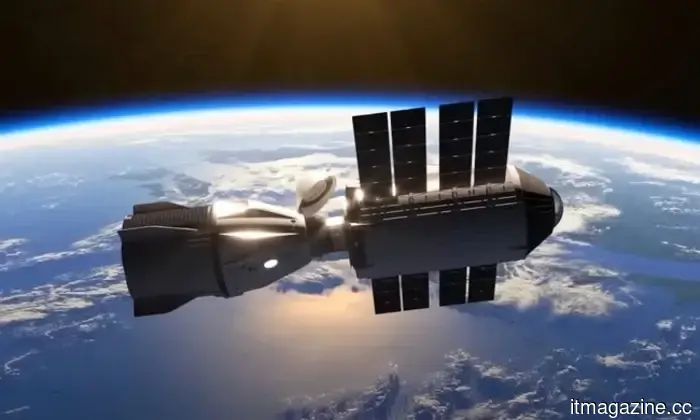
AI data centers already consume significant amounts of electricity and water on Earth, prompting Silicon Valley to explore options that are more spacious... literally. Companies like Elon Musk's SpaceX and Jeff Bezos' Blue Origin, among others, have proposed massive constellations of satellites designed to function as orbital data centers. However, environmental advocates and former space officials are warning that deploying them at such a scale could have serious ramifications for Earth's atmosphere and the night sky.
Read more
The first potential exomoon is here, and it makes our Moon seem tiny.
Scientists may have identified the first exomoon, which is about the size of Jupiter.
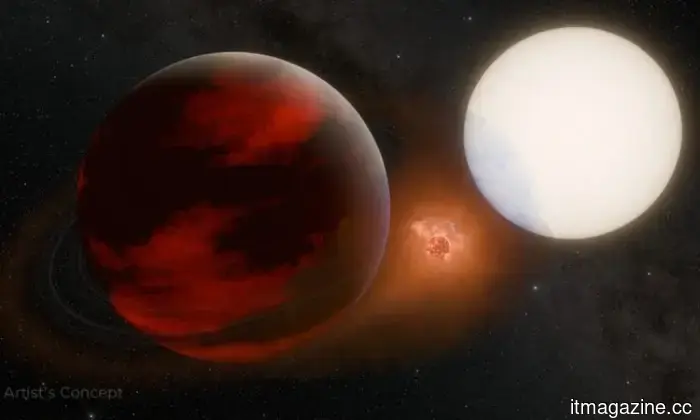
We have already discovered over 6,000 planets beyond our solar system. However, locating a moon orbiting one of these distant planets has proven vastly more difficult. Astronomers may have finally found something resembling a genuine moon, although this particular object stretches the definition of "moon" nearly beyond recognition. Using the European Southern Observatory's Very Large Telescope in Chile, researchers found compelling evidence of a moon-like object within the CD-35 2722 system. Further observations are needed to confirm the finding, but it could potentially be the first confirmed natural satellite outside our solar system. There is a small complication, though: this moon appears to be enormous.
Read more
China's solution to SpaceX's reusable rockets involves catching boosters with a net.
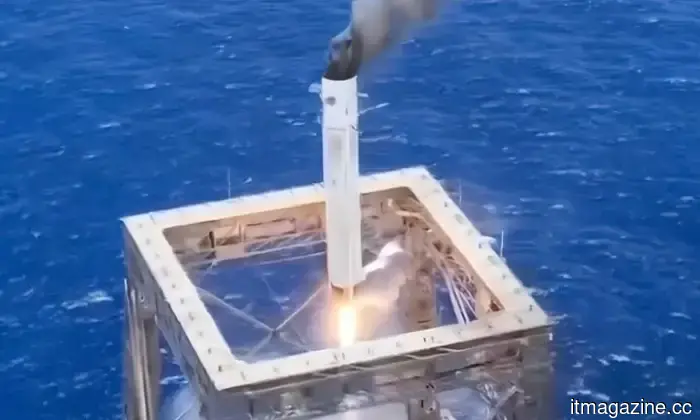
While SpaceX typically recovers rocket boosters using legs and a controlled vertical landing, China has attempted a different approach, demonstrating it on July 10 as well.
Read more

Other articles
 Bose's forthcoming QuietComfort headphones have surfaced online in six stunning colors.
The upcoming QuietComfort headphones from Bose have been spotted online in six color options, which include Rosewood Mauve, DewDrop Mint, Eucalyptus Green, and Hazelnut Taupe. Their anticipated release date is August 13.
Bose's forthcoming QuietComfort headphones have surfaced online in six stunning colors.
The upcoming QuietComfort headphones from Bose have been spotted online in six color options, which include Rosewood Mauve, DewDrop Mint, Eucalyptus Green, and Hazelnut Taupe. Their anticipated release date is August 13.
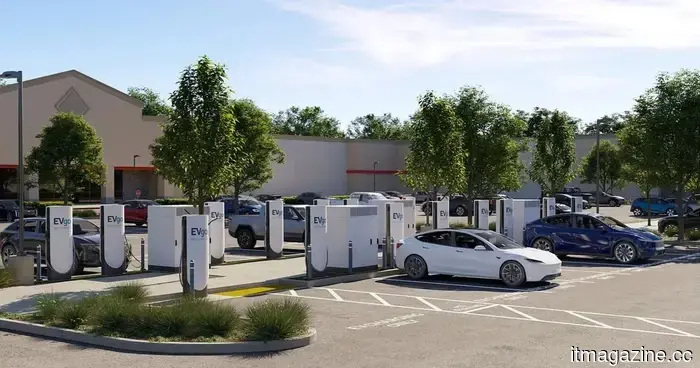 EVgo is incorporating Tesla V4 Superchargers into its charging network across the United States.
EVgo will install hundreds of Tesla V4 Superchargers as part of a licensing agreement, featuring 500kW charging, compatibility with Magic Dock, and integration into Tesla's navigation system beginning this fall.
EVgo is incorporating Tesla V4 Superchargers into its charging network across the United States.
EVgo will install hundreds of Tesla V4 Superchargers as part of a licensing agreement, featuring 500kW charging, compatibility with Magic Dock, and integration into Tesla's navigation system beginning this fall.
 Three Chinese car manufacturers, BYD, Geely, and Chery, have entered the global top 10.
This week, the newest global sales rankings for automakers for the first half of 2026 were published, highlighting the first occurrence of three Chinese automakers having
Three Chinese car manufacturers, BYD, Geely, and Chery, have entered the global top 10.
This week, the newest global sales rankings for automakers for the first half of 2026 were published, highlighting the first occurrence of three Chinese automakers having
 Three Chinese car manufacturers—BYD, Geely, and Chery—have entered the global top 10.
This week, the most recent global sales rankings for automakers in the first half of 2026 were published, indicating that it is the first occasion on which three Chinese automakers have
Three Chinese car manufacturers—BYD, Geely, and Chery—have entered the global top 10.
This week, the most recent global sales rankings for automakers in the first half of 2026 were published, indicating that it is the first occasion on which three Chinese automakers have
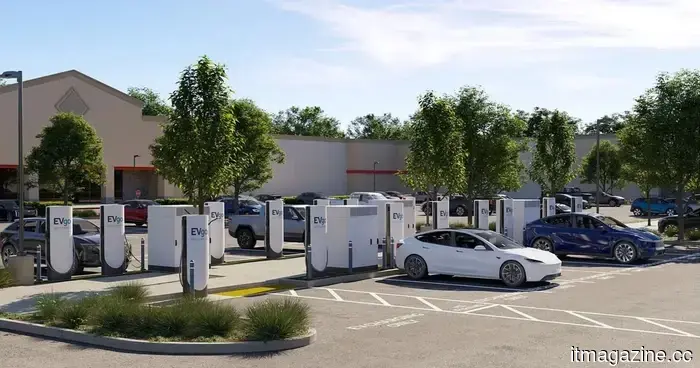 EVgo is incorporating Tesla V4 Superchargers into its charging network across the United States.
EVgo is set to install hundreds of Tesla V4 Superchargers as part of a licensing agreement, featuring 500kW charging, compatibility with Magic Dock, and integration into Tesla's navigation system beginning this fall.
EVgo is incorporating Tesla V4 Superchargers into its charging network across the United States.
EVgo is set to install hundreds of Tesla V4 Superchargers as part of a licensing agreement, featuring 500kW charging, compatibility with Magic Dock, and integration into Tesla's navigation system beginning this fall.
NASA constructed the Roman Space Telescope to investigate dark matter, but it can also assist in safeguarding Earth from harmful asteroids.
Although NASA's Roman Space Telescope wasn't specifically intended for asteroid detection, its extensive field of view positions it as a significant asset to Earth's planetary defense system.