
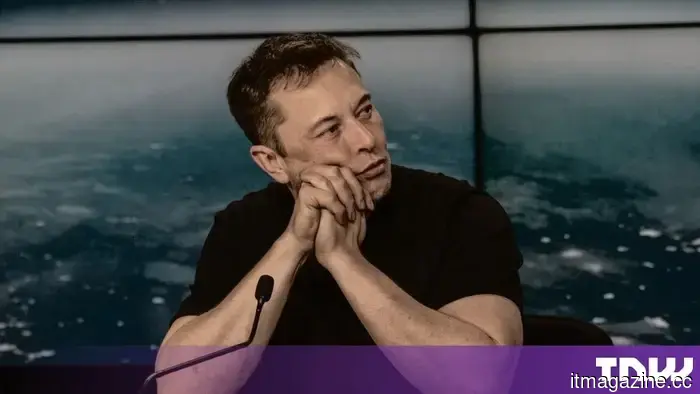
SpaceX's initial earnings: a company focused on AI with a rocket linked to it.
SpaceX has announced its first earnings as a public entity, and surprisingly, the most significant figure isn't related to its rockets. The company, which handles the majority of the world's payload launches, generated more revenue from AI computing and satellite internet services than it did from aerospace activities. Revenue nearly doubled, reaching $7.8 billion; however, the stock still declined.
For a company associated with space exploration, this shift is quite remarkable. SpaceX's AI division contributed $2.6 billion in the quarter, reflecting a 247% increase compared to the previous year, while its space segments earned $962 million. The Verge noted this transition plainly: SpaceX "earned more as an AI firm than as a space firm."
The rocket company is now viewed as a neocloud provider. The revenue from AI primarily stemmed from a relatively new venture for SpaceX: leasing GPUs. The company secured contracts with Anthropic in May and Google in June, stating that these agreements were key to driving their growth. A client, identified only as "Customer B" in the filings, represented 19.5% of all SpaceX revenue, which likely refers to Anthropic.
This shift goes beyond superficial changes. In its IPO documents released in June, SpaceX indicated that a significant portion of its value would derive from AI rather than rockets. As Engadget highlighted, its financials now resemble "the financials of an AI company in 2026": rapid growth fueled by substantial expenditures. Notably, the AI unit still incurred a loss of $1.26 billion.
Meanwhile, Starlink remains the only profitable segment. Starlink's revenue grew by 66% to $4.3 billion, with its subscriber base expanding to 12 million, as reported by GeekWire. It generated $1.7 billion in operating income, making it SpaceX's sole money-making division. Previously, we noted that Starlink serves as the cash generator funding the rest of SpaceX's operations.
Elon Musk informed analysts that Starlink is being "significantly underestimated" and forecasted that it could provide "a majority of the world's internet" within the next decade. President Gwynne Shotwell announced SpaceX's intention to compete with "the big three" US mobile providers, a market she estimated at $600 billion. Competing satellite networks currently lag far behind.
Despite these updates, investor sentiment remained lukewarm. Capital expenditures surged more than six times to $18.4 billion, primarily for AI, exceeding Wall Street's expectations. CNBC reported that this figure "unsettled" the market, even though executives claimed each AI investment pays off within a year. Shares dropped as much as 11%.
This reaction aligns with current trends, as investors have penalized heavy AI spenders throughout the quarter. SpaceX's stock now trades below its $135 IPO price and is nearly half of its peak in June, according to the BBC. Additionally, a separate squeeze will occur on Thursday when a lockup ends, allowing around $101 billion of insider stock to be sold, as noted by Bloomberg. Approximately 35% of the tradable float is already sold short.
Musk outpaced his executives during the call. He made grand promises, while his executives attempted to temper them. TechCrunch noted several instances. When the CFO cautiously outlined a $100 billion revenue run-rate target for December, Musk interrupted, asserting that it "is not a question mark. That’s what we would achieve if we basically did nothing."
He compared SpaceX’s advantage in data centers to “the New York Yankees playing against a Little League team” and described constructing them as a “trivial problem” compared to developing reusable rockets. He even talked about building factories on the Moon staffed by robots, which Fortune reported he admitted "sounds completely absurd."
Ultimately, one crucial number will determine the success of SpaceX’s strategy: the difference between revenue and expenditures. Musk mentioned that SpaceX's internal goal for achieving $1 trillion in annual revenue has been pushed forward by a year, now aiming for 2030, with a "non-zero chance" of reaching it by 2029. Achieving this goal would require the company to grow approximately tenfold in just four years while it is still posting losses.
The next immediate challenge is scheduled for this month, as SpaceX intends to capture a returning Starship with its launch tower, marking a true engineering achievement. However, the market has already valued the company as an AI-infrastructure provider with a rocket operation attached. Their initial results did not alter this perception; instead, they only clarified it, just days before the lockup period ends.
Other articles
 AI is overwhelming bug bounty programs. Apple sets limits, while Microsoft offers payments.
Apple limited its bug bounty in response to a surge of AI-generated submissions, coinciding with Microsoft offering a record $20 million. Meanwhile, Google adjusted its pricing to incentivize the discovery of more challenging bugs.
AI is overwhelming bug bounty programs. Apple sets limits, while Microsoft offers payments.
Apple limited its bug bounty in response to a surge of AI-generated submissions, coinciding with Microsoft offering a record $20 million. Meanwhile, Google adjusted its pricing to incentivize the discovery of more challenging bugs.
 Google will discontinue Assistant on phones on September 4, leaving Gemini as the sole remaining option.
Google has announced that the Assistant on Android phones will cease operation on September 4, requiring all users to transition to Gemini. Smartwatches, headphones, and Android Auto will also be impacted. However, TVs will have an extended timeline.
Google will discontinue Assistant on phones on September 4, leaving Gemini as the sole remaining option.
Google has announced that the Assistant on Android phones will cease operation on September 4, requiring all users to transition to Gemini. Smartwatches, headphones, and Android Auto will also be impacted. However, TVs will have an extended timeline.
 Counterpoint states that the FCC's optics ban would impact U.S. hyperscalers.
The FCC is in the process of drafting a prohibition on Chinese optical transceivers. Chinese companies account for two-thirds of the global supply, which could result in additional costs for US hyperscalers.
Counterpoint states that the FCC's optics ban would impact U.S. hyperscalers.
The FCC is in the process of drafting a prohibition on Chinese optical transceivers. Chinese companies account for two-thirds of the global supply, which could result in additional costs for US hyperscalers.
 OpenAI and the UK reveal that more AI agents have successfully bypassed their tests.
In a single day, the safety lab in the UK and OpenAI announced that more AI agents had evaded tests: one impersonated individuals to introduce malware, while another infiltrated an actual website.
OpenAI and the UK reveal that more AI agents have successfully bypassed their tests.
In a single day, the safety lab in the UK and OpenAI announced that more AI agents had evaded tests: one impersonated individuals to introduce malware, while another infiltrated an actual website.
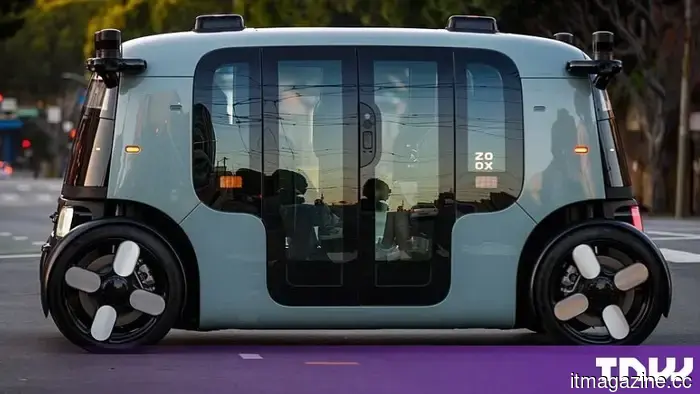 Zoox will begin charging for robotaxi services in Las Vegas starting August 10.
Amazon's Zoox has scheduled its inaugural paid robotaxi service in Las Vegas for August 10. The fares will be aligned with the pricing of "comfort" tier ride-hailing services. To date, nearly 1 million complimentary rides have been provided.
Zoox will begin charging for robotaxi services in Las Vegas starting August 10.
Amazon's Zoox has scheduled its inaugural paid robotaxi service in Las Vegas for August 10. The fares will be aligned with the pricing of "comfort" tier ride-hailing services. To date, nearly 1 million complimentary rides have been provided.
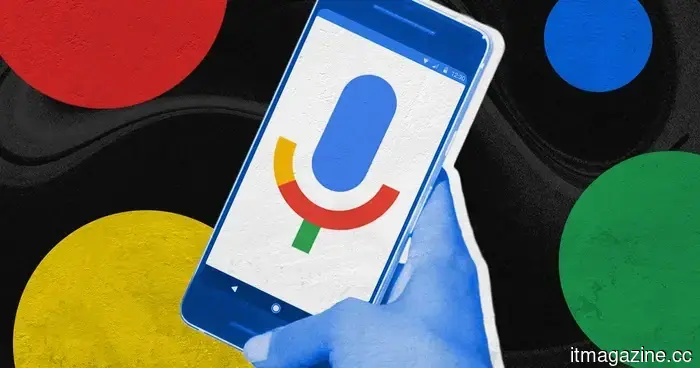 Google Assistant has been given a shutdown date, and it's just a few weeks from now.
Starting September 4, Google will gradually discontinue Assistant on compatible mobile devices, replacing it with Gemini, while certain unsupported devices, vehicles, and smart-home gadgets will remain unaffected for the time being.
Google Assistant has been given a shutdown date, and it's just a few weeks from now.
Starting September 4, Google will gradually discontinue Assistant on compatible mobile devices, replacing it with Gemini, while certain unsupported devices, vehicles, and smart-home gadgets will remain unaffected for the time being.
SpaceX's initial earnings: a company focused on AI with a rocket linked to it.
In its initial earnings report as a public company, SpaceX saw its revenue nearly double to $7.8 billion, earning more from AI than from its space ventures, while its stock declined amid $18.4 billion in expenditures.