
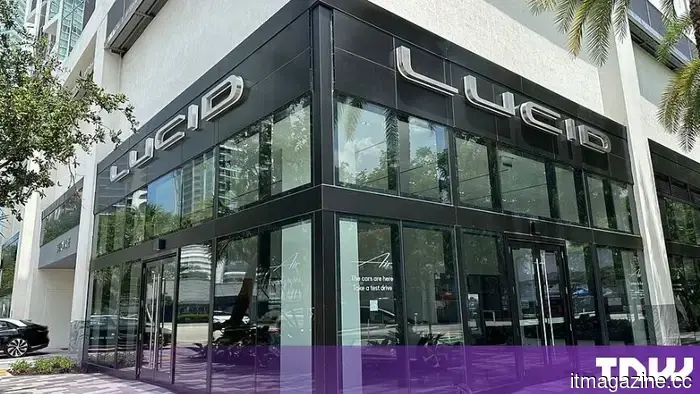
Lucid is slashing $1.4 billion and wagering its future on robotaxis.
Lucid's plan for recovery hinges on significantly reducing expenses and relying on the success of robotaxis. This week, the luxury electric vehicle manufacturer announced a cash-savings initiative of $1.4 billion, alongside a net loss of $1.26 billion for the second quarter.
The depth of the loss underlines the urgency of the situation. Revenue grew to $405 million from $259 million a year prior, yet the company continues to deplete cash reserves at a pace that offers little leeway, despite having $3 billion in liquidity available.
CEO Silvio Napoli outlined a plan that includes a $500 million reduction in capital expenditures, savings of $600 million to $800 million from streamlined inventory, and $200 million in decreased operating costs, which he believes will provide sufficient runway into 2027.
Additionally, Lucid reduced its workforce by approximately 18% in June, which equates to around 1,500 jobs, following a previous 12% cut months earlier, and eliminated a second shift at its Arizona plant to save $158 million annually.
Napoli, still relatively new to his position, has restructured the company’s leadership. He has appointed a new chief financial officer, a technology chief, and a transformation chief, while also halving the number of executives reporting directly to him.
He was straightforward about Lucid’s direction, denying any rumors regarding potential bankruptcy and clarifying that the ongoing consulting engagement with AlixPartners is focused exclusively on identifying savings, concluding this month.
The current strategy revolves around four main priorities: the development of a midsize electric vehicle known as Cosmos, the construction of a new factory in Saudi Arabia, enhanced cost management, and, most importantly, the robotaxi initiative developed in partnership with Uber and Nuro.
The midsize vehicle aims to address a structural issue. To date, Lucid has primarily sold high-priced, low-volume sedans; introducing a more affordable model is essential for achieving the scale necessary for future profitability.
The connection to Saudi Arabia is significant. The kingdom’s sovereign wealth fund is Lucid's principal investor, and the establishment of a second factory there links the company's future to a long-term investor that has already invested billions.
This partnership is central to Lucid's strategy. The three companies are integrating Nuro's self-driving technology into Lucid's Gravity SUV, with testing already progressing and employee rides taking place in San Francisco.
The scale of this initiative is considerable. A fleet of 100 vehicles is undergoing testing in Houston and the Bay Area, production validation vehicles are being assembled in Arizona, and full production is set to commence in the fourth quarter.
The financial advantage lies in the margins. Napoli contends that the economics of robotaxis will greatly surpass those of traditional vehicle sales, as a vehicle generating revenue around the clock holds significantly greater value than one sold once and driven away.
While the concept is promising, it remains unverified at scale. Only Waymo has operated a large paid robotaxi service for any significant time, and its expansion has been gradual, illustrating that autonomy often develops more slowly and at greater cost than anticipated.
Uber has openly expressed its commitment, with its investment in Nuro nearing $500 million, as part of a broader strategy where the ride-hailing firm supports partners instead of creating its own self-driving technology.
This trend is becoming established. Uber has also reached a $1.25 billion robotaxi agreement with Rivian, diversifying its partnerships across various automakers while building a network of autonomous fleets to integrate with its app.
For Lucid, the timeline poses a risk. The financial benefits from robotaxis are at least a year away, and having fallen behind companies like Waymo in the self-driving race, the sector is still demonstrating the viability of this model at scale.
Consequently, this quarter appears as a strategy for Lucid to buy time. The company has implemented cost reductions to endure the wait, relying on a self-driving initiative that will not yield benefits until after the current cuts are completed.
Other articles
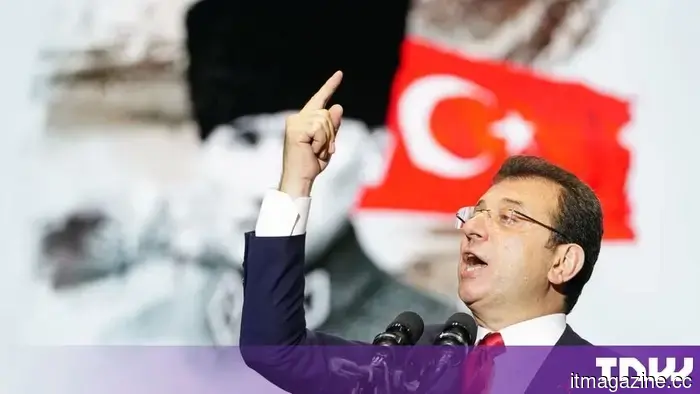 X is contesting a Turkish directive to prohibit Ekrem Imamoglu’s campaign account.
A Turkish court has directed X to limit the presidential-campaign account of Ekrem Imamoglu, the jailed mayor of Istanbul. X has stated that it is adhering to the order while also contesting it in court.
X is contesting a Turkish directive to prohibit Ekrem Imamoglu’s campaign account.
A Turkish court has directed X to limit the presidential-campaign account of Ekrem Imamoglu, the jailed mayor of Istanbul. X has stated that it is adhering to the order while also contesting it in court.
 T-Mobile's new financing plan may seem appealing at first, but it becomes clear what it is ultimately setting you up for.
T-Mobile's newly introduced EIP Flex 36 plan allows eligible customers to finance a phone without any initial payment.
T-Mobile's new financing plan may seem appealing at first, but it becomes clear what it is ultimately setting you up for.
T-Mobile's newly introduced EIP Flex 36 plan allows eligible customers to finance a phone without any initial payment.
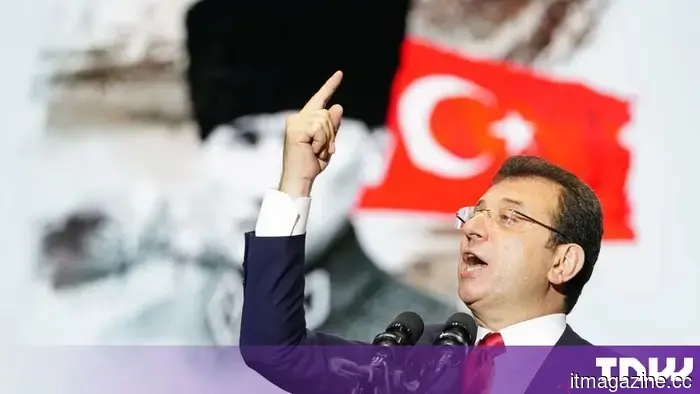 X is challenging a Turkish court's decision to freeze Ekrem Imamoglu's campaign account.
A Turkish court has instructed X to limit the presidential campaign account of Ekrem Imamoglu, the imprisoned mayor of Istanbul. X has stated that it is adhering to this order while also contesting it in court.
X is challenging a Turkish court's decision to freeze Ekrem Imamoglu's campaign account.
A Turkish court has instructed X to limit the presidential campaign account of Ekrem Imamoglu, the imprisoned mayor of Istanbul. X has stated that it is adhering to this order while also contesting it in court.
 Research indicates that readers give higher ratings to stories written by AI, yet they still place greater trust in works labeled as “human.”
A recent study revealed that readers had difficulty distinguishing between stories written by AI and those penned by humans, and they frequently rated the AI-generated narratives more favorably—at least until they found out the authorship.
Research indicates that readers give higher ratings to stories written by AI, yet they still place greater trust in works labeled as “human.”
A recent study revealed that readers had difficulty distinguishing between stories written by AI and those penned by humans, and they frequently rated the AI-generated narratives more favorably—at least until they found out the authorship.
 Samsung has announced a solution for the red tint problem on the Galaxy S26 Ultra, but for the time being, it necessitates a visit to a store.
Samsung has formally announced a solution for the red tint problem affecting certain Galaxy S26 Ultra devices, which currently necessitates that owners visit a local store.
Samsung has announced a solution for the red tint problem on the Galaxy S26 Ultra, but for the time being, it necessitates a visit to a store.
Samsung has formally announced a solution for the red tint problem affecting certain Galaxy S26 Ultra devices, which currently necessitates that owners visit a local store.
 Taiwan is looking into 17 Chinese companies for allegedly recruiting its semiconductor talent.
Taiwan's Investigation Bureau has conducted searches at 64 locations and interviewed 114 individuals as part of an investigation into 17 Chinese companies alleged to have unlawfully recruited semiconductor professionals.
Taiwan is looking into 17 Chinese companies for allegedly recruiting its semiconductor talent.
Taiwan's Investigation Bureau has conducted searches at 64 locations and interviewed 114 individuals as part of an investigation into 17 Chinese companies alleged to have unlawfully recruited semiconductor professionals.
Lucid is slashing $1.4 billion and wagering its future on robotaxis.
Lucid announced a $1.4 billion plan to reduce costs in conjunction with a quarterly loss of $1.26 billion, focusing its recovery efforts on a robotaxi initiative with Uber and Nuro.