
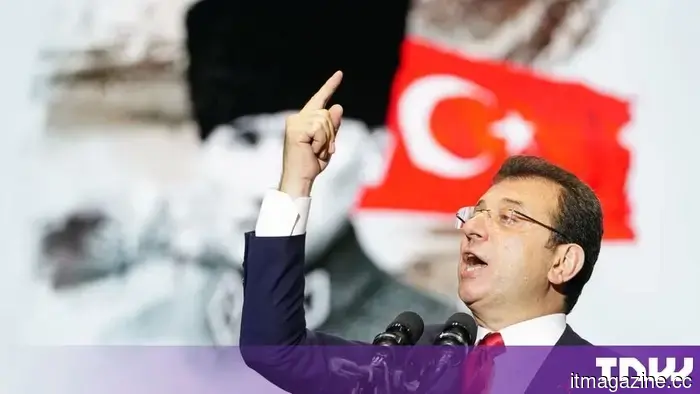
X is contesting a Turkish directive to prohibit Ekrem Imamoglu’s campaign account.
X has been instructed to silence one of the most closely monitored accounts in Turkish politics. A court has ordered the platform to restrict access to the presidential campaign account of jailed Istanbul mayor Ekrem Imamoglu within Turkey.
The company is pushing back, stating that while it is complying with the order as mandated by Turkish law, it disagrees with it and has initiated legal action to overturn the restriction.
This account holds significant importance. It acted as the campaign channel for Imamoglu’s presidential run and had approximately 225,000 followers, serving as a platform for the opposition to maintain visibility for his candidacy while he is incarcerated.
The court provided broad reasoning for its decision, citing national security and public order—justifications that Turkish authorities have often used to block notable accounts on the platform.
Imamoglu’s case adds weight to the order. He is widely perceived as President Erdogan’s main opponent and was arrested in March 2025 in a case that sparked the largest street protests in Turkey in over a decade. He remains imprisoned awaiting trial, facing charges of corruption, espionage, and terrorism, all of which he refutes. His supporters view the prosecution as an attempt to eliminate a significant electoral challenger.
The timing of his candidacy has raised particular concerns. He was named his party’s presidential candidate just days after his detention, even though a university diploma required for candidacy was revoked a day before his arrest.
This isn't the first of Imamoglu's accounts to be restricted. His main profile, boasting nearly 10 million followers, was blocked in Turkey in May 2025, and X also challenged that decision.
This situation complicates X’s self-image. Under Elon Musk, the platform promotes itself as a champion of free speech, yet it consistently complies with government requests to remove content while contesting such orders in court.
That tension is not new in Turkey. The country has a long history of exerting pressure on the platform, at times blocking access completely to enforce compliance during politically sensitive periods.
X’s conduct in other regions contributes to the ambiguity. The platform has clashed with regulators over content policies, including withdrawing from the EU’s disinformation code, positioning itself against Western oversight while yielding to authoritarian legal systems.
The inconsistency is evident. X resists democratic institutions demanding it limit harmful content, yet adheres to an authoritarian court's directive to mask an opposition politician, which has a far-reaching impact.
Currently, the practical consequence is that users in Turkey cannot access the account. The legal challenge may take months, and even a favorable outcome might come too late to influence the political landscape at that time.
The pattern in Turkey is well-established. Authorities have pressured social platforms for years, and X has previously contested fines it labeled as penalties for hosting “propaganda,” only to ultimately comply.
Critics see a familiar strategy in action. Restricting a campaign account does not eliminate a politician, but it diminishes the reach an opposition figure requires, particularly one who cannot campaign in person from a prison cell.
For the platform, each case sets a precedent. Complying allows X to operate in a significant market, yet each submission to a takedown further complicates its free-speech image with its actual practices.
The overarching question is who truly controls speech on a global platform. When a court can deactivate a candidate's account in one country, the town-square metaphor begins to appear as a patchwork of local permissions.
Other articles
 T-Mobile's latest financing plan appears impressive at first glance, but it's important to understand what it may ultimately lead to.
T-Mobile's newly introduced EIP Flex 36 plan allows eligible customers to finance a phone without any initial payment.
T-Mobile's latest financing plan appears impressive at first glance, but it's important to understand what it may ultimately lead to.
T-Mobile's newly introduced EIP Flex 36 plan allows eligible customers to finance a phone without any initial payment.
 Taiwan is looking into 17 Chinese companies for allegedly recruiting its semiconductor talent.
Taiwan’s Investigation Bureau has conducted searches at 64 locations and interrogated 114 individuals as part of an investigation into 17 Chinese companies suspected of unlawfully recruiting semiconductor professionals.
Taiwan is looking into 17 Chinese companies for allegedly recruiting its semiconductor talent.
Taiwan’s Investigation Bureau has conducted searches at 64 locations and interrogated 114 individuals as part of an investigation into 17 Chinese companies suspected of unlawfully recruiting semiconductor professionals.
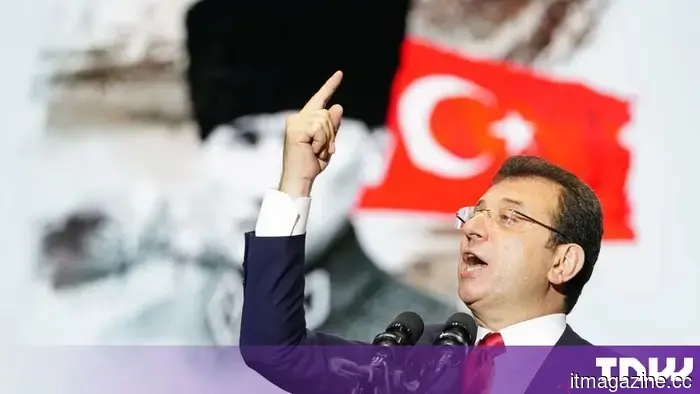 X is challenging a Turkish court's decision to freeze Ekrem Imamoglu's campaign account.
A Turkish court has instructed X to limit the presidential campaign account of Ekrem Imamoglu, the imprisoned mayor of Istanbul. X has stated that it is adhering to this order while also contesting it in court.
X is challenging a Turkish court's decision to freeze Ekrem Imamoglu's campaign account.
A Turkish court has instructed X to limit the presidential campaign account of Ekrem Imamoglu, the imprisoned mayor of Istanbul. X has stated that it is adhering to this order while also contesting it in court.
 Moove secures $250 million at a $2.1 billion valuation to operate robotaxi fleets.
Moove, previously an African car-financing startup, has secured $250 million at a valuation of $2.1 billion to develop the fleet infrastructure for Uber and Waymo's self-driving vehicles.
Moove secures $250 million at a $2.1 billion valuation to operate robotaxi fleets.
Moove, previously an African car-financing startup, has secured $250 million at a valuation of $2.1 billion to develop the fleet infrastructure for Uber and Waymo's self-driving vehicles.
 T-Mobile's new financing plan may seem appealing at first, but it becomes clear what it is ultimately setting you up for.
T-Mobile's newly introduced EIP Flex 36 plan allows eligible customers to finance a phone without any initial payment.
T-Mobile's new financing plan may seem appealing at first, but it becomes clear what it is ultimately setting you up for.
T-Mobile's newly introduced EIP Flex 36 plan allows eligible customers to finance a phone without any initial payment.
 How to select an app development agency for your startup: a guide for founders
Chop Dawg, an app development firm based in Philadelphia and established in 2009, advocates for selecting a technical partner that emphasizes process, reliability, and long-term responsibility rather than opting for the quickest or most affordable choice.
How to select an app development agency for your startup: a guide for founders
Chop Dawg, an app development firm based in Philadelphia and established in 2009, advocates for selecting a technical partner that emphasizes process, reliability, and long-term responsibility rather than opting for the quickest or most affordable choice.
X is contesting a Turkish directive to prohibit Ekrem Imamoglu’s campaign account.
A Turkish court has directed X to limit the presidential-campaign account of Ekrem Imamoglu, the jailed mayor of Istanbul. X has stated that it is adhering to the order while also contesting it in court.